Publication Highlight: “Online First” Articles (Oct 2014), Part Two

Welcome to the second installment of this series. The following collection of articles are from our “Online First” file at our publisher’s website: http://link.springer.com/journal/11013. The full text of these articles will be released in upcoming issues of Culture, Medicine, and Psychiatry, but here we’d like to lend our readers a glimpse into the innovative research in medical anthropology and social medicine that the journal publishes.

Clicking the title of each paper will send you to the “Online First” page for each article, including a full list of authors and abstracts.

cropped-cropped-2009cover-copy1.jpg

Confinement and Psychiatric Care: A Comparison Between High-Security Units for Prisoners and for Difficult Patients in France

Livia Velpry & Benoît Eyraud

Learning Constraint. Exploring Nurses’ Narratives of Psychiatric Work in the Early Years of French Community Psychiatry

Nicolas Henckes

The Ethics of Ambivalence and the Practice of Constraint in US Psychiatry

Paul Brodwin

Between Jewish Settlers and Palestinian Citizens of Israel: Negotiating Ethno-national Power Relations Through the Discourse of PTSD

Keren Friedman-Peleg

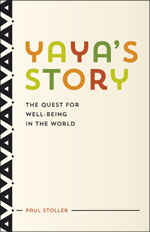
Book Release: Paul Stoller’s “Yaya’s Story: The Quest for Well-Being in the World”

9780226178790

Image from UC Press website

Out this month from the University of Chicago Press is Paul Stoller’s book Yaya’s Story: The Quest for Well-Being in the World. The text traces the author’s friendship with a Songhay trader from Niger named Yaya Harouna: a man who moved to the United States as Stoller, an anthropologist, had likewise made a journey from the USA to Africa as a Peace Corps volunteer. Their story begins whenever Stoller meets Yaya selling artwork in an African market in New York City’s Harlem neighborhood, where Stoller carried out research.

Although the men’s histories are markedly different, they become close after the two are each diagnosed with cancer: this serves as the heart of Yaya’s Story, and the experience upon which the two men’s culturally divergent, yet not entirely dissimilar, narratives cross paths. With extensive publications in the genres of both ethnography and memoir, Stoller is certain to blend keen anthropological insight with deeply personal accounts of human suffering, endurance, and resilience in the face of illness across cultures in his latest book.

Stoller, Professor of Anthropology at West Chester University, is a 1994 winner of a Guggenheim Fellowship and the 2013 recipient of the prestigious Anders Retzius Gold Medal in Anthropology from the King of Sweden.

You can find out more about the book here, at the UC Press website:

http://www.press.uchicago.edu/ucp/books/book/chicago/Y/bo18882897.html

Publication Highlight: “Online First” Articles (Oct 2014), Part One

The following collection of articles are from our “Online First” file at our publisher’s website: http://link.springer.com/journal/11013. The full text of these articles will be released in upcoming issues of Culture, Medicine, and Psychiatry, but here we’d like to lend our readers a glimpse into the innovative research in medical anthropology and social medicine that the journal publishes.

Clicking the title of each paper will send you to the “Online First” page for each article, including a full list of authors and abstracts.

cards

A Village Possessed by “Witches”: A Mixed-Methods Case–Control Study of Possession and Common Mental Disorders in Rural Nepal

Ram P. Sapkota, et al

Practicing and Resisting Constraint: Ethnography of “Counter Response” in American Adolescent Psychiatric Custody

Katherine Hejtmanek

The Invisibility of Informal Interpreting in Mental Health Care in South Africa: Notes Towards a Contextual Understanding

Leslie Swartz & Sanja Kilian

Learning Disabilities’ as a ‘Black Box’: On the Different Conceptions and Constructions of a Popular Clinical Entity in Israel

Ofer Katchergin

From the Archive: Biomedicine, Chinese Medicine, and Psychiatry

In the “From the Archive” series, we will highlight articles published throughout the journal’s history. We look forward to sharing with our readers these samples of the innovative research that CMP has published on the cultural life of medicine across the globe.
cards3

At the journal, we often present fascinating work on psychiatric care throughout the world, including Joshua Breslau’s 2001 article “Pathways through the Border of Biomedicine and Traditional Chinese Medicine: A Meeting of Medical Systems in a Japanese Psychiatry Department” (volume 25 issue 3.) 

In this piece, Breslau recounts stories of the two medical systems interacting during a meeting of clinicians employing, to varying degrees, traditional Chinese medicine (TCM) alongside biomedical interventions within a Japanese psychiatric department. The author asserts that Japan is perhaps the most common ground for the two medical systems to meet, and that it represents the “traffic” of medical knowledge between Japan, the Asiatic mainland, and the rest of the world. Indeed, Japan has had a lengthy history of exchange with foreign medical systems,beginning with the 18th-century import of anatomy textbooks from Holland. Combined with expanded trade with “the West” in the 19th century and the later resurgence of local Japanese interest in Chinese herbal remedies during the 1970s, we see that the two medical systems have both held a prominent position in the dynamic medical landscape in Japan.

Breslau observes that the two medical systems complement one another most strikingly in psychiatry, where kanpo (herbal treatments) are used both to diminish the uncomfortable side effects of psychoactive medications and to treat conditions for which there are few biomedical interventions. Exemplifying this blended approach to care, the author notes that Dr. Nakai, professor of psychiatry at Kobe University, examines the tongue to diagnose his patients. This method of diagnosis has its roots in TCM, and was taught to Dr. Nakai from a visiting Chinese student; many such Chinese students, having studied TCM, go to Japan to learn “Western medicine.” Although there is little formal education in TCM available in Japan, these interpersonal (and intercultural) exchanges are important mechanisms for sharing diverse medical techniques.

Another physician, Dr. Song, initially specialized in the use of acupuncture to treat psychiatric patients in China. Breslau theorizes that although it seems anomalous for traditional medicine to find a niche in conditions that generally fall under the scope of biomedicine, Dr. Song’s work is a productive blend of psychiatric treatments from both medical systems. Whereas patients in the Chinese biomedical settings were admitted alone, patients and their families stayed together in the TCM centers for mental health, thereby offering a support network that the biomedical patients lacked. In Japan, Dr. Song combined TCM and biomedical approaches. She established an “open ward” psychiatric unit that welcomed patients and their families, and employed both pharmaceutical and herbal remedies depending on the severity and the stage of psychiatric distress suffered by the patient.

Breslau’s piece reminds us of the complicated ways in which cultures are in contact with one another. Rather than reading medicine in China and Japan as a contest, where biomedicine and traditional Chinese medicine are at odds in the race to be deemed “most effective,” it is more accurate to describe the ways that the systems are in dialogue– often in the same clinical settings.

You can find the contents of the full issue in which Breslau’s article is published here: http://link.springer.com/journal/11013/25/3/page/1

News: AAA Forms Task Force on the Israeli-Palestinian Conflict

The American Anthropological Association (AAA) has recently formed a task force that will examine implications of the conflict between Israel and Palestine for the anthropological community: including forming potential stances that the organization could take on issues that might impede upon scholarly inquiry surrounding the conflict.

Members of the task force, appointed by current AAA president Monica Heller, could profess no public opinion about the political nature of the conflict. They were each required to have a subject matter background pertinent to analyzing the conflict at hand.[i]

Logo of the AAA from Wikimedia Commons

Logo of the AAA from Wikimedia Commons

The AAA website notes that the task force members will investigate “the uses of anthropological research to support or challenge claims of territory and historicity; restrictions placed by government policy or practice on anthropologists’ academic freedom; or commissioning anthropological research whose methods and/or aims may be inconsistent with the AAA statement of professional responsibilities.”[ii] Beyond studying what effects the conflict has on anthropological research and scholarship, the task force will also make recommendations on whether or not the AAA should take a stance on issues unveiled by the report.

In describing the task force goals, the AAA website also notes that it is possible that no stance will be taken on problems raised in the findings—but that any position the organization takes must be substantiated by “neutral overviews” of the argument in favor of a particular stance.

An article about the task force posted earlier this year on the Anthropology News website—operated by the AAA—noted that anthropologists, “have an opportunity here to develop modes of mutually respectful exchange on controversial anthropological topics that will serve us well now and in the future.”[iii]

Although the task force will meet in person during the Annual Meeting in December to discuss these concerns, their findings will not be available in a complete written report until October 2015.


[i] https://www.insidehighered.com/quicktakes/2014/09/09/anthropology-group-creates-task-force-israeli-palestinian-conflict

[ii] http://www.aaanet.org/cmtes/commissions/Task-Force-on-AAA-Engagement-on-Israel-Palestine.cfm

[iii] http://www.anthropology-news.org/index.php/2014/04/30/towards-an-informed-aaa-position-on-israel-palestine/

Current Issue: Preview of Books Received, Part Two

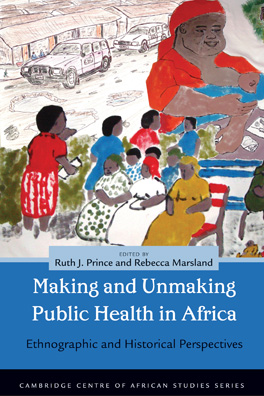
In this special feature on the blog, we’re highlighting recent book publications that have been submitted for review to Culture, Medicine, and Psychiatry. This week, we are pleased to present a short overview of Making and Unmaking Public Health in Africa: Ethnographic and Historical Perspectives, a volume of works edited by Ruth J. Prince and Rebecca Marsland. This book addresses the experience of African public health initiatives from numerous vantage points. Published by the Ohio University Press, a paperback version was released in December 2013. You can learn more about the book here: http://www.ohioswallow.com/book/Making+and+Unmaking+Public+Health+in+Africa.

Book cover image via the Ohio University Press website.

Book cover image via the Ohio University Press website.

Prince and Marsland’s edited collection was the result of a 2008 workshop at the University of Cambridge hosted by the Centre of African Studies and the Department of Social Anthropology. Africa has long served as an “arena” for discussions about global health, human rights, and humanitarian aid, but the notion of health-for-all is complicated against a backdrop of African state formation, international interventions, and transnational policies.

This text explores what public health means for clinical professionals, patients, government officials, and citizens throughout Africa. Instead of generalizing what the meaning of public health to these groups might be, this book aims to establish a rich, complex anthropology of African public health that weighs the importance of politics, culture, and local understanding to the definition and delivery of public health initiatives. The volume covers topics in numerous countries including Uganda, Nigeria, Kenya, and Tanzania, and takes a blended historical-anthropological approach to studying public health.


These brief summaries are intended to give our readers a glimpse into the newest academic publications that we’re excited to discuss in our journal and with our followers on social media. For a full list of books that have been submitted for review at CMP, click this link: http://link.springer.com/article/10.1007/s11013-014-9383-x. This page also has information regarding the submissions process for authors who’d like their academic releases reviewed in the journal, as well as information for those interested in composing a review. For more information on this process, please contact managing editor Brandy Schillace.

Current Issue: Preview of Books Received, Part One

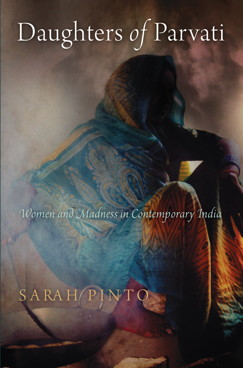
In this special feature on the blog, we’re highlighting recent book publications that have been submitted for review to Culture, Medicine, and Psychiatry. This week, we’d like to give you a short overview of Sarah Pinto’s new book Daughters of Parvati: Women and Madness in Contemporary India, from the University of Pennsylvania Press (more information here: http://www.upenn.edu/pennpress/book/15224.html)

Book cover image courtesy of the University of Pennsylvania Press website

Book cover image courtesy of the University of Pennsylvania Press website

Released earlier this year, Sarah Pinto’s book chronicles the experiences of women at a number of different psychiatric care institutions throughout Northern India. Pinto questions the poor treatment of female patients, the licensing process for mental health caregivers in these settings, as well as the overprescription of psychoactive medications to Indian women. Pinto pays close attention to the ways women in particular experience difficulty and distress as the primary caretakers of their families and households.

The goddess Parvati, whom the book is in part titled after, represents intense love for someone far away that borders on, and becomes, a form of suffering. Pinto invokes the name of this figure as a way to remind us of the mental strain that familial love can cause, especially for the Indian women at the heart of her moving ethnographic account.


These brief summaries are intended to give our readers a glimpse into the newest academic publications that we’re excited to discuss in our journal and with our followers on social media. For a full list of books that have been submitted for review at CMP, click this link: http://link.springer.com/article/10.1007/s11013-014-9383-x. This page also has information regarding the submissions process for authors who’d like their academic releases reviewed in the journal, as well as information for those interested in composing a review. For more information on this process, please contact managing editor Brandy Schillace.

Current Issue Highlight: September 2014 (Vol 38 Issue 3) Part Two

Welcome back to our two-week special update featuring glimpses into some of the articles published in the latest release of Culture, Medicine, and Psychiatry. These brief synopses of a few of our newest pieces from the September 2014 issue are only some of the publications that the current issue has to offer. We hope they invite you to explore the many other fascinating articles housed in this issue and in past volumes of CMP.

Swapnaushadhi: The Embedded Logic of Dreams and Medical Innovation in Bengal
Projit Bihari Mukharji

Mukharji’s article discusses the prevalent but little-researched history of indigenous therapeutic practices in Bengal that stem from therapies revealed in healers through dreams. Instead of grouping this practice into the indiscriminate category of “indigenous practice” or “dream culture,” the author asserts that all dream cultures are locally specific. They also do not draw stringent religious boundaries, as healers (and their patients) may receive visions of divine figures like Jesus or Muhammed despite not being of the creed the prophet represents. Because of this cross-cultural and “borderless” dialogue, medical innovation in dream medicine occurs regularly as the product of contact between numerous religious, spiritual, and local traditions. As Mukharji argues, “the logic of dreams opens up a space: the swapna-sthana or the dreamland where such cross-boundary transactions can take place without undermining the sanctity of the boundary itself in everyday social life.”

‘‘Pensando Mucho’’ (‘‘Thinking Too Much’’): Embodied Distress Among Grandmothers in Nicaraguan Transnational Families
Kristin Elizabeth Yarris

Yarris chronicles the difficulties faced by Nicaraguan grandmothers serving as the primary caregivers of grandchildren whose mothers have migrated to another country for employment. The author asks us to reconsider the simplistic mind-body connection in lieu of a more complicated view of the body and mind as experiencing distress: physical, emotional, and cultural all at once. In this paper, we discover that the term “thinking too much” ultimately describes the difficult self-sacrifice faced by grandmothers who tend to their grandchildren to allow their own children to succeed elsewhere. The stress of geographically dispersed and fractured families, the burden of caregiving later in life, and anxieties surrounding the grandmothers’ “hopes for the future” generate a particular form of psychosomatic suffering connected to broader economic, social, and political pressures manifested at the local level among these Nicaraguan families.

Current Issue Highlight: September 2014 (Vol 38 Issue 3) Part One

Welcome back to the CMP blog! For the next two weeks we will post short descriptions of our newest articles from September 2014, which includes a special section addressing medical learning in South Asia as well as other thought-provoking pieces in the cultural construction of medicine, health, and illness. These updates are intended to offer a taste of the research we’re excited to share with you through the journal.

Knowledge and Skill in Motion: Layers of Tibetan Medical Education in India
Laurent Pordié & Calum Blaikie

In this article, the authors discuss the various ways that a student can be trained in Tibetan medical practice. They argue that there is not one means of medical training for Tibetan medicine, but rather numerous means of learning that alter the way the Tibetan practitioners learn and deliver medical care. In particular, three means of learning are highlighted: traditional apprenticeship under a Tibetan medical caregiver, classroom learning through a Buddhist institute, and lastly at a Tibetan medical organization intended to educate future practitioners from poorer rural regions with fewer resources than those attending the elite Buddhist school. The argument weighs the prestige and the social acceptance of each methods of training, noting that “institutionalisation tends to relegate ‘traditional training’ to an inferior level, in particular due to its heterogeneity and the social image of rural backwardness it presents.” It also addresses how different forms of learning are legitimated by the government and local authorities, and demonstrates the shift from skill-based learning via apprenticeship towards formal, institutional learning that emphasizes education over “enskillment.”

Of Shifting Economies and Making Ends Meet: The Changing Role of the Accompagnant at the Fann Psychiatric Clinic in Dakar, Senegal
Katie Kilroy-Marac

Kilroy-Marac draws from her ethnographic research in Senegal to offer a vivid picture of the shift in the role of the accompagnant, an attendant who stays with mental health patients for the duration of their hospitalization. Although this attendant was in previous generations a family member of the patient, there has been a sudden rise in professional accompagnants who are paid to stay with the patient at the clinic. The author notes that the “neoliberal turn” in Senegal towards increased wealth and commodification of services is exemplified in the professional accompagnant, whose services form a monetary transaction in lieu of fulfilling a familial duty to the patient: providing work for others and freeing up families who, in the newly-bolstered economy, often have other career and personal obligations. However, the author complicates this notion by noting how much the families cherish the attendant’s work and offer them gifts outside of typical payment agreements, and how these connections can often be special between families and the accompagnants.

News: “Uncontacted” Tribes Emerge in Brazil

As reported by the BBC, the Brazilian organization FUNAI (which handles affairs of indigenous people within the country) released a statement on July 1st 2014 stating that seven members of an isolated tribe entered a village on the Peruvian border and made “peaceful contact” with the locals.[i] The group has been referred to in news media as an “uncontacted” tribe because of its formerly limited interaction with settled society outside of the Amazon rainforest, where the group makes its home.

This image of two members of the tribe was released by the Brazilian organization FUNAI.

This image of two members of the tribe was released by the Brazilian organization FUNAI.

The reemergence of this tribal group proves to be a source of enlivening discussion for scholars of the culture of medicine. The American Association for the Advancement of Science—the organization behind the journal Science—published a news piece that the tribal people “first exhibited flu symptoms on 30 June, 3 days after their first meeting with government officials in the Brazilian village of Simpatia.”[ii] After returning to the town, the article notes, the group was met by a medical team who administered flu vaccines and held them for six days at a treatment facility. They hoped to stop the disease from being transmitted to fellow members of the tribe, who due to infrequent contact with the villagers, could lack established immune defenses against the illness.

Another piece from Forbes news describes this interaction in further detail. “Doctors were flown in to the remote village and were able to talk to the nomads through an interpreter who knew a similar language, persuading them to take medicine that helped them to recover before they went home to their people,” the piece explained.[iii] The author also cites Carlos Travassos of the FUNAI organization, who remarked that, “at first [the tribal people] were afraid and wary, but thankfully in the end they understood, believed us, trusted the medical team and accepted the medicine…it was a difficult and slow dialogue.” The case therefore highlights the cross-cultural impact of medical treatment and the possible problems of delivering care that is non-native to the patients.

This news invites us to revisit postcolonial theory and to weigh the relationship between the settled, modernized world with that of local natives who have sustained their lifestyle alongside globalized societies which they come into contact with. It also suggests that the notion of the exotic “other,” and romanticizing of tribal life, remain objects worthy of introspection and critical interest.


[i] Newar, Rachel. (August 4 2014). Anthropology: The sad truth about uncontacted tribes. BBC News. http://www.bbc.com/future/story/20140804-sad-truth-of-uncontacted-tribes


[ii] Pringle, Heather. (July 25 2014). Did Brazil’s uncontacted tribe receive proper medical care? American Association for the Advancement of Science News. http://news.sciencemag.org/health/2014/07/did-brazils-uncontacted-tribe-receive-proper-medical-care


[iii] Rodgers, Paul. (July 20 2014). Indians Emerge From Jungle, Catch Deadly Flu. Forbes. http://www.forbes.com/sites/paulrodgers/2014/07/20/indians-emerge-from-jungle-catch-deadly-flu/