AAA 2015 Sessions: The Anthropology of Mental Health Care

Beginning last Fall 2014, we began compiling lists of sessions at the Annual Meeting of the American Anthropological Association that we thought would be of interest to our readers attending the conference. These sessions included topics such as drug use and abuse, reproductive medicine, and global health. This year, we again feature our series on the upcoming conference, to be held November 18-22 in Denver, Colorado (more information here.) You can also browse last week’s installment of the blog, where we highlighted sessions on biomedicine and the body at the upcoming Society for Social Studies of Science (4S) meeting, also in Denver, to be held November 11-14 (details here.) This week, we present three paper sessions on the anthropology of mental health care. The sessions are organized chronologically by time and date.

Image via AAA Website

Image via AAA Website

Re-Institutionalizing Care: Anthropological Engagements with Mental Health Courts and Alternative Forensic Psychiatry Interventions in North America

Saturday, November 21st 10:15am-12:00pm (details about this session.)

Topics in this session will include racial disparities in a mental health court in Canada; the relationship between criminal justice officials, psychiatric crisis, and mental health; dogma and psychiatry; and mental health care reform. The session lists itself as particularly of note to applied and practicing anthropologists, especially those with an interest in mental health care, policy, and reform.

From the Streets to the Asylum: Medicalizing Vulnerable Children

Saturday, November 21st 10:15am-12:00pm (details about this session.)

This session includes work on the following topics: humanitarian care and child homelessness in Cairo, Egypt; drug use and treatment amongst juvenile prisoners in Brazil; immigrant youth and mental health in France; and notions of American childhood in the context of mental health. Though the session is sponsored by the Anthropology of Children and Youth Interest Group, its topics overlap with many contemporary issues in medical anthropology and the social study of mental health care.

Making Sense of Mental Health Amidst Rising Rural Social Inequality in North America: Class, Race, and Identity in Treatment-Seeking

Saturday, November 21st, 1:45pm-3:30pm (details about this session.)

Presenters in this session will speak on these issues: mental health and poverty in rural New England; mental health and prescription drug abuse in Appalachia; citizenship and mental health in Oklahoma; care access in remote Alaskan communities; community mental health activism; and inequity and depression in rural Kentucky. These sessions will be of interest to scholars of social justice and medicine, as well as those studying mental health care access and the culture of psychiatry in the United States.

4S 2015: Sessions on Biomedicine, the Body, and Knowledge

Last year, we featured blog posts that highlighted paper sessions on various topics in medical anthropology and social medicine presented at the annual AAA (American Anthropological Association) meeting in Washington, DC. This year, we are heralding in conference season by featuring details on two upcoming events: the AAA meeting and the annual meeting of the Society for Social Studies of Science (4S). Both conferences will be held in November 2015 in Denver, CO. You can find out more about the AAA Meeting here (http://www.aaanet.org/meetings/) and the 4S Meeting here (http://www.4sonline.org/meeting.)

Logo of 4S via the organization's website

Logo of 4S via the organization’s website

The 4S organization brings together researchers whose works span all aspects of scientific research, production, and the impact of science on society. Despite the organization’s breadth of represented interests, many scholars of social medicine take a science and technology studies (STS) approach and are active in 4S. This week, we highlight sessions at the 4S Meeting that emphasize their research and paper sessions on biomedicine. Sessions are organized chronologically by date and time.


Sex and Gender in Biomedicine

Thursday, November 12th 8:30-10:00am

Click here for details on this session.

This session will feature three presentations on sex and gender in biomedicine focused on the following topics: cosmetic surgery in South Korea and the United States, the history of biological sex as defined by the sciences, and the role of a parasite transmitted through sex on the reproductive lives of humans. The papers propose new understandings of sex and gender as constructed through scientific knowledge and practice.

Examining the Exceptional: Case Studies of Knowledge Production in Biomedicine and Science

Thursday, November 12th 10:30am-12:00pm

Click here for details on this session.

Topics in this session will address: microevolution and genetic science on indigenous men in Brazil; the definition of crisis in emergency medicine in the United States; sickle cell patient advocacy in Brazil; a comparative case of pregnancy monitoring in the USA and the United Kingdom; and immigrant physicians and medical professionals arriving in the United States as an “exceptional” population. These papers will offer various examples of the way that science constructs meaning for patients and practitioners of biomedicine alike.

Biomedicine and Difference

Thursday, November 12th 2:00-3:30pm

Click here for details on this session.

In this session, presenters will explore: human microbiome research; astronauts, race, and physical preparation for conditions in outer space; representations of race in a stroke awareness campaign; past technologies for measuring skin color; and the breakdown of ethnic origin by genetic percentages. These papers will scrutinize the complex and often problematic relationships between race, science, medicine, and the body.

The Body in Biomedical Knowledge

Friday, November 13th 4:00-5:30pm

Click here for details on this session.

This session will address the following topics: food insecurity, the use of inmates as test subjects, obesity, and anatomical and physiological representations in 20th century Chinese medicine. The session will also feature the work of our blog editor, Julia Knopes, on the ontological status of cadavers as objects in Western medical traditions.

Replaceable Parts: Prosthetic Technologies in Biomedicine 

Saturday, November 14th 10:30am-12:00pm

Click here for details on this session.

Presenters in this session will speak about new surgical robots, the role of prosthetic limbs amongst wounded military veterans, cross-cultural readings of prosthetic making in Canada and Uganda, 3D organ printing and facial transplants, and the experiences of amputees in an ever-changing landscape of prosthetic and bionic technologies. The sessions in this paper panel will offer fresh perspectives on the meaning of the cyborg, a continued area of interest for many medical anthropologists and researchers in social medicine.

News: UN Releases New Sustainable Development Goals (SDGs)

On Friday, September 25th, the UN released its new plan for global development through 2030: the sustainable development goals (SDGs).[i] This plan replaces the millennium development goal (MDG) plan that expires at the end of 2015, and offers a new 17-point agenda focused on social equality, infrastructure, technology, and environmental conservation.[ii] Of note to medical anthropologists, global health workers, and other scholars in social medicine is the continued focus on health and well being as the third item amidst the seventeen goals. The SDG plan champions health “for all at all ages,” although it proposes no specific goals for improving elder care despite the language stressing health across ages. Maternal and reproductive health, substance abuse, traffic deaths, and universal health care coverage are key issues addressed in the SDGs.

Emblem of the UN via Wikimedia Commons

Emblem of the UN via Wikimedia Commons

Proponents of the new SDGs, like the World Bank, argue that the plan’s emphasis on both developed and developing countries creates a shared impetus for bolstering food security, education, and access to quality health care; likewise, it suggests that these issues are global ones that cross national borders, and do not exist at the state level alone.[iii] Others criticize the SDGs as too ambitious, arguing that global authorities already struggle to aid migrants and peoples in crisis[iv], stating that the goals are too broad and thus not focused enough to produce observable change[v], and highlighting the irony of combating climate change while promising electricity for all by 2030.[vi]

Anthropologists have long held an interest in international development as a site of cross-cultural exchange, a relic of colonialism, and as a paternalistic model of societal shepherding of developing nations by the wealthy West and Global North.[vii] Amongst development anthropologists, the sustainable development goals will certainly generate new questions about the connectedness of social inequities with health, autonomy, and human rights in the contemporary age. The goals will similarly continue to attract the interest of scholars studying biomedicine and global health in diverse cultural settings.

In addition, the SDGs will no doubt capture the attention of anthropologists in science and technology studies (STS) with the plan’s robust emphasis on technologies, energy, infrastructure, and the environment. This sharpened focus on the connection between social order, science, and technology attests to the applicability of STS approaches to the study of development.

The SDGs arrive at a time of increased concern over social justice and equity on the transnational scale, particularly in the face of the Syrian refugee crisis[viii] and given wide income gaps that impact people in the United States, Chile, Greece, Mexico, and Turkey alike.[ix] Anthropologists are ideally situated to explore the impact of development goals across cultures, and to question how and why these goals may face considerable challenges as they are translated into action, law, and practice at the local level.


[i] http://www.theguardian.com/global-development/2015/sep/25/global-goals-summit-2015-new-york-un-pope-shakira-malala-yousafzai

[ii] https://sustainabledevelopment.un.org/topics

[iii] https://blogs.worldbank.org/voices/global-goals-economic-transformation-in-an-interconnected-world

[iv] http://www.npr.org/sections/goatsandsoda/2015/09/28/444188463/are-the-new-u-n-global-goals-too-ambitious

[v] http://www.scientificamerican.com/article/sustainable-development-goals-offer-something-for-everyone-and-will-not-work/

[vi] http://www.theatlantic.com/international/archive/2015/09/energy-access-sdgs-un-climate-change/407734/

[vii] http://www.wiley.com/WileyCDA/WileyTitle/productCd-0631228802.html

[viii] http://www.cnn.com/2015/09/28/world/united-nations-main/

[ix] http://www.reuters.com/article/2015/09/27/us-development-goals-challenges-analysis-idUSKCN0RR0TV20150927

Book Release: “The Law of Possession: Ritual, Healing, and the Secular State”

Screen Shot 2015-09-13 at 7.10.00 PM

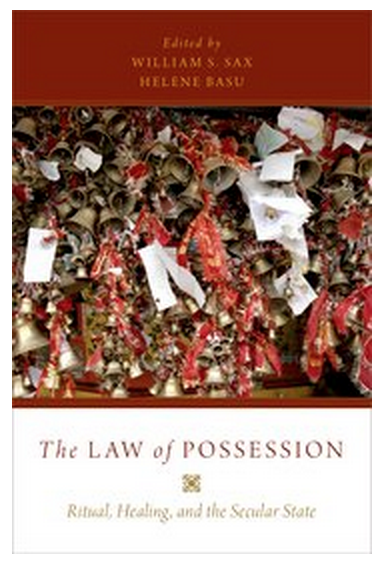
Image via Oxford UP website

Out this November 2015 from Oxford University Press is an edited collection by William S. Sax and Helene Basu entitled The Law of Possession: Ritual, Healing, and the Secular State. The text presents both contemporary and historical case studies of the relationship between spiritual conflict and judicial exchanges across cultures. While rituals to exorcise spirits from the afflicted are typically characterized solely as acts of healing, they are also scenarios in which spirit healers do justice by the possessed by driving out a spirit who has committed an act of evil against the person they inhabit. Spirit possession may similarly provide valuable opportunities for members of a community to contact restless spirits through a human oracle. These otherworldly entities may then offer evidence to the living as to how to avenge or appease them, thereby restoring social harmony. Healing, justice, cosmic order, and religion are thus closely integrated within these culturally meaningful negotiations.

The authors of the text challenge the assumption that these spiritual encounters– which have consequences for both medicine and the law in many societies– are antiquated and do not belong in modern societies or in secular governments. By drawing on examples from East Asia, South Asia, and Africa, the authors assert that spiritual healing and law nevertheless persist in the contemporary age as a way to meet social and religious needs in many cultures.

Learn more about the book (in paperback) by clicking here.

Link to the hardcover copy: https://global.oup.com/academic/product/the-law-of-possession-9780190275747?cc=us&lang=en

About the editors: William Sax teaches at the University of Heidelberg, where he serves as the Chair of Cultural Anthropology at the South Asia Institute. Helene Basu is the director of the Institute of Social Anthropology at Münster University.

Issue Highlight: Vol 39 Issue 3, Suicide in Rural Kenya

When a new issue of Culture, Medicine & Psychiatry is released, we feature a series of blog posts that highlight these latest publications in our journal. The current September issue includes articles that address psychiatric conditions and the experiences of people with mental illness across cultures. Readers may access the full issue at Springer here: http://link.springer.com/journal/11013/39/3/page/1. In this issue highlight, we will discuss an article on ethnographic analyses of suicide and distress amongst three communities in northern Kenya.


cards3

Suicide in Three East African Pastoralist Communities and the Role of Researcher Outsiders for Positive Transformation: A Case Study

Bilinda Straight, Ivy Pike, Charles Hilton, and Matthias Oesterle – Pages 557-578

http://link.springer.com/article/10.1007/s11013-014-9417-4

The authors of this article strive to establish a nuanced and ethnographically rich understanding of suicide and mental distress in an under-studied population of three distinct, yet interacting, pastoral communities in northern central Kenya. These three groups– the Pokot, Samburu, and Turkana– are engaged in intercommunity conflicts over territory and land use agreements, despite the communities’ shared and entangled oral histories. Such tensions are only exacerbated by mutual fear of raids by other groups, dearths in food available for forage, and the theft of livestock from individuals who sell the animals to finance political campaigns. Poverty is likewise aggravated by these patterns of loss and violence.

This turbulent social environment creates widespread mental distress amongst the three communities, yet individuals from each group stressed to the research team that they felt obligated to persevere despite these pressures, making admitting psychological suffering (and especially confessing thoughts about suicide) deeply taboo. Therefore, any mental health intervention would have to be responsive to the extent to which Pokot, Samburu, and Turkana culture disallow individuals from discussing or even thinking about suicide: an act which could create even more social strain on the family of the person who committed it. The researchers confirmed this inability to discuss suicide by the high rates of non-response on a survey question which asked participants whether or not they had experienced suicidal thoughts.

Suicide thus proves to be a unique case for anthropological analysis because it is both driven by the social conditions of those who take their own lives, as well as disruptive to the communities in which these people lived. Its treatment by global health workers must in turn be sensitive to cultural beliefs that forbid conversation about suicide, especially in communities where the death of an individual may contribute to already extraordinary social distress.

Issue Highlight: Vol 39 Issue 3, Maya Mental Disorders in Belize

With each new issue of Culture, Medicine & Psychiatry, we feature a series of blog posts that highlight the latest publications in our journal. This September’s issue includes articles that address psychiatric conditions and the experiences of people with mental illness across numerous cultures. Readers may access the full issue at Springer here: http://link.springer.com/journal/11013/39/3/page/1. In today’s issue highlight, we will examine a study on indigenous nosologies of mental illness amongst the Maya of Belize.


cropped-cards.jpg

Narrative Structures of Maya Mental Disorders

Andrew R. Hatala, James B. Waldram, and Tomas Caal – Pages 449-486

http://link.springer.com/article/10.1007/s11013-015-9436-9

To understand the compatibility of divergent medical traditions, it is first essential to describe how medical systems classify and interpret disorders in particular ways. With this aim in mind, the authors of this ethnographic study sought to develop an picture of indigenous mental illness nosology amongst the Q’eqchi’ Maya of southern Belize. They also asked how this knowledge may alternatively coexist, or compete, with biomedical concepts of suffering.

In order to learn about this indigenous medical epistemology, the authors worked with the Maya Healers’ Association, a professional, self-regulated group of twelve healers who maintain a garden of medicinal plants for research and who strive to reinvigorate traditional medical practice in Belize. Across ninety-four interviews with healers, the authors uncovered four illness categories that the participants used to describe the roots of mental illnesses: “thinking too much,” fright, the day of birth, and spirit “attacks.”

These descriptions are sometimes cross-compatible with DSM-V nosologies, as the researchers discovered that “thinking too much” was also listed as a symptom in biomedical models of mental illness. However, unlike the DSM-V, Maya healers tended to characterize overthinking as a “genre” of illness experience rather than as a discrete symptom. Maya healers also characterize mental illnesses as existing within the heart, the mind, and the spirit: thereby expanding the implications of mental illness beyond brain physiology, the proximate explanation employed by biomedical psychiatry.

The authors conclude that it is essential to understand the similarities in the two nosologies to facilitate collaboration between indigenous and biomedical healers, but add that both groups must also be aware of the differences in classificatory schemes that they use to interpret mental illness. In this way, people with mental disorders in Belize may best receive care that accounts for all of the ways they might seek care and understand their illness across the boundaries of medical systems.

Issue Highlight: Vol 39 Issue 3, Depression & Psychiatry in Iran

With each new issue of Culture, Medicine & Psychiatry, we feature a series of blog posts that highlight the latest publications in our journal. This September’s issue features articles that address psychiatric conditions and the experiences of people with mental illness across cultures. The articles span studies in India, the United States, East Africa, Iran, and Belize. Readers may access the full issue at Springer here: http://link.springer.com/journal/11013/39/3/page/1. In this issue highlight, we will explore the emergence of public discourse about mental illness, suffering, and political struggle in Iran.


cropped-cards.jpg

Writing Prozak Diaries in Tehran: Generational Anomie and Psychiatric Subjectivities

Orkideh Behrouzan – Pages 399-426

http://link.springer.com/article/10.1007/s11013-014-9425-4

Behrouzan’s study began upon noticing young Iranians discussing mental illness in blogs and in public forums in the early 2000s. At the same time, the author examined unpublished public health records maintained by the state, and noticed that there was a sharp rise in the prescription rate of antidepressants in the mid to late 1990s. This pattern correlated with a shift in the understanding of suffering: during the Iran-Iraq war of the 1980s, PTSD and anxiety disorders were considered the most pressing mental health concerns, but these illnesses became supplanted by a shared culture of loss and hopelessness amongst young Iranians in the period following the war.

Unlike the narrative of depression in other places, however, Behrouzan found that the Iranian category of depreshen held deep political meanings. The illness category reflected the condition of those unable to publicly mourn for friends and family who may have been executed as political prisoners, or to process grief about continued political unrest that seemed to have no resolution, or to understand the loss of a parent during wartime as a young child. As one Iranian blogger described, “our delights were small: cheap plastic footballs, cartoons and game cards… But our fears were big: what if a bomb targets our house?” Thus depreshen becomes an experience of suffering that reverberates throughout a generation.

However, Iranian psychiatry responds to this condition outside of its cultural context, and continues to treat depreshen as an individual patient pathology that can be understood in biological terms. By biomedicalizing depreshen in this way without understanding its connection to political struggle, Iranian psychiatry minimizes suffering and “takes away subjects’ abilities to interpret and/or draw on their pain as a political resource.” When we interpret depreshen from the perspective of patients, therefore, we gain a nuanced view of suffering that is at once culturally specific and politically powerful.

Guest Blog: The Autism Spectrum, Anorexia, and Gender

This week on the blog, we are hosting a guest post by Carolyn Smith, MA, a third-year PhD student in medical anthropology at Case Western Reserve University. Carolyn studies the intersections of mental health, eating, and the body, blending biological and cultural approaches. This blog post complements our July 2015 issue on autism, which you can read more about in the links provided at the end of the guest post.


In Autism spectrum disorders: Toward a gendered embodiment model, Cheslack-Postava and Jordan-Young[1] argue the importance of gender theory in understanding the preponderance of male cases with autism spectrum disorders (ASD) in the United States. In addition to evidence of autism as sex-linked, the authors argue that there is evidence as well for biases in diagnosing autism, and that social environment likely plays a role in male susceptibility. The literature on anorexia nervosa offers a parallel argument: anorexia nervosa, like autism, is often described in terms of biological risk factors[2] yet it remains a socially charged, deeply gendered diagnosis. In the USA and other societies with thin female beauty ideals, for instance, anorexia nervosa is most widely attributed to women.[3]

Both anorexia nervosa and ASD are recognized by the American Psychological Association (APA) and have specific criteria. While these categorizations are justifiably scrutinized by medical anthropologists, here I use the APA criteria as a cultural document that reflect what conditions that biomedical practitioners in the United States are cataloguing when they demarcate mental conditions. Anorexia nervosa is an eating disorder characterized as one of the most fatal mental illnesses in the United States.[4] Diagnostic criteria in the Diagnostic and Statistical Manual of Mental Disorders, Fifth Edition (DSM-V) includes restrictive eating and an intense fear of gaining weight/persistent behaviors to prevent weight gain. [5] One key criterion for anorexia is being of low body weight with the absence of any other pathology. The inclusion criteria have changed over the years, as have social ideas about the disorder and who suffers from it. Meanwhile, autism is classified as a neurodevelopmental disorder with social deficits and rigid behaviors.[6] The understandings of autism, like anorexia nervosa, have also changed over time in the United States.
cards3

Yet gendered categories for these conditions persist. In the realm of psychiatric health, autism is assumed to be a male disorder, and anorexia nervosa, a woman’s diagnosis. This simple categorization overlooks the extent to which anorexia and autism are demonstrably comorbid in studies carried out in the USA and the UK.[7] [8] [9] One study from the UK, in fact, found that anorexics, restrictive-type were five times more likely than the general population to score as high on the Autism Questionnaire as someone with an ASD. 9 This finding offers no simple cause-and-effect explanation for how the two disorders are linked. However, this new data suggests that the body, the mind, gender roles, and dieting behaviors may be entwined in ways that resonate with cultural beliefs and categories.

There are competing theories about the etiologies of anorexia as well as autism, each with gendered overtones that do not reflect the findings of associations between the two psychiatric conditions. One theory of autism is that it is linked to a “hypermasculinized” brain.[10] Meanwhile, in a 2012 article for Psychology Today, Maestripieri argues that anorexia may be due to a “hyperfeminine” brain. The two conditions, it seems, appear to be “oppositional.”[11] However, these theories do not capture the wide diversity of cultural perspectives within the USA or UK, meaning there may be unique gendered understandings of psychiatric disorders between social groups that are not accounted for in existing research. In either case, what is clear is that cultural categories of psychiatric conditions in the US and UK may be missing how patients (of any gender, from numerous cultural backgrounds) live and seek care with either condition.

These gendered categories become even more complex for individuals diagnosed as both autistic and anorexic. The comorbidity of ASD and anorexia is complicated by the fact that restrictive dieting in anorexia may lead to cognitive impairment, which subsequently causes behaviors that might be confused with cognitive patterns on the autism spectrum. However, people with anorexia do report having autistic traits prior to the onset of their eating disorder, and people recovering from anorexia appear more often than non-anorexics to fall along the autism spectrum. 6,7 Thus, the two illnesses co-produce one another in ways that cross traditional gender lines (autism as male, anorexia as female) while also making it difficult, if not impossible, to isolate each condition from the other. Here medical anthropologists can offer valuable perspectives from the view of patients, who may describe their eating patterns and body image in terms that span and challenge existing diagnostic divisions.

Though there may be no empirical means to measure the extent to which ASD and anorexia overlap, existing theories about socialization may shed some light on how these two illnesses co-occur. There are numerous common traits between anorexia nervosa and ASD, including perfectionism, social withdrawal, and obsessive thinking.6 Girls and women with anorexia appear to have other similar traits to boys and men with autism: systematizing, a fascination with details, and resistance to change. Anorexic individuals with these autistic traits, Baron-Cohen hypothesizes, could become fixated on the systemic relationships behind body weight, shape, and food intake.[12]Of course, this would depend on whether or not the person with autism was brought up in a cultural environment where food intake and body shape are viewed as something that can and should be regulated at all. Here is where socialization may play a crucial role in the development of anorexia nervosa out of behavioral patterns attributed most often to autism.

The comorbidity of ASD and anorexia nervosa presents an anthropologically complex case where discrete classifications of mental illness may not reflect the connectedness of the two conditions. Likewise, the gendering of each illness as dualistic male-autistic and female-anorexic overlooks the extent to which the conditions share behaviors, tendencies, and thought patterns. Though national clinical studies in the USA and the UK suggest a connection between autism and anorexia, cultural readings of gender, eating, and self-regulation amongst patients with comorbid cases might better illuminate how these conditions manifest on the local scale, and between cultural groups.


Additional Reading

Publications:

Jaffa, T., Davies, S., Auyeung, B., Allison, C., & Wheelwright, S. (2013). Do girls with anorexia nervosa have elevated autistic traits. Mol Autism, 4(1), 24.

Nilsson, E. W., Gillberg, C., Gillberg, I. C., & Raastam, M. (1999). Ten-year follow-up of adolescent-onset anorexia nervosa: personality disorders. Journal of the American Academy of Child & Adolescent Psychiatry, 38(11), 1389-1395.

Oldershaw, A., Treasure, J., Hambrook, D., Tchanturia, K., & Schmidt, U. (2011). Is anorexia nervosa a version of autism spectrum disorders?. European Eating Disorders Review, 19(6), 462-474.

Websites: 

ASD and Autism

https://www.psychologytoday.com/blog/games-primates-play/201208/the-extreme-female-brain

http://www.medicalnewstoday.com/articles/264666.php

https://books.google.com/books?hl=en&lr=&id=iPGFAgAAQBAJ&oi=fnd&pg=PR10&dq=malson+the+thin+woman&ots=sQPGnzOFN1&sig=ZSv8OMyuNAFQ3UgBOWZTEX5lHAg#v=onepage&q=malson%20the%20thin%20woman&f=false

CMP Special Issue Features: July 2015 Issue on Autism

https://culturemedicinepsychiatry.com/2015/07/08/special-issue-highlight-the-anthropology-of-autism-part-1/

https://culturemedicinepsychiatry.com/2015/07/22/special-issue-highlight-the-anthropology-of-autism-part-2/

https://culturemedicinepsychiatry.com/2015/08/05/autism-in-brazil-and-italy-two-cases-from-the-june-2015-special-issue/


References Cited

[1] Cheslack-Postava, K., & Jordan-Young, R. M. (2012). Autism spectrum disorders: toward a gendered embodiment model. Social science & medicine, 74(11), 1667-1674. “Our argument is fully biosocial, and our main points in advancing it are to articulate a model for autism, specifically for explaining the male-female disparities in prevalence, that does not exclude social environmental variables, and is therefore more biologically satisfying; and to demonstrate concrete mechanisms whereby autism may become more prevalent in males as a result of social structures and processes related to gender (p. 1673).”

[2] Bulik, C. M., Slof-Op’t Landt, M. C., van Furth, E. F., & Sullivan, P. F. (2007). The genetics of anorexia nervosa. Annu. Rev. Nutr., 27, 263-275.

[3] Malson, H. (2003). The thin woman: Feminism, post-structuralism and the social psychology of anorexia nervosa. Routledge.

[4] Arcelus J, Mitchell AJ, Wales J, Nielsen S. Mortality Rates in Patients With Anorexia Nervosa and Other Eating Disorders: A Meta-analysis of 36 Studies. Arch Gen Psychiatry. 2011;68(7):724-731.

[5] IBD

[5] IBD

[6] American Psychiatric Association. (2013). Diagnostic and statistical manual of mental disorders: DSM-5 (5th ed.).

[7] Zucker, N. L., Losh, M., Bulik, C. M., LaBar, K. S., Piven, J., & Pelphrey, K. A. (2007). Anorexia nervosa and autism spectrum disorders: guided investigation of social cognitive endophenotypes. Psychological bulletin, 133(6), 976.

[8] Nilsson, E. W., Gillberg, C., Gillberg, I. C., & Raastam, M. (1999). Ten-year follow-up of adolescent-onset anorexia nervosa: personality disorders. Journal of the American Academy of Child & Adolescent Psychiatry, 38(11), 1389-1395.

[9] Baron-Cohen., Jaffa, T., Davies, S., Auyeung, B., Allison, C., & Wheelwright, S. (2013). Do girls with anorexia nervosa have elevated autistic traits. Mol Autism, 4(1), 24.

[10] Baron-Cohen, S. (2002). The extreme male brain theory of autism. Trends in cognitive sciences, 6(6), 248-254.

[11] Maestripieri, D. (2012 August 23). The Extreme Female Brain: Where eating disorders really come from. Psychology Today. Retrieved from https://www.psychologytoday.com “Therefore, just like Autism Spectrum Disorders may be the product of the combination of the extremely high systemizing and low empathizing tendencies that characterize the extreme male brain, eating disorders may be a manifestation of high negative evaluation anxiety that originates from the combination of the extremely high empathizing and low systemizing characteristics of the extreme female brain.”

[12] (2013 August 10). Anorexia and autism – are they related? Medical News Today. Retrieved from http://www.medicalnewstoday.com

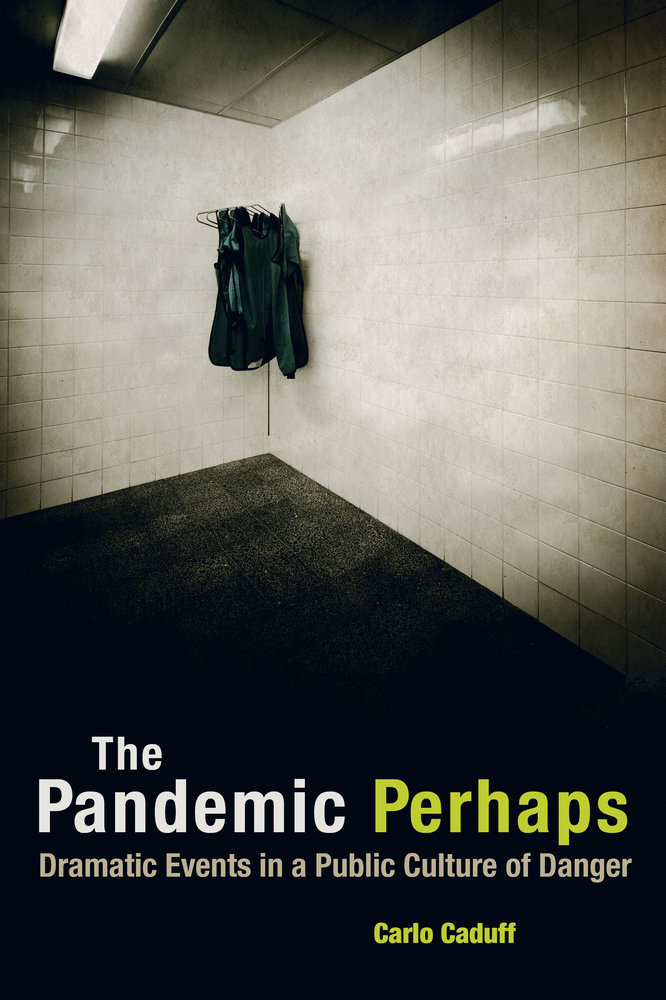
Book Release: Carlo Caduff’s “The Pandemic Perhaps”

Image via UC Press site

Image via UC Press site

Released this August 2015 from University of California Press is Carlo Caduff’s The Pandemic Perhaps: Dramatic Events in a Public Culture of Danger. In the text, Caduff focuses on alerts in 2005 posted by American experts about a deadly, approaching influenza outbreak. These urgent messages warned that the outbreak would have crippling effects on the economy and potentially end the lives of millions of people. Even though this potentially-catastrophic outbreak ultimately never occurred, preparedness efforts for the slated pandemic carried on.

The text is the product of anthropological fieldwork carried out amongst public health agents, scientists, and other key players in New York City surrounding the influenza scare. Caduff demonstrates how these figures framed the potential outbreak, and how they sought to capture the public’s attention regarding the disease. The book grapples with questions about information, perceived danger, and the meaning of safety in the face of large-scale epidemics. Likewise, Caduff examines how institutions and individuals come to cope with the uncertainty of new outbreaks.

The book will be of interest to cultural medical anthropologists as well as epidemiologists and scholars in public health. Caduff’s work will no doubt shed a timely new light on the way that the threat of epidemics shapes health policy and public perceptions of disease and security.

Caduff is Lecturer in the Department of Social Science, Health, and Medicine at King’s College London. His research addresses the anthropology of science, technology, and medicine, as well as issues surrounding knowledge, expertise, safety, and disease.


For more information on the book, visit the publisher’s website here: http://www.ucpress.edu/book.php?isbn=9780520284098

From the Archive: Witchcraft and Healing in the Colonial Andes, 16th-17th Centuries

In our “From the Archive” series, we revisit articles published throughout the journal’s history, and explore the meaning of these publications for contemporary issues in medical anthropology, medical humanities, and social medicine. This week, we explore Irene Silverblatt’s December 1983 article “The evolution of witchcraft and the meaning of healing in colonial Andean society.”cropped-cropped-2009cover-copy1.jpg

Silverblatt writes that while the Spanish conquistadors were laying claim to land and peoples in South America in the 16th and 17th centuries, their countrymen in Spain were in the throes of the Spanish Inquisition. Traditional healers (most often women) were tortured and killed as agents of the devil. These healers were assumed to either mask deadly curses in the form of cures, or to have received their healing knowledge from a diabolical pact. Rather than leaving this battle against traditional healing at home in Europe, the Spanish conquistadors carried the legacy of the Inquisition with them across the world, imposing similar religious restrictions on traditional healers in the societies they conquered by holding Inquisition-style court hearings.

European cosmologies, based intensely on the dualistic struggle between good and evil, did not evenly graft onto the Andean worldview. In the Peruvian Andes, where Silverblatt focuses her paper, women were not considered morally inferior to men and more susceptible to evil; likewise, native Andean models of disease viewed illness as the result of an imbalance between the individual, society, and supernatural forces, rather than caused directly by evil spirits. Andean healers thus served as both priests (who placated the spirits to seek balance in the universe) and as healers (who treated the individual sufferer with herbs or medicines.) Their treatments relied on the connectedness between the community, spirits, and the healers themselves.

Yet throughout the 16th century, in the period of Spanish colonization, exposure to Christian mythology and cosmology led these healers to view their practice differently. By the 17th century, Andean healers tried by Spanish inquisitors confessed to dreams and visions wherein they received recipes for herbal medicines from the spirits. The devil in these accounts, though, took on particular forms: that of the Christian saint Santiago (the patron of Spain), as tiny angels (also Christian entities), men dressed in cloaks, or as snakes. The latter proved the closest form of Satan to appear in the Spanish religious canon, but these spirits were scarcely the hideous, bestial demons known to Spanish lore. Indeed, Silverblatt posits that the healers envisioned Saint Santiago as their spiritual contact because they fashioned him as another form of the Thunder God, a native figure representing conquest who could also ward off diseases caused by sorcery.

Throughout the primary legal documents that Silverblatt reviews, the healers also argued that the spirits– even when described as malignant– served them equally to help and to cause harm. The spirits were not agents of evil alone in their stories. These confessions suggest that the Andean relationship to spirits in the Christian narrative remained connected to their native ideology of cosmological balance and harmony, wherein the spirits could be responsible for imbalance or harmony. In this fashion, traditional healers on trial resisted traditional Spanish notions of devil-worship, while simultaneously asserting the validity of their own indigenous notions of spiritual and social balance within healing.

Silverblatt’s piece contains a valuable lesson for continued inquiry into colonialism and neocolonialism. She invites us to analyze colonization as a dialectical relationship between colonizers and the colonized, and consider the way that the tensions between these two populations’ ideologies come to create novel cosmologies, beliefs, and perspectives. Likewise, she suggests that the authority of a medical system is tightly woven into the social and political worlds in which it is practiced. Silverblatt similarly concludes that rather than reading colonial threats towards indigenous medicines as hegemonic, we discover much more by locating the resistance of native healers to newly-introduced ideas about healing, and by analyzing the ways that they integrate foreign beliefs into their outlook on medical practice.


To access the full article through Springer, click here: http://link.springer.com/article/10.1007/BF00052240