Book Release: Sharon R. Kaufman’s “Ordinary Medicine”

Via the Duke UP website

Via the Duke UP website

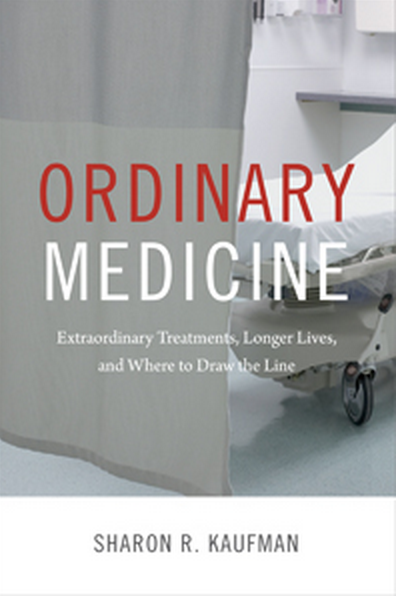
In May 2015, Sharon R. Kaufman’s book Ordinary Medicine: Extraordinary Treatments, Longer Lives, and Where to Draw the Line is set to be released by Duke University Press. The text will address the contested division between what is a life-saving therapy and what proves to be over-treatment of older patients. This divide, Kaufman states, is frequently negotiated by pharmaceutical, biomedical, and insurance industries. Treatments that might seem aggressive or unnecessary to address late-life health concerns have become common procedures.

Drawing on ethnographic accounts from older patients, their families, and their physicians, Kaufman demonstrates how patients and their caregivers decide how much medical intervention is enough, or when it has gone too far. Kaufman considers what this new, medicalized meaning of the “end-of-life” means for patients and for the social world of medicine, while inviting us to consider how we might refresh the goals of medicine when caring for older patients.

Kaufman has previously published on a related topic in her book And a Time to Die: How American Hospitals Shape the End of Life. She is the Chair of the Department of Anthropology, History and Social Medicine at the University of California, San Francisco.

See more about the book from the publisher’s website here:

https://www.dukeupress.edu/Ordinary-Medicine/index.html

A Few Words from the AAA 2014 Meeting

This week, many of our readers (and staff members here in the office of Culture, Medicine, and Psychiatry) are attending the American Anthropological Association’s annual meeting in Washington, DC. For those of you presenting, we wish you the best of luck in delivering thoughtful and productive presentations. To all attendees, we hope you have pleasant travels to the nation’s capital, and return from the conference with new knowledge and fresh ideas.

via Wikimedia Commons

via Wikimedia Commons

Much like conferences in our field, CMP social media is a common space for intellectual inquiry about contemporary issues in anthropology. In the spirit of building this communal space electronically, we now invite our followers to submit approximately 500-word blog entries– ranging from brief commentaries on a research project, recent presentation, or reflections on topics in medical anthropology, medical humanities, and social medicine– to be considered for our blog.

We ask that submissions to the blog be widely accessible to readers across anthropology and the humanities: from advanced undergraduate students, graduate students, professors, as well as applied practitioners and interdisciplinary researchers. Accepted pieces will be posted here and shared via our Twitter account. This is an opportunity to showcase your work to new audiences and to gain valuable insight into producing widely accessible, digital scholarship. Please direct your submissions to Julia Balacko at jcb193@case.edu.

Thank you for following CMP social media. We look forward to receiving your guest blog submissions and hearing more from you about exciting new research from the AAA Annual Meeting.

Best Wishes,

The CMP Editorial Staff

AAA 2014: Sessions on Biotechnology and Medical Practice

For our readers attending the American Anthropological Association annual meeting this year, we’ve put together a second selected list of sessions on anthropological approaches to biotechnology and forms of medical practice. The following selection of sessions was drawn from this year’s AAA online presentation schedule for the 2014 annual meeting, to be held this year in Washington, DC from December 3-7th (for more information, click here: http://www.aaanet.org/meetings).

Wednesday, December 3rd

Reproductive Potentialities: Assisted Reproductive Technologies and the Imagination of Possible Futures

8:00pm-9:45pm

https://aaa.confex.com/aaa/2014/webprogram/Session11643.html

Thursday, December 4th

Techniques and Technologies of Global Health

9:00am-10:15am

https://aaa.confex.com/aaa/2014/webprogram/Session11699.html

What Constitutes Medical Knowledge?: Part 2 of a Discussion of Affliction by Veena Das

11:00am-12:45pm

https://aaa.confex.com/aaa/2014/webprogram/Session10870.html

Saturday, December 6th

Producing Intercultural Discourse in the Clinical Encounter, Part 2

2:30pm-4:15pm

https://aaa.confex.com/aaa/2014/webprogram/Session12505.html

Revisiting Midwifery: New Approaches to an Old Profession

6:30pm-8:15pm

https://aaa.confex.com/aaa/2014/webprogram/Session11410.html

Ordering, Morality, and Triage: Producing Medical Anthropology Beyond the Suffering Subject – Part 1: Biomedical Interventions and Failings

6:30pm-8:15pm

https://aaa.confex.com/aaa/2014/webprogram/Session11357.html

Sunday, December 7th

Doctors: Influencing and Being Influenced by Their Work and Subject

10:00am-11:45am

https://aaa.confex.com/aaa/2014/webprogram/Session12929.html

From the Archive: Caregiving and Dementia in Urban India

In the “From the Archive” series, we will highlight articles published throughout the journal’s history. We look forward to sharing with our readers these samples of the innovative research that CMP has published on the cultural life of medicine across the globe.
cards3

Recently, one of our readers on the Culture, Medicine, and Psychiatry Twitter account requested that our next “From the Archive” post address an aspect of aging and community. In the spirit of the reader’s suggestion, this week we are featuring a 2008 article by Bianca Brijnath and Lenore Manderson entitled “Discipline in Chaos: Foucault, Dementia and Aging in India.” (you can find out more about the article here: http://link.springer.com/article/10.1007/s11013-008-9111-5.)

The authors posit that caregivers for those with dementia are important providers of structure: they are responsible for the patient’s hygiene, diet, and medical needs, as well as accountable for the actions of people who, experiencing symptoms of dementia, sometimes act out in ways which are not consistent with public cultural norms. Typically in India, such care falls into the hands of younger relatives. Domestic caregiving by these family members “prevents the demented body from threatening the stability of the social body.” There are tremendous “social anxieties,” the authors write, surrounding the potential for someone with dementia to resist normative behaviors per the local codes of social life.

The Foucauldian stream of thought here is quite present: the caregiver must “discipline” the body of the dementia patient to reinforce the cultural codes of the society in which both actors live. Although there exists the notion of seva, or the submission of younger relatives to the direction and advice of older relatives, this idea of the respected and powerful elder is complicated in the face of dementia where the power to attend to another person is rather reversed. Instead of being disciplined by the familial patriarchs or matriarchs, younger relatives must both discipline the elder who is unable to provide the social structure for themselves, as well as their own bodies by taking on new routines and practices to accommodate their family member with the illness.

Power, however, is still bi-directional: those with dementia have extraordinary power in altering the routines of their familial caregivers, and even act out violently: the authors note they may “kick, hit, punch, bite, and threaten with a weapon” when they are upset, and are not necessarily expected to limit these actions on their own due to their condition. The transactions of power, agency, and authority in these relationships are resonant with similar social exchanges as explored via the Foucauldian lens in other Western settings.

Brijnath and Manderson’s piece highlights important features in the care of dementia patients, and demonstrates that community-based models of caregiving for the elderly are not as simple as the removal of power from the elderly individual and the installation of authority in the caregiver. The caregiver, too, is both self-disciplined and disciplined by the acting out of their ward.

AAA 2014: Sessions on Psychiatry, Mental Illness, and Drugs

For our readers attending the American Anthropological Association annual meeting this year, we’re featuring a list of sessions sure to pique your interest in various aspects of mental illness, health, drugs, and psychiatric care. The following selection of sessions was drawn from this year’s AAA online presentation schedule for the 2014 annual meeting, to be held this year in Washington, DC from December 3-7th (for more information, click here: http://www.aaanet.org/meetings). Sessions in the list are organized by chronological date and time.

If you would like your session to be added to this list, please email a link to the session description on the AAA website to: jcb193@case.edu.

Global Mental Healthcare: Challenges, Controversies and Innovations

Wednesday, December 3rd 2pm-3:45pm

http://aaa.confex.com/aaa/2014/webprogram/Session12926.html

“Global” Knowledge, “Local” Care, and Subjectivity: Producing an Anthropology of Psychosis

Wednesday, December 3rd 2pm-3:45pm

http://aaa.confex.com/aaa/2014/webprogram/Session11392.html

Psyche and the Brain in the 21st Century

Wednesday, December 3rd 4pm-5:45pm

http://aaa.confex.com/aaa/2014/webprogram/Session11636.html

Transcendance and the Everyday in Responses to Trauma

Thursday, December 4th 2:30-4:15pm

http://aaa.confex.com/aaa/2014/webprogram/Session11838.html

What Drugs Produce

Saturday, December 6th 9am-10:45am

http://aaa.confex.com/aaa/2014/webprogram/Session11124.html

Psychological Disorder and Subjectivity in Socio-Political Context

Saturday, December 6th 11am-12:45pm

http://aaa.confex.com/aaa/2014/webprogram/Session12768.html

Ordering, Morality and Triage: Producing Medical Anthropology Beyond the Suffering Subject Part 2: Mental Health and Illness

Saturday, December 6th 2:30pm-4:15pm

http://aaa.confex.com/aaa/2014/webprogram/Session11809.html

Professional Perspectives in the Anthropology of Drugs

Saturday, December 6th 6:30pm-8:15pm

http://aaa.confex.com/aaa/2014/webprogram/Session11263.html

Publication Highlight: “Online First” Articles (Oct 2014), Part Two

Welcome to the second installment of this series. The following collection of articles are from our “Online First” file at our publisher’s website: http://link.springer.com/journal/11013. The full text of these articles will be released in upcoming issues of Culture, Medicine, and Psychiatry, but here we’d like to lend our readers a glimpse into the innovative research in medical anthropology and social medicine that the journal publishes.

Clicking the title of each paper will send you to the “Online First” page for each article, including a full list of authors and abstracts.

cropped-cropped-2009cover-copy1.jpg

Confinement and Psychiatric Care: A Comparison Between High-Security Units for Prisoners and for Difficult Patients in France

Livia Velpry & Benoît Eyraud

Learning Constraint. Exploring Nurses’ Narratives of Psychiatric Work in the Early Years of French Community Psychiatry

Nicolas Henckes

The Ethics of Ambivalence and the Practice of Constraint in US Psychiatry

Paul Brodwin

Between Jewish Settlers and Palestinian Citizens of Israel: Negotiating Ethno-national Power Relations Through the Discourse of PTSD

Keren Friedman-Peleg

Book Release: Paul Stoller’s “Yaya’s Story: The Quest for Well-Being in the World”

9780226178790

Image from UC Press website

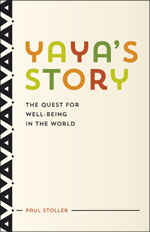
Out this month from the University of Chicago Press is Paul Stoller’s book Yaya’s Story: The Quest for Well-Being in the World. The text traces the author’s friendship with a Songhay trader from Niger named Yaya Harouna: a man who moved to the United States as Stoller, an anthropologist, had likewise made a journey from the USA to Africa as a Peace Corps volunteer. Their story begins whenever Stoller meets Yaya selling artwork in an African market in New York City’s Harlem neighborhood, where Stoller carried out research.

Although the men’s histories are markedly different, they become close after the two are each diagnosed with cancer: this serves as the heart of Yaya’s Story, and the experience upon which the two men’s culturally divergent, yet not entirely dissimilar, narratives cross paths. With extensive publications in the genres of both ethnography and memoir, Stoller is certain to blend keen anthropological insight with deeply personal accounts of human suffering, endurance, and resilience in the face of illness across cultures in his latest book.

Stoller, Professor of Anthropology at West Chester University, is a 1994 winner of a Guggenheim Fellowship and the 2013 recipient of the prestigious Anders Retzius Gold Medal in Anthropology from the King of Sweden.

You can find out more about the book here, at the UC Press website:

http://www.press.uchicago.edu/ucp/books/book/chicago/Y/bo18882897.html

Publication Highlight: “Online First” Articles (Oct 2014), Part One

The following collection of articles are from our “Online First” file at our publisher’s website: http://link.springer.com/journal/11013. The full text of these articles will be released in upcoming issues of Culture, Medicine, and Psychiatry, but here we’d like to lend our readers a glimpse into the innovative research in medical anthropology and social medicine that the journal publishes.

Clicking the title of each paper will send you to the “Online First” page for each article, including a full list of authors and abstracts.

cards

A Village Possessed by “Witches”: A Mixed-Methods Case–Control Study of Possession and Common Mental Disorders in Rural Nepal

Ram P. Sapkota, et al

Practicing and Resisting Constraint: Ethnography of “Counter Response” in American Adolescent Psychiatric Custody

Katherine Hejtmanek

The Invisibility of Informal Interpreting in Mental Health Care in South Africa: Notes Towards a Contextual Understanding

Leslie Swartz & Sanja Kilian

Learning Disabilities’ as a ‘Black Box’: On the Different Conceptions and Constructions of a Popular Clinical Entity in Israel

Ofer Katchergin

From the Archive: Biomedicine, Chinese Medicine, and Psychiatry

In the “From the Archive” series, we will highlight articles published throughout the journal’s history. We look forward to sharing with our readers these samples of the innovative research that CMP has published on the cultural life of medicine across the globe.

cards3

At the journal, we often present fascinating work on psychiatric care throughout the world, including Joshua Breslau’s 2001 article “Pathways through the Border of Biomedicine and Traditional Chinese Medicine: A Meeting of Medical Systems in a Japanese Psychiatry Department” (volume 25 issue 3.) 

In this piece, Breslau recounts stories of the two medical systems interacting during a meeting of clinicians employing, to varying degrees, traditional Chinese medicine (TCM) alongside biomedical interventions within a Japanese psychiatric department. The author asserts that Japan is perhaps the most common ground for the two medical systems to meet, and that it represents the “traffic” of medical knowledge between Japan, the Asiatic mainland, and the rest of the world. Indeed, Japan has had a lengthy history of exchange with foreign medical systems,beginning with the 18th-century import of anatomy textbooks from Holland. Combined with expanded trade with “the West” in the 19th century and the later resurgence of local Japanese interest in Chinese herbal remedies during the 1970s, we see that the two medical systems have both held a prominent position in the dynamic medical landscape in Japan.

Breslau observes that the two medical systems complement one another most strikingly in psychiatry, where kanpo (herbal treatments) are used both to diminish the uncomfortable side effects of psychoactive medications and to treat conditions for which there are few biomedical interventions. Exemplifying this blended approach to care, the author notes that Dr. Nakai, professor of psychiatry at Kobe University, examines the tongue to diagnose his patients. This method of diagnosis has its roots in TCM, and was taught to Dr. Nakai from a visiting Chinese student; many such Chinese students, having studied TCM, go to Japan to learn “Western medicine.” Although there is little formal education in TCM available in Japan, these interpersonal (and intercultural) exchanges are important mechanisms for sharing diverse medical techniques.

Another physician, Dr. Song, initially specialized in the use of acupuncture to treat psychiatric patients in China. Breslau theorizes that although it seems anomalous for traditional medicine to find a niche in conditions that generally fall under the scope of biomedicine, Dr. Song’s work is a productive blend of psychiatric treatments from both medical systems. Whereas patients in the Chinese biomedical settings were admitted alone, patients and their families stayed together in the TCM centers for mental health, thereby offering a support network that the biomedical patients lacked. In Japan, Dr. Song combined TCM and biomedical approaches. She established an “open ward” psychiatric unit that welcomed patients and their families, and employed both pharmaceutical and herbal remedies depending on the severity and the stage of psychiatric distress suffered by the patient.

Breslau’s piece reminds us of the complicated ways in which cultures are in contact with one another. Rather than reading medicine in China and Japan as a contest, where biomedicine and traditional Chinese medicine are at odds in the race to be deemed “most effective,” it is more accurate to describe the ways that the systems are in dialogue– often in the same clinical settings.

You can find the contents of the full issue in which Breslau’s article is published here: http://link.springer.com/journal/11013/25/3/page/1

News: AAA Forms Task Force on the Israeli-Palestinian Conflict

The American Anthropological Association (AAA) has recently formed a task force that will examine implications of the conflict between Israel and Palestine for the anthropological community: including forming potential stances that the organization could take on issues that might impede upon scholarly inquiry surrounding the conflict.

Members of the task force, appointed by current AAA president Monica Heller, could profess no public opinion about the political nature of the conflict. They were each required to have a subject matter background pertinent to analyzing the conflict at hand.[i]

Logo of the AAA from Wikimedia Commons

Logo of the AAA from Wikimedia Commons

The AAA website notes that the task force members will investigate “the uses of anthropological research to support or challenge claims of territory and historicity; restrictions placed by government policy or practice on anthropologists’ academic freedom; or commissioning anthropological research whose methods and/or aims may be inconsistent with the AAA statement of professional responsibilities.”[ii] Beyond studying what effects the conflict has on anthropological research and scholarship, the task force will also make recommendations on whether or not the AAA should take a stance on issues unveiled by the report.

In describing the task force goals, the AAA website also notes that it is possible that no stance will be taken on problems raised in the findings—but that any position the organization takes must be substantiated by “neutral overviews” of the argument in favor of a particular stance.

An article about the task force posted earlier this year on the Anthropology News website—operated by the AAA—noted that anthropologists, “have an opportunity here to develop modes of mutually respectful exchange on controversial anthropological topics that will serve us well now and in the future.”[iii]

Although the task force will meet in person during the Annual Meeting in December to discuss these concerns, their findings will not be available in a complete written report until October 2015.


[i] https://www.insidehighered.com/quicktakes/2014/09/09/anthropology-group-creates-task-force-israeli-palestinian-conflict

[ii] http://www.aaanet.org/cmtes/commissions/Task-Force-on-AAA-Engagement-on-Israel-Palestine.cfm

[iii] http://www.anthropology-news.org/index.php/2014/04/30/towards-an-informed-aaa-position-on-israel-palestine/