Interview With Burcu Mutlu

The next few months we’ll be highlighting authors who have published in Culture, Medicine, and Psychiatry.
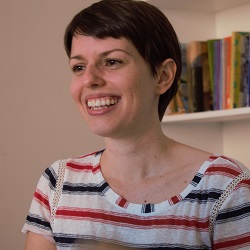
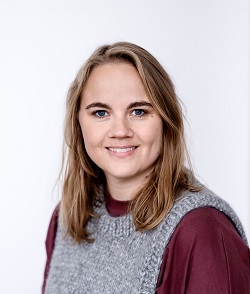
Burcu Mutlu is an assistant professor in the Department of Humanities and Social Sciences at Özyeğin University. She completed my Ph.D. in 2019 in History, Anthropology, and Science, Technology & Society at MIT. She has published on trans/national politics of assisted reproductive technologies, reproductive labor, abortion politics, reproductive justice, and migration.

What is your article “Between Solidarity and Conflict: Tactical Biosociality of Turkish Egg Donors” explores the complex and ambivalent aspects of Turkish egg donors” about?

My article explores the complex and ambivalent aspects of Turkish egg donors’ involvement in transnational egg donation between Turkey and Northern Cyprus. The article drew on ethnographic fieldwork and interviews I conducted with Turkish egg donors at a private Northern Cypriot fertility clinic from November 2014 until January 2016. In this article, I investigate how young Turkish women tactically manage social relations and orient themselves in this morally ambivalent and precarious bioeconomy of egg donation. To do so, I particularly focus on possibilities of cooperation and conflict among egg donors who are part of a specific form of biomedical sociality. I argue that cross-border egg donation retains both gendered moral and economic concerns for these young women that must be tactically negotiated not only to protect this new (clandestine) realm of financial opportunity but also to navigate the wider context of heteropatriarchal sexual culture and restrictive reproductive biopolitics.

Tell us a little bit about yourself and your research interests.

I completed my Ph.D. in 2019 with a dissertation entitled “Transnational Biopolitics and Family-Making in Secrecy: An Ethnography of Reproductive Travel from Turkey to Northern Cyprus.” In the dissertation, I investigated the transgressive cross-border reproductive travels between Turkey and Northern Cyprus that are stimulated by legal restrictions in Turkey, from a cultural anthropological and feminist STS perspective. I obtained my B.A. degree in Political Science and International Relations from Marmara University and my M.A. degree in Sociology from Boğaziçi University. Currently I am working on informal breast milk sharing practices via online platforms in times of politicized reproduction and a global pandemic. My research areas include: anthropology of reproductive technologies and biobanking; medical anthropology; feminist science & technology studies; family, kinship and gender; and transnational mobilities.

What drew you to this project?

My research interest in cross-border gamete donation is related to my M.A. project. In my thesis, I examined the local practice of assisted reproduction as a global biotechnology and its reflections on the lives and bodies of married heterosexual Turkish women (since assisted reproduction is only accessible to married heterosexual couples using their own gametes) as an intimately gendered and embodied reproductive experience. For the thesis, I conducted semi-structures interviews with married Turkish women as past or current fertility patients, and I also collected and discursively analyzed a variety of ethnographic materials including legal documents, religious discourses, economic policies, and media representations corcerning IVF in Turkey. I found that the “appropriate” and “inappropriate” forms of assisted reproduction are simultaneously configured in and through these local socio-technical articulations within and beyond the labs and clinics; transnational gamete donation thus emerges as a site of “reproductive excess” that is left outside the sphere of legality.

In my M.A. project, I investigated complex socio-technical processes that produce this excess in Turkey, with particular focus on the “appropriate” uses of assisted reproduction. In my PH.D. study, I studied this excess itself, by particularly focusing on the clandestine network of transnational gamete donation between Turkey and Northern Cyprus that includes the circulation of recipient couples, gamete donors, medical experts and technology, expertise, and capital. My article on Turkish egg donors resulted from this wider disseration project.

What was one of the most interesting findings?

I found interesting that although most Turkish egg donors I talked to said that they would support the legalization of egg donation in Turkey for recipients, they did not want donating eggs to be legally permissible for donors owing to their suspicions about the health sector in the country as well as their concerns about the possibility of higher competition (and therefore lower payment) among egg donors. So, they were willing to keep this new realm of financial opportunity secret, while undertaking all risks involved.  

What are you reading, listening to, and/or watching right now?

Recently I am watching Pantheon, animated sci-fi TV series on uploaded intelligence. It raises interesting questions on what it means to be human, how the boundaries between life and death get blurred beyond the limits of corporeality, and what social, economic, political, and intimate implications technologies have for both individuals and wider society. I also enjoy reading short stories by Turkish writers and my recent favorites are Melisa Kesmez, Aylin Balboa and Burçin Tetik. Finally, I would like to mention a podcast that I recently discovered on the weather changers/ weather modification on BBC (https://www.bbc.co.uk/programmes/p0ddvpy2?utm_source=aposto ), thanks to Zappa Zamanlar, a blog curated by two Turkish sociologists, Biray Kırlı and Zafer Yenal from Boğaziçi University.

If there was one takeaway or action point you hope people will get from your work, what would it be?

One takeaway or action point people can get from my work would be to criticize and challenge states’ efforts of criminalizing or banning gamete donation that drive such practices further underground within and beyond the national borders and put both recipients and donors at risk for victimization and exploitation. Bottom-up efforts or regulations are needed that would not only guarantee safe medical practice but also address underlying social processes and inequalities, with a critical perspective that accurately captures diverse voices and experiences of involved actors.


Other places to connect:
Website
Academia.edu

Interview with Neil Krishan Aggarwal

The next few months we’ll be highlighting authors who have published in Culture, Medicine, and Psychiatry.

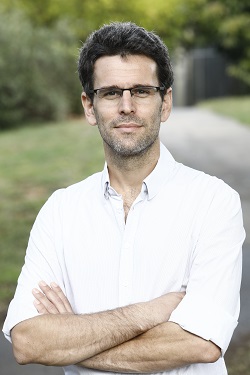
Neil Krishan Aggarwal is an Assistant Professor at Columbia University. He is a cultural psychiatrist and social scientist. His research focuses on translating anthropological theories for clinical use and the cultural analysis of mental health knowledge and practices. 

What is your article “The Evolving Culture Concept in Psychiatric Cultural Formulation: Implications for Anthropological Theory and Psychiatric Practice” about?

“Social scientists debate what terms like “culture” mean. This article traces how the term “culture” has been defined in editions of the psychiatric classification manual known as the Diagnostic and Statistical Manual of Mental Disorders (DSM). It explores similarities and definitions in these definitions.

Tell us a little bit about yourself and your research interests.

“I come from a racially, ethnically, linguistically, and religiously minoritized community in the United States. I’ve had to face people’s implicit and explicit biases about me based on my appearance. Therefore, I’m interested in how people generally make interpretations about others. We all make interpretations in everyday life, such as students rating professors, customers rating businesses, or people deciding which way to swipe on dating apps. Anthropologists have long pointed out that psychiatrists also make interpretations about patients through acts of diagnosis. This perspective informs my research interests in cultural psychiatry, cultural psychology, and psychiatric anthropology.”

What drew you to this project?

“I’ve spent the past 15 years trying to encourage mental health professionals to think of their work as fundamentally cultural, beyond just attending mandatory cultural competence trainings. I believe that my colleagues in anthropology have conversations that my colleagues in mental health benefit from hearing. Every revision to the DSM is an opportunity to explore the current state of cultural assumptions regarding mental health knowledge and practice. When DSM-5-TR came out in 2022, I saw this as a timely opportunity.”

What was one of the most interesting findings?

“The model of culture in the DSMs is different from other models that could change clinical practice. The DSM model assumes that providers can ask patients about their identities, that culture resides in the minds of patients. But a model of culture that looks at how patients and clinicians interact allows us to discover how patients and clinicians create culture during appointments.”

What are you reading, listening to, and/or watching right now?

“I just finished reading this brilliant article by the black queer scholar Keguro Macharia titled “On Being Area Studied.” As one of the few brown men in my departments, I haven’t been equally accepted as a peer, so I’ve been re-reading Frantz Fanon and trying to imagine how he has felt.

I’ve been exalting in the 50th anniversary of hip-hop this year. No other popular art form provides more incisive social commentary about what it’s like to transcend social marginaliztion as a minoritized individual. I just saw DJ Premier in concert this week, and I’ve been inspired to rediscover the poetry of artists like KRS-One, Rakim, Nas, Biggie Smalls, Q-Tip, Jay-Z, and other greats. I’ve also been jamming to AP Dhillon, Gurinder Gill, Shinda Kahlon, and Karan Aujla on the Punjabi Bhangra side.

I love Hindi cinema. Streaming has really allowed movie stars to try new roles, and I’m captivated by a show titled Asur. Check it out.”

If there was one takeaway or action point you hope people will get from your work, what would it be?

“Whether we use knowledge from psychiatry, psychology, the law, or any other form of professionalized expert knowledge, we can never fully know anyone else. How do we cultivate a space for respectful curiosity?”

Thank you for your time!


Other places to connect:
Twitter

Interview with Lawrence T. Monocello

The next few months we’ll be highlighting authors who have published in Culture, Medicine, and Psychiatry.

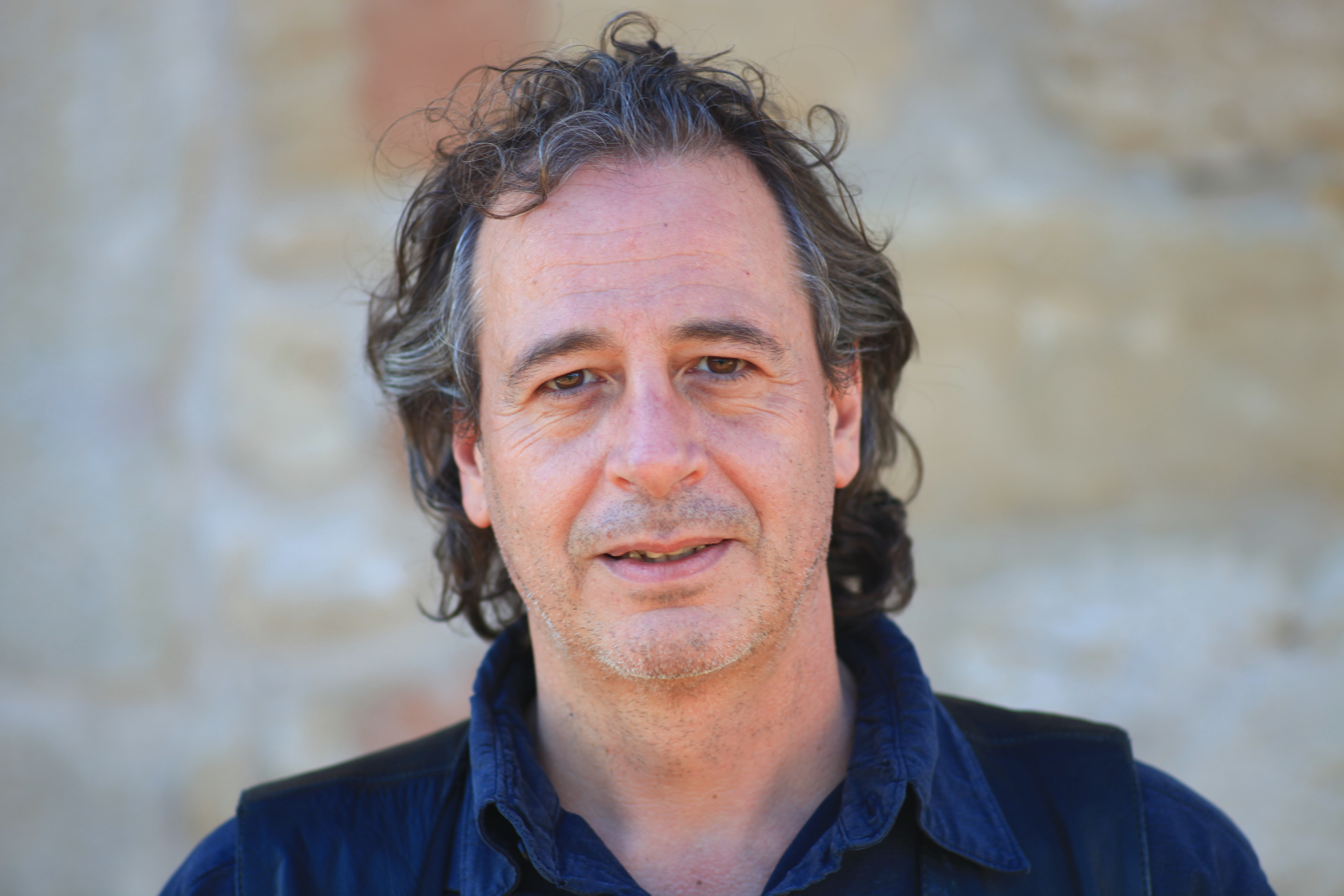
Lawrence T. Monocello is a T32 Postdoctoral Research Scholar in the Department of Psychiatry at Washington University in St. Louis. Lawrence Monocello received his Ph.D. in 2022 from the University of Alabama. His dissertation examined how cultural, social, and political-economic factors shaped disordered eating among South Korean men in Seoul. Currently, he contributes anthropological perspectives to a transdisciplinary team of world-class researchers on preventing/treating eating disorders and childhood obesity.

What is your article “Guys with Big Muscles Have Misplaced Priorities”: Masculinities and Muscularities in Young South Korean Men’s Body Image” about?

“Male body image research only makes up about 1% of the body image literature, and what literature does exist tends to focus on white, Western men’s concerns with muscularity. Using cognitive and biocultural methods, this article examines how young Korean men negotiate and navigate multiple cultural models of ideal male bodies. It not only questions the model of Western masculinity which underlies male body image research but also problematizes the notion of a single kind of “muscularity” to which men may aspire. Drawing on the concept of “masculinities”—the multiple, hierarchized, and increasingly hybridized ways of being male in a given society—this article advances the concept of “muscularities” to account for their multiple, hierarchized, and hybridized models of muscularity, not just as biological traits but as meaningful, embodied engagements with their social and political-economic conditions.”

Tell us a little bit about yourself and your research interests.

“My research interests lie primarily in understanding how individuals’ variable engagement with culture affects health. In non-anthropological health research, culture—if it is considered at all—is usually treated as some sort of monolithic, categorical variable to which causality is attributed. Anthropologists have long challenged this notion, understanding that culture is dynamic, and that the lived experience of culture varies individual-to-individual and in relation with other social, political-economic, and demographic factors. However, connecting rich ethnography with broader models and measures of health has proven difficult. Cognitive anthropological mixed-methods, which combine rigorous ethnography and statistical modeling, have a ton of potential for connecting individuals’ lived experience of their meaning systems on their own terms to health outcomes. As I’ve been recently working in a biomedical context, it’s become increasingly evident to me that there is not only great opportunity, but moral necessity, for medical anthropologists to contribute our expertise and be more active in framing research on topics like social determinants of health.”

What drew you to this project?

“When I was a junior at Case Western Reserve University, I took The Anthropology of Body Image with Eileen Anderson. I remember reading some of the literature on male body image and being confused at how, as a white, cisgender male who struggled with body image, the data presented and conclusions it reached seemed not to apply to me that much. It got me really interested in intracultural variation and how it affected lived experience. Once I got to graduate school, I found that body image was “good to think with” during my theory courses. Around the same time, my Asian-American friends from undergrad started sending me K-Pop videos and I noticed how male idols were presenting in media. I became curious about to whether and to what extent men internalized those images versus those in the global White Western media. I found that there wasn’t much research on it, so I decided to do it myself.”

What was one of the most interesting findings?

“One of the most interesting findings was that, despite a lot of my participants saying that people don’t talk about men’s bodies (at least to the same extent that they do women’s bodies), everyone had opinions about them and everyone’s understandings of social expectations about men’s bodies and their meaning were extremely consistent.”

What are you reading, listening to, and/or watching right now?

“Now that I’ve finished my dissertation I’m trying to get back into reading fiction. I’m in the middle of Moby Dick now. I used to be kind of skeptical of “queer readings” of literature, but I’m convinced that it’s the only way to read Moby Dick.”

If there was one takeaway or action point you hope people will get from your work, what would it be?

“When we’re looking to address difficult phenomena like eating disorders across cultures, it’s extremely important for researchers to (1) unpack how people are really experiencing it (i.e., not just transplanting political-economically powerful white US emic perspectives elsewhere) and (2) for anthropologists to be able to articulate the barriers and disjunctures which emerge during ethnographic fieldwork in ways accessible to the actors who directly interact with people suffering from the phenomena (i.e., clinicians, public health practitioners, policymakers).”

Thank you for your time!


Other places to connect:
Website
LinkedIn
Twitter

Interview with Iben Emilie Christensen

The next few months we’ll be highlighting authors who have published in Culture, Medicine, and Psychiatry.

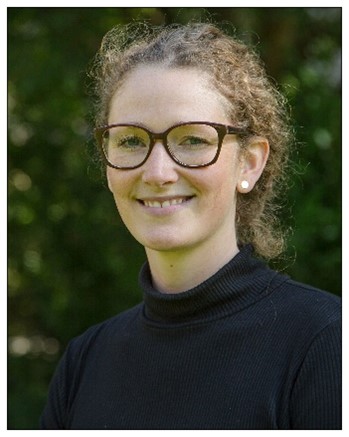
Iben Emilie Christensen is a Danish sociologist and PhD student at the Department of Public Health, University of Copenhagen, and at VIVE, The Danish Center for Social Science Research. She is in the final stage of her PhD project focusing on everyday life among people with severe mental and physical illnesses.

What is your article Senses of Touch: The Absence and Presence of Touch in Health Care Encounters of Patients with Mental Illness about?

“Based on ethnographic fieldwork, the article explores the significance of touch and physical examination in different healthcare encounters among people with severe mental (schizophrenia, bipolar disease, and severe depression) and physical illnesses. We found that touch and physical examination of this patient group is limited in healthcare encounters leaving the patients with feelings of being misunderstood, less socially approved, and less worthy of trust. Despite patients being seen, heard and treated with care and empathy by health care professionals, it was not enough for them to feel recognized or think of the encounter as a pleasant one. Overall, the article shows that when touch and physical examination takes place in healthcare encounters it gives the patients recognition – their bodily sensations and symptoms are taken seriously and not least, they are recognized as patients and human beings, suffering from a somatic disease and not only mental disorders with psychiatric label.”

Tell us a little bit about yourself and your research interests.

“The overall aim of my PhD project is to study the everyday life among people who live with both mental and physical illnesses, and to explore how they experience and navigate within the health care system. My PhD is part of a larger research project at the University of Copenhagen called SOFIA, with the primary aim to reduce the all-cause mortality of patients with severe mental illness and comorbidity in Denmark by improving the treatment of their comorbid physical conditions in general practice. The findings contribute to the SOFIA project regarding the experiences of people with severe mental and physical illnesses, their healthcare-seeking strategies, and their experiences when engaging with the healthcare system.”

What drew you to this project?

“I worked as a researcher at VIVE, The Danish Center for Social Science Research, when I was offered the opportunity to be part of the large research project SOFIA as a PhD student at the University of Copenhagen. The chance to explore a new research field, such as psychiatry, and a particular interest in inequity and inequality in healthcare motivated me to pursue this project. People with severe mental illness die 10-20 years earlier compared to people without mental illness and according to research part of this excess mortality stems from physical illnesses, which are believed to be underdiagnosed and undertreated. The ethnographic fieldwork gained important insight into the interlocutors’ everyday life, which also involved these topics.”

What was one of the most interesting findings?

“In the beginning of the PhD study, I did not anticipate that touch, particularly procedural touch (physically examination of patients), would to be the topic of the first article. However, during fieldwork and when observing the interlocutors as they interacted with different healthcare professionals, I wondered why they never seemed to find the encounter pleasant. This prompted my co-authors and I to focus on what did not take place, what did not occur and what I did not observe, leading us to realize the significance of touch in healthcare encounters.”

What are you reading, listening to, and/or watching right now?

“Since my next article focuses on patients’ experiences of symptoms and the interpretative process when living with mental and physical illnesses simultaneously, I read about bodily sensations and how they transform into symptoms in an everyday life perspective.”

If there was one takeaway or action point you hope people will get from your work, what would it be?

“People with severe mental illness often face vulnerability, social exposure, and stigma, and may live on the edge of society. I believe, that if a doctor’s caring hand and a physical examination during healthcare encounters give this patient group a feeling of being recognized as they are, as patients with potential somatic illness, and as human beings with same rights and possibilities, I think it is a minimal adjustment to incorporate touch as a continuous procedure in healthcare encounters.”

Thank you for your time!


Other places to connect:
Website
LinkedIn

Interview with Omnia El Shakry

The next few months we’ll be highlighting authors who have published in Culture, Medicine, and Psychiatry.

Omnia El Shakry is a professor of history at the University of California, Davis. Her research centers on the history of the human and religious sciences in modern Egypt.

What is your article “The Work of Illness in the Aftermath of a ‘Surpassing Disaster’: Medical Humanities in the Middle East and North Africa” about?

“The article serves as a commentary on new work in the medical humanities in the Middle East, while posing a series of questions. What happens when we question the role of the expert and the idea of the detached rationality of expertise in medicine and psychiatry? How should we account for the cultural specificity of illness and of healing practices in the Middle East, particularly in institutional contexts in which the mental hospital aspired to function as a ‘healing collective’? Given that the Middle East has been at the center of a series of catastrophic events, how can we understand the persistent inability of modern medicine to understand physical anguish, but also spiritual pain, within this context? Middle East studies is, I think, especially well situated to consider these questions, precisely because the region is an arena in which so many of the experiments of group life—both in its traumatism and its healing—model distinct ways of imagining non-materialist understandings of illness, suffering, and healing.”

Tell us a little bit about yourself and your research interests.

“I am an intellectual historian interested in epistemology and ethics within the human and religious sciences. I am currently working on two projects– one is on the work of Sami-Ali, the Arabic translator of Sigmund Freud’s Three Essays on the Theory of Sexuality, author of a large body of original psychoanalytic writings, and translator of the poetry of Sufi masters. The second is on the vibrant movement of intellectual exchange between Muslim and Catholic scholars and religious practitioners in twentieth century Egypt.”

What drew you to this project?

“I was a participant in the conference “Power in Medicine: Interrogating the Place of Medical Knowledge in the Modern Middle East,” organized by Edna Bonhomme, Lamia Moghnieh, and Shehab Ismail in Berlin in April of 2019. The piece is a commentary on the specific articles that came out of that conference and are published in CMP and on the wider issues raised by the workshop. But it is more than that, it is also partly and indirectly a reflection on my own personal experience with illness, my frustration with biomedicine, and my dear friend and colleague Stefania Pandolfo’s inspiration and encouragement to see the ‘wound light.’”

What was one of the most interesting findings?

“I was especially struck by how intellectually generative it was to juxtapose Georges Canguilhem’s observation in the Normal and the Pathological that to be a living organism is to accept “the eventuality of catastrophic reactions,” alongside Jalal Toufic’s theorization of the “withdrawal of tradition past a surpassing disaster.””

What are you reading, listening to, and/or watching right now?

“I am currently reading David Marriott’s brilliant Lacan Noir: Lacan and Afro-pessimism. I am (almost) always listening to The Mountain Goats and I watch a ton of TV, which I affectionately refer to as ‘cheap therapy,’ and have been enjoying The Peripheral and the current season of Bob’s Burgers.”

If there was one takeaway or action point you hope people will get from your work, what would it be?

“That we should work toward imagining the non-West as a site for the production and critique of theoretical knowledge (or ‘theory’) within the human sciences, rather than merely a site for its consumption and circulation.”

Thank you for your time!


Other places to connect:
Website
Other

Interview with Dr. Edna Bonhomme

The next few months we’ll be highlighting authors who have published in Culture, Medicine, and Psychiatry.

Edna Bonhomme is a historian of science and writer based in Berlin, Germany. Edna’s research critically engages with how people navigate the unsavory and unwieldy states of health—primarily how people contend with contagious outbreaks, medical experiments, reproductive assistance, and illness narratives. Her work has appeared in Al Jazeera, The Atlantic, The Guardian, the London Review of Books and elsewhere. Edna’s forthcoming book examines contagion in confined spaces.

What is your article “Medicine and Politics in the Middle East and North Africa: Transdisciplinary Approaches in Medical Humanities” about?

“I co-edited a special issue that elucidated the intellectual and transdisciplinary approaches to medicine and psychiatry in the Middle East and North Africa (MENA). The journal issue is a compilation of various papers from an interdisciplinary workshop we co-organized in Berlin while I was a Postdoctoral Fellow at the Max Planck Institute for History of Science. The two-day workshop was held in Berlin in April 2019 and generated live interventions and debates about medicine’s connection to colonialism, humanitarianism,  and nationalism in the MENA region. This co-written introduction provides a theoretical framework for articulating the region’s specificities and some universal trends. We argue that the authors engage in broader discussions that not only frame disease, health, and healing in the Middle East and North Africa while also exploring how medical practices in the region dovetail with global trends.”

Tell us a little bit about yourself and your research interests.

“I am a historian of science, culture writer, and editor who explores how people navigate the unsavory and unwieldy states of health—especially subjects that discuss contagious outbreaks, medical experiments, reproductive assistance, or illness narratives. I write cultural criticism, features, book reviews, and opinion pieces. I am especially interested in human driven narratives and to think actively about those who have been excluded from history, which often means thinking actively about a wide range of sources and archives.”

What drew you to this project? 

“In 2017, I graduated with a PhD in History of Science from Princeton University and my dissertation, “Plagued Bodies and Spaces’ ‘ examined the origins and progression of epidemics in North Africa during the eighteenth and nineteenth centuries. As a historian, my research examines contagion, epidemics, and toxicity by asking: what makes people sick? As a writer, I narrate how people perceive modern plagues and how they try to escape from them through critical storytelling. My writing about illness and health draws on my educational training in biology (BA), public health (MPH), and in history of science (PhD), and I invite readers to sit with the messiness of contagion, the discomforts of maladies, and the power of embodied knowledge, while also finding people’s desire to heal.”

What was one of the most interesting findings?

“Rather than look solely at illness as a given or have a universal definition of mental illness, we tried to explore how categories of disease have shifted within the Middle East and North Africa. At least at the level of merchants, goods, and materials potentially being the sites of vectors, but also being a site of control at the level of trade. These ideas and rules have evolved; they have taken on new meanings. This is primarily in the context of the age that we live in and of the rise of the nation-state, specifically, border regimes that made it even more challenging to travel between empires that were far more possible 400 years ago. How we define a disease and how we navigate trauma is also something the special issue explored.”

What are you reading, listening to, and/or watching right now? (Doesn’t have to be anthropological!)

 I am drawn to creative fiction, to the power of imagination and the ways that people conjure new worlds. As such, I have been reading novels and poetry, including the works of Namwali Serpell, Sheila Heti, Tsitsi Dangarembga, Caleb Azumah Nelson, Keorapetse Kgositsile, Deborah Levy, Ada Limón, Claudia Rankine and more. These writers are teaching me to get lost in the page and to escape the world as we know it.

If there was one takeaway or action point you hope people will get from your work, what would it be? 

Most of the labor for this project was done after the workshop and during the pandemic. My collaborator and I went through a pandemic, coordinated from different time zones, and underwent major life changes. We were mourning our past lives while also holding dear to our labor and our commitment to producing scholarship about medicine, disease, and psychiatry. One thing that made this project successful is our tenacity and commitment to collective projects. As such, I highly recommend that people take the time and care to work with other researchers who not only articulate their intellectual interests but who also have a mutual work ethic.

Thank you for your time!


Other places to connect:
Website
Twitter
Substack

Interview with Soha Bayoumi

The next few months we’ll be highlighting authors who have published in Culture, Medicine, and Psychiatry.

Soha Bayoumi is a Senior Lecturer in the Medicine, Science, and the Humanities Program at the Johns Hopkins University. She is presently completing two book projects, one (with Sherine Hamdy) on the work of doctors in the Egyptian uprising, and the other on the social and political roles of doctors in relation to health and justice in postcolonial Egypt. 

What is your article “Nationalism, Authoritarianism, and Medical Mobilization in Post-revolutionary Egypt” about?

This article explores the links between medical practice and expertise, on the one hand, and nationalist discourses, on the other, in the context of the 2011 Egyptian uprising and the years that followed, which witnessed a consolidation of political authoritarianism. It investigates how doctors played a significant role in countering political regimes’ acts of violence and denial. It traces the trajectory of the doctors’ mobilization in the 2011 uprising and beyond and demonstrates how the doctors drew on their professional expertise and nationalist sentiment in their struggles against a hypernationalistic military state. It contrasts activist doctors’ idea of nationalism with the state’s and shows how medicine has served as a site of awakening, conversion narratives, and building of bridges in a polarized society where the doctors were able to rely on their “neutral” expertise to present themselves as reliable witnesses, narrators, and actors.

Tell us a little bit about yourself and your research interests.

I work at the intersection of the history of medicine, science and technology studies, and political theory. My work is informed by postcolonial studies, gender studies, and social justice, and centers the ways in which medical expertise is shaped by and deployed in different political contexts.

What drew you to this project?

This research is part of a book-length project that I have been working on for the good part of the last decade with Sherine Hamdy. We were both amazed and intrigued by the different roles played by doctors in the Egyptian uprising and its aftermath and felt compelled to document that episode of the Egyptian revolution and ask questions related to what motivates doctors to engage in politics, especially during such volatile political moments.  

What was one of the most interesting findings?

We were really struck by how doctors reliance on their “neutral” expertise and their attempts to efface the political in their work actually reinscribe the political in different ways, in ways that both allow doctors to either resist state violence or abet it.

What are you reading, listening to, and/or watching right now?

I’m currently watching the Netflix show, Mo, which is, as far as I know, the first mainstream show about a Palestinian-American to ever make it to streaming screens in the US. I’m reading Oliver Sacks’ first memoir, A Leg to Stand On, which is focused on an accident that caused him to lose the use of one of his legs and his reflections on being patient, after a long career of being a doctor. And I’ve just finished listening to the audiobook, Born a Crime: Stories from a South African Childhood, by Trevor Noah. I love Trevor Noah’s style of comedy, and I think his autobiography book, which contains a lot of comedy, is best enjoyed performed by Noah himself.

If there was one takeaway or action point you hope people will get from your work, what would it be?

I think it is the idea that very few things in life are actually politically “neutral”—that what we take for granted as apolitical or technical or neutral has so many ramifications on politics, writ large. Many of the daily actions we take and the statements we make are inscribed in a political context and often function to reproduce and perpetuate that context or to subvert and change it, if we so choose.

Thank you for your time!


Other places to connect:
Website
Twitter
LinkedIn
Academia.edu

Interview With Lamia Moghnieh

The next few months we’ll be highlighting authors who have published in Culture, Medicine, and Psychiatry.

Lamia Moghnieh (Postdoctoral Fellow, University of Copenhagen) is an anthropologist and mental health practitioner. Her research looks at the impact of psychiatry on understandings of self and illness in postcolonial and postconflict societies of the MENA/SWANA. She is interested in exploring the relationship between psychiatry and subject formation in the context of global mental health and patient subjectivities.

What is your article “The Broken Promise of Institutional Psychiatry: Sexuality, Women and Mental Illness in 1950s Lebanon” about?

I am an anthropologist, psychologist, and a social worker, and more recently, I am also a patient of analytical therapy. I try to let my research be informed from all of these positionalities together or provide insights from all of these places (as a researcher, practitioner and from the more intimate and vulnerable position of being a patient). I work in the field of mental health, and I do research on the histories and ethnographies of psychiatry, tracing various discourses on mental health from the Middle East and North Africa/ Southwest Asia and North Africa). I am currently writing my book manuscript provisionally entitled “Psychiatric Afterlives: Narrating Illness, Gender and Violence in Lebanon”. The book builds on multi-disciplinary frameworks from medical humanities to examine the role of psychiatric expertise in shaping patient and social imaginaries of madness and violence in Lebanon.

What drew you to this project?

I always wanted to be a clinical psychologist until I enrolled in the MAPSS program (Masters’ in the Social Sciences) at the university of Chicago. There, I was introduced to the various historical, philosophical and political critiques of psychology and I was drawn to medical anthropology. After I finished my PhD, which focused on trauma, humanitarianism and the politics of suffering in Lebanon, I was interested in learning more about the history of psychiatry in Lebanon and the region. My background and research interests are interdisciplinary. I am lucky to be in an academic position (at the upcoming research center “Culture and the Mind” head by Ana Antić at the University of Copenhagen) that welcomes and values this interdisciplinarity in the study of psy disciplines.

What was one of the most interesting findings?

One of the findings that interest me is the ways in which the family acts as an equal diagnoser of mental illness to psychiatric expertise. As shown in the article, the story of Hala invites more attention to the ways in which women (and maybe non-normative persons) become chronically institutionalized by institutional psychiatry and the family. This is not to dismiss the psychological and financial effects that mental illness might have on family members. The article rather approaches the family as a sociological unit that governs and defines normality, and is interested in the dialogue, tensions and challenges of care and normality between the family and institutional psychiatry, as shown in the story of Hala.

What are you reading, listening to, and/or watching right now?

Audre Lorde’s Zami: A New Spelling of My Name
Roberto Bolaño’s Cowboy Graves
سارة اب وغزال “احلمي يا سيدي
هلال شومان “حزن في قلبي
Couch Fiction: A Graphic Tale of Psychotherapy
Jonathan Sadowsky’s Empire of Depression: A New History

If there was one takeaway or action point you hope people will get from your work, what would it be?

That psychiatry is both a form of governance and a mode of healing whose authority and reach transforms and changes over time. That patient voices and narratives are a crucial part of the history of psychiatry and of its contemporary practices. And that medical humanities, including anthropology, is a field that can offer useful and critical insights on the status of global mental health.

Other places to connect:
Website
Twitter
LinkedIn

Interview with Michael Galvin

The next few months we’ll be highlighting authors who have published in Culture, Medicine, and Psychiatry.

Dr. Michael Galvin is a Global Psychiatry Clinical Research Fellow and in the Department of Psychiatry at Harvard University and the Department of Psychiatry at Boston University. Dr. Michael Galvin is a global health researcher and psychotherapist.  His primary research interests center on mental health and the role that one’s environment, culture, and belief systems play in mental illness and treatment.  In particular, his work focuses on elucidating cultural models of mental illness and exploring relationships to pathways to care, with the goal of improving cultural adaptation of mental health interventions.  

What is your article “Examining the Etiology and Treatment of Mental Illness Among Vodou Priests in Northern Haiti about?

This article is about the way that traditional healers (ougan) conceptualize and treat mental illness in rural Northern Haiti.  While the vast majority of people with mental illness seek treatment from ougan in this region – as few biomedical services exist – very little research has examined what ougan actually do when treating patients.  The article also tries to understand how mental illness is viewed from the healer’s perspective, delving into the broader Vodou cosmology which remains very influential in rural parts of Haiti.

Tell us a little bit about yourself and your research interests.

My interests mostly center around mental illness and how we conceptualize it in different cultures and settings.  Historically, mental illness has always been hard for people to understand, getting wrapped up in ideas of spirit and demon possession.  Rarely have people thought it was something to treat like a broken leg or even a bacterial infection.  This is partly because there are no biomarkers to test for it thus patients recount what they are experiencing solely via self-report.  But it’s also because mental illness affects the basic ways in which people act and simply exist in the world.  When our loved ones have significant behavioral changes without physical symptoms of illness or infection it can often lead us to suspect the supernatural.

What drew you to this project?

I have been working and living in Haiti on and off since 2012 and knew I wanted to focus my dissertation research in Cap-Haïtien.  I found out about the Mental Health Center at Morne Pelé in 2018 and spent the entire summer of 2019 volunteering with them so we could get to know each other, for me to better understand what their work was like, and to start exploring different angles for my dissertation research which I conducted in the second half of 2020.  It was during the summer of 2019 that I learned about the extent to which patients held explanatory models based in Vodou and I knew that had to become a significant part of my research there.  I’m currently the director of the Mental Health Center at Morne Pelé’s new Research Laboratory so it’s very exciting to continue to collaborate together.

What was one of the most interesting findings?

One of the most interesting findings was this treatment called fiksyon that almost all the healers I interviewed used.  Barely anything has been written about these concoctions so this was really one of the first times they’ve been explored.  Fiksyon are different liquids – usually rum mixed with ground plants and animals – that are kept in large unmarked semi-transparent plastic bottles.  There’s a lot of mystery surrounding fiksyon with many people saying they have mystical properties.  It would be interesting to explore more about what is actually in them and the places where they are manufactured

What are you reading, listening to, and/or watching right now?

I’m reading a really interesting book that was written in the 1970s called Plagues and Peoples.  It’s a great dive into the history of pandemics over the centuries.  It’s not a hard read at all, very enjoyable and easy to understand with lots of nice anecdotes.  Apparently the findings have held up really well over the last 50 years too.

If there was one takeaway or action point you hope people will get from your work, what would it be?

That religion and culture have deep impacts in the way we conceive of mental illness.  That we still know relatively little about how mental illness develops, manifests, and is best treated.  That the relationship between our minds and our bodies is exceedingly complex and there are often no easy solutions.

Thank you for your time!


Interview with Katarzyna Szmigiero

The next few months we’ll be highlighting authors who have published in Culture, Medicine, and Psychiatry.

Katarzyna Szmigiero is a graduate of the University of Łódź, Poland. She is an Associate Professor at the Institute of Literary Studies and Linguistics of the of University of Jan Kochanowski, Poland (Branch in Piotrków Trybunalski). Her research interests concentrate on medical humanities, especially cultural representations of psychiatry and gender, and genre fiction.

What is your article “We All Go a Little Mad Sometimes:” Representations of Insanity in the Films of Alfred Hitchcock about?

The article deals with the way motifs connected with psychiatry (doctors/treatment/people diagnosed with mental illness or individuals displaying disturbing behavior/attitudes to mental psychopathology) are used in the films of Alfred Hitchcock. First of all, it tries to answer the questions why the director so often presented mentally unstable characters in his works. It also looks at how Hitchcock gently questioned the assumptions about mental illnesses and its origins that were dominant in his times. Finally, it briefly mentions the legacy of Hitchcock if the cinematic portrayals of insanity are concerned.

Tell us a little bit about yourself and your research interests.

I am interested in cultural representations of madness, gender studies, and popular literature.

What drew you to this project?

I have always loved Hitchcock’s films and saw Frenzy in my early teens, as it was my dad’s favourite. It was one of the most unpleasant and, simultaneously, hilarious film I have ever seen since.

What was one of the most interesting findings?

On the surface, Hitchcock appears to be following the psychoanalytic approach, especially in his American movies. However, he always undermines the official discourse on madness, proving that we are all, sometimes, a little mad and there’s nothing wrong about it.

What are you reading, listening to, and/or watching right now?

I am currently an avid reader of the retellings of the Medusa myth (as well as other chick lit fantasy books about antiquity).

Watch Hitchcock! Old films may seem dated, especially if you are not used to them. But his dialogues, designs, cast is often genius.

Thank you for your time!