Issue Highlight Vol 40 Issue 2: Hospitals as Sites of Conflict in Pakistan

cropped-cards.jpg

In the coming blog posts, we will be highlighting new articles from our June 2016 issue, which you can access in full here. The theme of this special issue is The Clinic in Crisis: Medicine and Politics in the Context of Social Upheaval. This week, we will overview Emma Varley’s article “Abandonments, Solidarities and Logics of Care: Hospitals as Sites of Sectarian Conflict in Gilgit-Baltistan.” Read the full article here.


As our past blog highlights have suggested, the clinical space can both act as a site of political protest and serve to facilitate political unity. Varley’s article expands upon these themes by arguing that the clinic can also become a microcosm of inter-group tensions, wherein the hospital itself relays a picture of broader social conflict. Through her analysis of a crisis in a Pakistani hospital, Varley ethnographically demonstrates how Sunni-Shia conflicts manifest in the clinic, and how these tensions are navigated by health professionals employed there.

Varley recounts a shooting and raid which occurred at a hospital in Gilgit-Baltistan in January 2005. Shia gunmen had entered the regional hospital to hunt down Sunni male patients, aiming to retaliate after the assassination of a Shia leader killed by Sunnis. One women’s health ward, operated by nurses of the neutral Ismaili group, was left untouched after the nurses hid Sunni male patients. The nurses protected the men by insisting to the gunmen that there would be no male patients on a female ward: drawing both upon their social role as neutral Ismaili and their gendered role as caregivers of women, who were seen as uninvolved in the conflict at hand. Meanwhile, in a surgical theatre, physicians pretended as if the assassinated Shia leader on their operating table was still alive: hoping to placate the gunmen who threatened them until police or military forces could arrive to dispel the violence. Orderlies and other guards on the wards had, in some cases, fled: leaving clinical staff to defend or otherwise conceal the Sunni patients, and in other cases, fellow Sunni providers.

In reflecting on this incident, Varley notes that the hospital became an example of an “abandoned” space, one in which the necessary governmental protections and securities were not in place to ensure the safety of all patients and clinicians. The onus of protecting patients fell upon the clinicians who staffed the hospital: illustrating both the selflessness of individuals in assisting one another across oppositional group divides, and the potential for hospitals to become sites of medical and political refuge. This increased the trust between Shia providers and their Sunni colleagues in medicine. Conversely, the incident intensified professional divisions between Shia and Sunni providers, as Sunni clinicians later departed the larger regional hospital and took up employment in new Sunni health centers where they felt less at risk.

Though Varley reminds us that conflict is “corrosive” within medical professional relationships, it may also enable “renewed” feelings of trust between caregivers of opposing groups when political unrest unites them under a common aim. In sum, the hospital may serve a site of caregiving exchanges that expand beyond the bounds of medical encounters, as it becomes a sites of political action and negotiation between social groups.

Conference Feature: “Other Psychotherapies”

2012cover

This week on the blog, we are highlighting an upcoming conference on global psychotherapies across geography and time. This feature was written by our CMP social media intern Sonya Petrakovitz, PhD student in anthropology at Case Western Reserve University.


“Other Psychotherapies – across time, space, and culture”

University of Glasgow

Monday, April 3, 2017 – Tuesday, April 4, 2017

This conference brings contemporary forms of Western knowledge about mental health and well-being into dialogue with psychotherapeutic approaches from ‘other’ geographically, historically, or otherwise ‘distant’ cultures. Specifically, presentations will address ancient and medieval approaches to psychotherapy and how those techniques have become incorporated into today’s approaches. The sessions will also explore the development of psychological practices over time and across changing spatialities of care practices, specifically how post-colonial and indigenous forms of healing influenced the perceived credibility of psychotherapies. They will likewise examine the therapeutic/salutogenic dimensions of subcultures.

Addressing psychotherapy in this way brings together multiple disciplines and expands our understandings of medicine, health, culture, therapies, and pedagogies. The themes of the conference would be of interest to historians, physicians, literary scholars, mental health practitioners, anthropologists, and anyone interested in learning about different perspectives on psychotherapies within a broader global context.

For interested applicants, visit the Call for Papers page at http://otherpsychs.academicblogs.co.uk/. The Conference Committee invites abstracts of up to 300 words for 20-minute presentations, to be submitted by no later than August 31, 2016. Abstracts should be emailed to  arts-otherpsychs@glasgow.ac.uk along with a short biography of 100 words or less.

Issue Highlight Vol 40 Issue 2: Medical Humanitarianism and Conflict in Turkey

cropped-cards.jpg

In the next few blog updates, we will be spotlighting new articles from our June 2016 issue, which you can access in full here. The theme of this special issue is The Clinic in Crisis: Medicine and Politics in the Context of Social Upheaval. This week, we will overview Salih Can Aciksoz’s article “Medical Humanitarianism Under Atmospheric Violence: Health Professionals in the 2013 Gezi Protests in Turkey.” Read the full article here.


Aciksoz’s article begins by painting a scene. In the summer of 2013, protests erupted throughout Turkey, leading to violent clashes between armed police forces and civilian protestors. Humanitarian health workers began to establish make-shift infirmaries near known sites of conflict to treat wounded protestors, yet soon themselves became targets of the police who directed tear gas and turned their weapons upon the infirmaries. Those tasked with quashing riots and subduing protests soon fixed their ire on the health professionals who cared for wounded protestors: viewing these clinicians not as neutral aid workers, but instead as complicit members of the uprisings they were attempting to quell. In time, emergency healthcare offered to protestors was deemed criminal activity by the Turkish government.

The author frames the Gezi Protests in terms of the security of medical spaces. Medical humanitarianism, he notes, is premised on the neutrality of care giving centers which serve as a “safe space” for medical aid to be delivered in times of “crisis” to anyone in need. However, this designation as a safe space relies on the authority of a state to recognize it as such. The Turkish government’s criminalization of the humanitarian infirmaries aligned health professionals with protestors, despite any claims to political neutrality. In Turkey, the ability for make-shift infirmaries to serve as neutral care centers was further threatened by the use of a particular weapon: tear gas and similar chemical weapons. An indiscriminate gas could transform entire physical areas– especially enclosed ones– into dangerous structures where all people were at risk of exposure. The use of gas by police forces inside clinics prevented these spaces from being both politically neutral and medically safe for patients and health professionals within.

The state’s designation of infirmaries as a site of criminal activity, and health professionals’ attendance to protestors as insurgent, did not always align with the accounts that Ackisoz collected from Turkish clinicians themselves. Even whenever health professionals confessed that they sympathized with the cause of the protestors, they nevertheless distinguished their political beliefs from their medical obligation. Many described their medical involvement with the protests as a natural response to crisis: as understandable as if they were responding to victims of an earthquake or other disaster. Yet their work also bordered on activism, as numerous clinicians sought to aid protestors after noting the failures of state-operated hospitals and ambulances to attend to the medical needs of all injured protestors.

In sum, Ackisoz argues that what constitutes “medical humanitarianism” borders on many other domains of society: on the state, on the government’s definition of both criminality and on appropriate use of force, on what constitutes political dissidence and whether or not “humanitarianism” is strictly neutral whenever any medical action has the potential to shed light on political failings. The article demonstrates that the ethnographic and social constructivist lenses are well-suited to the analysis of the troubled boundaries between politics and medicine, and between healing and the state in periods of upheaval.


Article Highlight: Feeding Tubes and Quality of Life in ALS Patients

cards

This week on the blog, we are highlighting Jeannette Pols and Sarah Limburg’s article “A Matter of Taste? Quality of Life in Day-to-Day Living with ALS and a Feeding Tube.” The article is open-access and can be read in full here on our publisher’s website.

The authors begin by suggesting that while “quality of life” has been transformed into a measurement used widely in health research, it is difficult to operationalize when considering the daily, lived experiences of patients. Rather than approaching quality of life as a measure of attainment or “outcome,” the authors instead choose to reframe it as a continual process: one that is negotiated by individual patients differently. To examine what quality of life entails in a qualitative sense, the authors interviewed a population of people with ALS in the Netherlands with feeding tubes, or ALS patients considering one.

The literature on feeding tubes, the authors note, present many perspectives on the relationships between quality of life and eating. Some sources argue that feeding tubes deprive individuals of the important social aspects of eating, while others note that feeding tubes can unburden patients for whom swallowing and the physical actions of eating are difficult, uncomfortable, or impossible.

Patients and their families interviewed by the researchers, on the other hand, demonstrate such ambiguity towards feeding tubes contextually, depending on the stage of their feeding tube transition. For many, the initial decision to have a feeding tube placed in their bodies was an upsetting signal of bodily deterioration. The procedure itself, though technically minimally invasive, was also viewed with trepidation by patients. They worried about the hospital stay, and whether or not their body would be strong enough to adapt to the tube quickly. Pols and Limburg found that for those who had undergone the procedure, “there was a remarkable consensus among patients in their evaluation of tube placement, with the main variations mentioning just how terrible it had been.” The authors later note that some patients continued to view the feeding tube negatively after it was placed, envisioning it as an unnatural, upsetting addition to their bodies. Others described it as a “necessity” that came with quality of life benefits, although it was not pleasant to have attached to their bodies.

However, for many patients who had feeding tubes already implanted at the time of the study, the response could be notably positive. These participants noted that the devices restored their health and function, and lessened distressing symptoms like choking and an inability to swallow. For one patient, the feeding tube ensured that she received the appropriate calories, such that any food she decided to eat normally could be at her discretion. Other patients who cared less about eating a range of foods appreciated that the feeding tube rid them of the need to worry about what could be easily consumed.

The authors conclude that “the feeding tube can best be understood not as an intervention that causes ‘impacts on quality of life’, but as a technology or prosthesis that may bring different qualities and appreciations that may shift over time.” They add that the feeding tube acts as an intervention that re-orders daily life for patients coping with the a ‘new normal’ of chronic illness: rather than serving to balance “good” and “bad” qualities, as outlined in the disability paradox. Lastly, they remind readers that instrumentalizing “quality of life” risks losing these facets of illness experience. This term is deeply contextual, and responsive to the needs, expectations, and hopes of each patient undergoing treatments or coping with chronic conditions.

Guest Blog: ‘In-Betweenness’: Liminality, Legality, and Migrant Health in Siracusa, Italy

This week on the blog, we are hosting a guest post by Adam Kersch, an MA Candidate who will begin his PhD in anthropology at the University of California – Davis this fall. Here, he presents findings from his ethnographic research on the health and wellbeing of migrants entangled in the legal webs of relocation in southern Italy.

cropped-cropped-2009cover-copy1.jpg


In January to July 2015, I conducted ethnographic research at a reception center for migrants in Siracusa, Italy, focusing on the struggles they faced upon arrival. Although the legal difficulties and hurdles that migrants faced were readily apparent, the toll that these policies took on the health and well-being of these migrants became increasingly visible during my research. Migrants coming to Italy and to Europe have often endured traumatic events resulting from war, violence, and poverty. Once migrants come to Europe, this crucial period of psychological and physical recovery is marked by ongoing anxiety and hardship as they navigate a complex web of legal processes as they seek asylum. That is, procedures and policies that compose the migration reception apparatus commonly have direct and deleterious effects on migrants’ health.

Abraham was one such migrant whose mental well-being was harmed by slow moving legislative mechanisms. Abraham, a 25 year-old Pakistani man, had been waiting in Umberto I, a primary reception center for migrants in Siracusa, Italy, for nearly six weeks and had heard nothing regarding the status of his asylum request. The poorly-supplied center was only designed to hold migrants for 72 hours, and no legal information was provided to its residents, leaving the migrants waiting in Umberto I without a clue as to their futures in Italy. Abraham left Pakistan fleeing sectarian violence and lack of economic opportunity. After some travel, he found himself in Libya, seeking passage to Europe. Like many other migrants, he was tortured and robbed by militias while in Libya as he worked to pay for his passage to Europe. Reeling from torture, the stress of his liminal status in Italy became unbearable. The center had given him no idea as to when he would be transferred, why he was there, or what his future might be like. Like many others before him, one day Abraham had enough of the waiting and clandestinely left the reception center. He contacted me a few days after leaving, begging for help. He was in Northern Italy, trying to cross the border into France to meet with a friend in Spain, but he kept getting caught and sent back to Italy. “I want to die,” he confessed, “I am a failure. I cannot support myself, I cannot support my family. No money, no work.” Having come to Europe for safety and to help support his family back in Pakistan, the painfully lethargic process of legal recognition prevented Abraham from being able to achieve his goals. His lack of documents prevented him from legally seeking work, but the longer he waited for these documents, the longer his family in Pakistan went hungry, unable to support themselves. Trying to seek asylum elsewhere seemed to him the only logical choice.

During my fieldwork in 2015, I found that migrants waiting to hear about their legal status in Italy had little to no access to legal information, and that this state of liminality facilitated social, psychological, and somatic trauma. Centers like Umberto I function as a part of the migrant reception apparatus in Italy that treats migrants with spotty assistance at best, and absolute negligence at worst. This lack of legal knowledge contributes to an environment of anxiety and leads to the physical and mental suffering of the hundreds of thousands of migrants who have come to Italy in recent years. This dearth of information violates United Nations and European Union (EU) policies on migrant reception, both of which stress that migrants should have access to any legal personnel willing to provide services. In this way, these policies suspend migrants in an ambiguous, unresolved legal status that both directly and indirectly impacts the psychological and somatic health of the migrants and their families.

Lamin, a 20-year-old migrant from Gambia, was another temporary resident of Umberto I. He, like Abraham, experienced deteriorating health as a result of the migrant reception policies and procedures in Siracusa. He had unknowingly agreed to serve as a legal witness for the state against the captain of the boat that brought him across the Mediterranean, who was being charged with human trafficking. The police had effectively coerced Lamin to sign the papers, which were in Italian. They assured him the papers were for his own benefit as they would secure him legal protection. However, since signing them, he had no updates about the court proceedings or about his own legal status. Lamin languished in Umberto I for the moment that he might be transferred or summoned, all the while ignoring the severe pain he was experiencing as a result of holes that had been drilled into his teeth when he was tortured in Libya. He refused to seek medical help, fearing that he may miss his chance to leave Umberto I and finally move forward while getting his teeth fixed. It was only after significant encouraging that he finally sought care from Emergency, a local medical NGO. Thankfully, Lamin successfully recovered and was finally transferred a few weeks later.

In cases such as Lamin’s, legal liminality takes priority over physical suffering. As a result, the slow and onerous migrant reception apparatus exacerbates and prolongs the wounds of migration, whether they are psychological, physical, or social. Those in Umberto I are far from the only sufferers of legal liminality. Cutiyo and her daughter, both refugees from Somalia, came into the legal office late one night in Siracusa. Cutiyo had regularly been coming to speak with Giulia, a local legal activist, to help file a family reunification to bring her husband living in Somalia to Italy. She often saw Giulia simply to ask about the progress of her husband’s case, wondering when she might finally see him again and when he would finally be safe from the violence in Somalia. Cutiyo spoke softly and left quietly after speaking to Giulia. Giulia turned to me, on the verge of tears, and explained that Cutiyo’s husband had been shot in the head five times by militants the night before in Somalia. This happened only a day or two before Cutiyo’s husband was finally to be brought to Italy to be with his wife and daughter. If the sluggish process had been streamlined, perhaps the family could have been reunited. Instead, Cutiyo was now alone in Italy with her daughter, faced with both an uncertain legal status and the social distress and strain caused by the death of her husband. The slow-moving Italian legal system had produced another casualty.

These moments of “in-betweenness” that migrants experience are crucial periods of temporal and social displacement that exacerbate the traumas from which many migrants are attempting to recover. As migrants wait to receive documentation or for their families to be reunited, the physical and psychological risks inherent to seeking a new future in Europe are placed in migrants’ peripheries as they seek legal recognition. As observed by anthropologists Cristiana Giordano (2014) and Miriam Ticktin (2011), granting asylum is often a process of recognizing and validating the suffering migrants experience before arriving in Europe. In circumstances such as these, suffering can become a migrant’s path to legal protection, functioning as a perverse currency that promises security and safety. But during the period in Europe preceding asylum decisions, migrants’ pains are perhaps ironically exacerbated by obtuse and labyrinthine legal processes in the very countries they have come to for protection. Whether it be by anxiety that defers attention to health issues, an uncertain future prompting a rejection of the reception apparatus, or documentation that arrives too late, migrant legislation and reception procedures in Siracusa, Italy have severe consequences for the well-being of people seeking a new future in Europe.

Sources Cited

Giordano, Cristiana. (2014). Migrants in Translation: Caring and the Logics of Difference in Contemporary Italy. Berkeley: University of California Press.

Ticktin, Miriam. (2011). Casualties of Care: Immigration and the Politics of Humanitarianism in France. Berkeley: University of California Press.


About the Author: Adam Kersch is currently a MA Candidate at the University of Central Florida and in September 2016 will begin his first year of PhD studies in Sociocultural Anthropology at the University of California, Davis as a Mellon Institute Comparative Border Studies Fellow. His research is focused on provision of health and legal services to migrants in Italy. He is particularly interested in human rights, imaginaries of Europe, and the politics of care in the context of austerity.

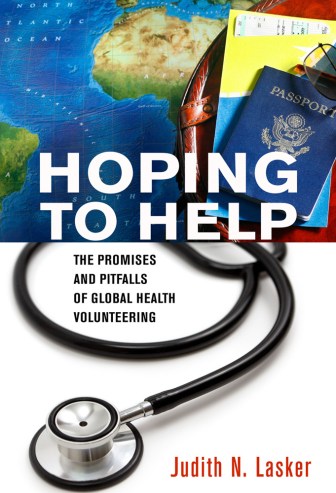
Book Release: Lasker’s “Hoping to Help: The Promises and Pitfalls of Global Health Volunteering”

80140100785730L.jpg

Image via Cornell UP website.

Released this January 2016 from Cornell University Press is Judith Lasker’s Hoping to Help: The Promises and Pitfalls of Global Health Volunteering (available for purchase here.) Lasker’s book examines the phenomenon of overseas medical volunteering, wherein individuals from wealthier countries travel for short periods to the developing world to offer humanitarian aid and medical services. These volunteers are sponsored by churches, non-profit organizations, or arrive in poorer countries via for-profit “voluntourism” companies that plan such travel.

Through participant observation, surveys, and interviews with volunteers, key figures in humanitarian organizations, and volunteer staff members native to developing nations, Lasker examines the impact of these ventures on host communities. She weighs present arguments that suggest that global health volunteering is a form of neo-colonialism, that this form of humanitarianism may cross ethical boundaries in the host community, and that volunteers’ need to “give back” may be otherwise misguided and harmful. Lasker places special emphasis on how volunteer organizations themselves benefit from the work of volunteers in developing countries. She likewise addresses whether or not these organizations’ objectives are truly responsive to the needs of the host community, or to what the host community identifies as a concern. She then weighs whether such aims place the volunteer’s experience ahead of the needs of the people who are the perceived recipients of aid.

Lasker’s text will be of equal interest to global health scholars and medical anthropologists and sociologists. Its attention to neo-colonialism and themes of globalization and power will likewise interest scholars who study global development and cross-cultural biomedicine.


About the author: Judith N. Lasker is N.E.H. Distinguished Professor of Sociology in the Department of Sociology and Anthropology at Lehigh University in Pennsylvania.

Issue Highlight Vol 40 Issue 1: Depression, Gender & Power

The March 2016 issue of Culture, Medicine & Psychiatry has recently debuted. Over the coming weeks, we will feature article highlights from a selection of the newest research published at our journal. To access the full issue, click here.

cards3

This week’s article highlight examines Alex B. Nietzke’s piece “An Illness of Power: Gender and the Social Causes of Depression” (accessible here.) Nietzke argues that a mechanistic and biological model of depression overlooks the extent to which women across the world are frequently diagnosed with the disorder at a higher rate than men. When bioscience and biomedicine fail to attend to underlying social and gendered dimensions of depression as a diagnosis, the author holds, they are “silencing women” and “marginalizing” a discourse surrounding the problematic social power of the biomedical model.

The article opens with a review of the literature on medicalization, which describes the shift from a psychodynamic model (where external factors were typically considered the source of reactive mental distress) to a biopsychiatric one (where, given the development of medications for mental disorders, mental illness was increasing viewed as seated within the patient’s biology.) The DSM-III later “eliminated” the categories for “reactive” mental illness, and placed physical symptoms (like weight loss) alongside psychological ones (like feelings of hopelessness) such that both expressions of illness were physiologically equated to one another.

Upon biologizing symptoms, the causes of depression thus fall wholly within the realm of biomedicine to diagnose and to treat. This leads to a nearly unilateral assumption of control over depression by psychiatrists and clinicians, even if other individuals such as family and friends– and the patient herself– has insights into the social determinants of a psychological condition. Furthermore, when biomedicine interests itself only in the biological and not social basis of women’s mental illness, it delegitimizes the very roots of many women’s distress and reinforces their inability to verbalize forms of oppression. Nietzke thus adds that “what begins to emerge here is that the psychiatric disease model of depression may actually be disempowering women by legitimizing the pathologies of a social system of gender as it delimits one’s expression of suffering and testimony to its causes.”

When biopsychiatry quiets the discussion of social determinants of mental illness, so too does it lend power to the systems of oppression that enable women’s suffering to continue, and limits their ability to express their psychological state. Put another way, by biologizing rather than contextualizing depression, women are inherently marginalized because they may have few other recourses outside of biomedicine for ameliorating the psychological ramifications of social disenfranchisement. The “silencing” Nietzke cues in the early paragraphs of the article returns here, as the author reminds readers that biomedicine’s biologizing of depression may problematically close the conversation around the social situatedness of women’s psychological experience and social status.

Book Releases: New Texts on Sex Tourism, Biotechnology

This week, we are featuring two book releases from the University of Chicago Press. The first book is Gregory Mitchell’s Tourist Attractions: Performing Race and Masculinity in Brazil’s Sexual EconomyThis new book, published in December 2015, presents an ethnographic perspective on gay sex tourism in Rio de Janeiro, Salvador de Bahia, and the Amazon. Mitchell examines issues of race, masculinity, and sexual identity amongst both sex workers and sex tourists. In particular, he asks how men of various racial, cultural, and national backgrounds come to understand their own identities and one another’s within this complex series of commercial, sexual, and cultural exchanges. Details about the book can be found here.

About the author: Gregory Mitchell is assistant professor at Williams College, where he teaches in the Women’s, Gender and Sexuality Studies program and in the Department of Anthropology and Sociology.

9780226309101

Image via UC Press website

The second book, debuting in September 2016, is Hallam Stevens’ Biotechnology and Society: An Introduction (cover image not yet available.) Each chapter of the text will address a different topic in the cultural and historical study of biotechnology, from gene patents, to genetically-modified foods, to genetic testing and disability, assisted reproductive technologies (ARTs), and the intersections of race, diversity, and biotechnologies. The text will be of equal interest to scholars of science and technology studies (STS), posthuman theory, and the history and culture of medical technology. Details about the book can be found here.

About the author: Hallam Stevens is assistant professor at Nanyang Technological University in Singapore. He teaches courses in the history of the life sciences and information technologies. He is the author of Life Out of Sequence: A Data-Driven History of Bioinformatics, also available here via the University of Chicago Press.


Issue Highlight: Vol 39 Issue 4, Stimulant Use in the University

This blog post is the last in a three-part series highlighting our newest installment of Culture, Medicine & Psychiatry (released December 2015) which readers can access here. This week, we explore Petersen, Nørgaard, and Traulsen’s research on the use of prescription stimulants amongst university students in New York City. The full article is available here.


cropped-cards.jpg

In recent dialogues on the widespread use of prescription stimulants amongst university students, drugs are often described as enhancing productivity or a student’s ability to successfully focus on academic work. However, Petersen, Nørgaard, and Traulsen found that university students in New York City often cited the use of these drugs as rendering their work more pleasurable, “fun,” and “rewarding.” Their study included 20 students spanning BA, MA, and PhD programs: representing a diverse sample that, in the aggregate, universally suggested that the use of stimulants in an educational setting was not centrally connected to academic output or production. This outcome, the researchers assert, complicates existing neoliberal readings of American personhood, premised on the idea that the self is primarily cultivated and disciplined through labor and individual productivity.

For example, rather than feeling shameful about using stimulants to improve study skills or produce better work, the students instead expressed guilt for enjoying their academic labors and for transforming “monotonous” and “boring” activities into an engaging experience. The “optimization” of the mind to perform intensive intellectual labor was not related strictly to productivity, which would evoke traditional neoliberal notions of the person-as-producer. Instead, the students described the drugs as optimizing pleasure first, which rendered them more productive as a secondary consequence.

Take this instance: a 32-year old PhD student, identified as Ben, reported using Adderall when he felt too “lazy” to initiate work. Rather than continuing by discussing the extent of his productivity while on the drug, he instead explains that the drug makes him eager “to tackle” his projects. This is often the case for students who struggle to find the desire to complete academic tasks that are not interesting enough to begin without being made pleasurable through stimulant use. Further, another student added that using stimulants helped him to “reconnect” with his interest in sociology during a difficult class on social science theory. In other cases, using Adderall kept students from being distracted from social media or entertainment websites: not because they lacked the inherent ability to be productive, but because without the drug, these sources of interest were simply more engaging than the work at hand. In other instances, students noted that stimulants made them feel more secure and positive about the quality of their work, and helped them to diminish the physical and mental stresses that came with “all-nighters,” or extended overnight studying stints.

Throughout all these cases, enhancement is not described as a means to make the human brain meet the demands of a “high-speed society.” Instead, “enhancement” relates to students’ satisfaction with their resulting work, to their enjoyment of otherwise “boring” tasks, and to reduced the negative psychosomatic effects of studying or working on a limited time frame.

The authors do not eschew the neoliberal model through these cases: indeed, they suggest that the use of stimulants does have cognitive effects that bolster students’ abilities to produce academic work. However, they note that we must complicate a strictly neoliberal model that would indicate that stimulants are employed by students strictly in order to achieve a certain amount of studying or to complete an assigned amount of work. Enhancement may include productivity, but for students who use stimulant drugs, it also involves increasing the pleasure of finishing intellectual labors, and decreasing the negative consequences of engaging in challenging or otherwise tedious academic work.

In this way, cognitive-enhancing drugs indeed fortify the mind and the conception of the self as a producer and academic laborer. However, they also shape human experience by altering students’ sense of confidence, their satisfaction with academic work, and their passion for their chosen topics of study. In these ways, enhancement drugs not only increase productivity in the neoliberal sense: they also broadly impact notions of pleasure and individual ability related to students’ quest to heighten academic production.


Issue Highlight: Vol 39 Issue 4, Posthumous Reproduction

Our final issue of the year– Volume 39 Issue 4 December 2015– has just arrived. In our last blog post series for 2015, we begin with a three-part feature of the latest publications at the journal in this new issue. In addition to the article previews in this series, our readers can access the full issue here. In this post, we explore Yael Hashiloni-Dolev’s preliminary research on posthumous reproduction in Israel (full article accessible here.)


cropped-cards.jpg

Biomedicine, through its innovative application of technology, can reconfigure biological experiences in ways that alter or reinforce cultural beliefs surrounding life, death, reproduction, kinship, parenthood, and social roles. Most recently, this has become a central issue in the field of assisted reproductive technologies: where biomedical interventions potentiate new relationships between parents, families, and children. But while assisted reproductive medicine is often discussed in terms of generating life, these new generative technologies may also intersect with death in novel ways that challenge existing understandings of kinship and familial relationships.

Hashiloni-Dolev article studies Israeli lay perceptions of a new concept in assisted reproductive medicine called posthumous reproduction (PHR.) In sum, PHR entails the use of genetic material from deceased parents to conceive children after their deaths. This usually means a woman will opt to become artificially inseminated with a husband or partner’s sperm retrieved while the man was in a coma or vegetative state: however, it may also include the fertilization of a woman’s eggs, frozen while she was alive, and gestated in a surrogate mother. Even frozen embryos of two deceased parents (a mother and father) might be “adopted” and implanted into a female relative or another recipient, who subsequently gives birth to a child whose biological parents are no longer alive. This process also facilitates the possibility of posthumous grandparenthood, and indeed, some parents whose adult children have died may seek out PHR technologies (include allied technologies such as surrogacy) to produce grandchildren.

Israel is one of the few countries that permits some forms of PHR, and it is a progressive nation in terms of reproductive technologies: its state health system covers the costs of ARTs (assisted reproductive technologies) for couples who have difficulty conceiving. Although Israel does not permit all forms of PHR, it does allow for the collection of a man’s sperm upon a wife’s request to carry his child upon his death (what the author calls the “prototype scenario.”) In this regard, Israel served as a prime location for surveying participants and testing initial ideas about the public perception of PHR: a new frontier of ARTs yet to be studied in the anthropological literature.

Through 26 semi-structured interviews with newlywed or childless couples, Hashiloni-Dolev discovered that there were some inconsistencies between the Israeli PHR policies and the participants’ understanding of PHR technologies. For instance, the government stipulated that PHR could occur via the retrieval of sperm from a dying or recently deceased father upon the wife or female partner’s instruction. The policy states that the retrieval could occur given evidence of a man’s “presumed wish” that he would want his spouse or partner to carry his child after death. However, “wish” and “consent” were interpreted differently by men interviewed for the study. The men typically stated that while they would defer to their partner’s wishes to have a child after their death, they themselves were uncomfortable with the possibility of their partners having the child and being unable to “move on” should they pass away. In this instance, while the man’s presumed “wish” might not change a woman’s decision to retrieve his sperm posthumously, it does not mean the man would “consent” to the process if he were not already dead.

Conversely, consent becomes more complicated given the circumstances that typically surround the use of PHR. The man is presumably young, such that his female partner would be able to carry his child, and would have died suddenly: thus making it nearly impossible to obtain his consent unless he had already affirmatively offered it while still alive and healthy.

There were also issues related to the family life of a child born through PHR techniques. Both male and female participants worried about the emotional stability and security of children born out of such conditions, and expressed their concern with new policies being proposed that would allow for expanded posthumous grandparenthood rights. The participants believed that the decision to have children following the death of a spouse was between the couple, and was not between other family members. Likewise, many participants worried about the birth of a child as a living shrine to the deceased, rather than as a new and autonomous member of the family.

In these responses, it is clear that while both biomedical technologies and governmental policies may enable PHR to occur, the process is not always viewed in such liberal terms by individuals who could be most likely to use it. Posthumous reproduction thus supplies medical anthropologists and scholars of social medicine with a nuanced case of the cultural position of new technologies, and the concerns that individuals across cultures have with these new reproductive tools: particularly as they relate to consent, kinship, and the roles of parents.