Medical Humanities as an Intersection: Fostering Cross-Disciplinary Intellectual Spaces, A Commentary

This week, we are featuring a commentary on the medical humanities, which first appeared this week here on The Daily Dose blog. This piece explores the nature of interdisciplinary research on the social, cultural, and experiential dimensions of medicine. It also spotlights the new Medicine, Society & Culture initiatives at Case Western Reserve University.


When I set out to write this commentary, I first intended on penning a blog piece about my own definition of the medical humanities as someone trained in both the humanities and the social sciences. Having come to medical anthropology from a past life in literary studies, my work has straddled the fissure between humanities and qualitative social sciences. I have presented work both on the history and theatrical presence of anatomical learning in the English Renaissance, and on my ethnographic research with medical students in the gross anatomy lab today. Sometimes, my work is focused solely on the present; in other instances, I turn to the historical past to inform my work as a scholar of contemporary medical training. My vision of the medical humanities is one that arrives from both within and beyond traditional disciplinary boundaries.

cropped-2009cover-copy.jpg

My approach, however, is but one. I recognize that the medical humanities do not offer a single or unified outlook on human health, illness, and medical practice. In fact, the medical humanities are populated by historians and artists, poets and literary scholars, philosophers and social scientists. Our individual professional identities may be firm—I identify now as an ethnographer and anthropologist, not a literary scholar—but the social, cultural, historical, experiential, and existential study of medicine is simply too complex to be dominated by a single field. The medical humanities (and its ally, social medicine), welcomes perspectives on the humanistic study of medicine informed by our varied native disciplines. More than a single field, the medical humanities often serve as a crossroads: an intellectual intersection (physical, virtual, or social) at which scholars across fields gather in dialogue, whether they identify with a single specialty or as interdisciplinary scholars. For this reason, and regardless of disciplinary allegiances, we can all benefit from the medical humanities as a site of discussion that welcomes myriad voices. Diverse perspectives encourage us to analyze human health and medical problems from numerous angles. As we all carry with us our own analytical methods and theories to this junction, so too do we leave these dialogues having ourselves learned and gained the critical perspectives of our peers. This sharpens our focus anew on social, cultural, and medical problems for which one discipline lacks all answers.

The value of the medical humanities is that they enable all of us to see medical and social problems through multiple lenses. If we cannot fully grasp a complex medical problem through ethnography alone, we turn to historical approaches to complete our understanding of the issue at hand. If individual illness narratives beg to be woven together through other data, we look to sociology and economics to conceptualize the underlying health inequities faced by diverse populations, amongst other socio-medical problems. And, further, when we strive to understand how medical science is confronting illness and suffering today, we turn to nurses, social workers, therapists, physicians, and other health professionals whose day-to-day interaction with patients is deeply informative for our own research. Indeed, clinicians also benefit from our work: the humanities have been widely integrated into coursework for physicians in the United Kingdom[1] and the United States[2]. While obstacles remain in the creation and implementation of medical humanities curricula for future medical practitioners[3], this coursework has widened the intellectual space in which medical humanists exchange ideas with multiple audiences.

Whether medical humanities programs are physically housed within humanities departments, or whether they are exported into numerous health education venues, they remain a space for invaluable cross-disciplinary conversation. I have been fortunate to serve as the administrative coordinator of a medical humanities and social medicine collaborative that has overcome departmental boundaries in creating a new space for scholarly dialogue. This new university-wide initiative in medical humanities and social medicine (MHSM) is anchored by a Bioethics MA degree track entitled Medicine, Society and Culture at Case Western Reserve University. Though the degree program is housed in the School of Medicine, our MHSM (Medical Humanities and Social Medicine) advisory committee (which oversees university-wide activities in medical humanities[4]) includes historians, philosophers, literary scholars, social scientists, rhetoricians, and many others. Across the university, we facilitate lectures, administer competitive conference and research grants for students, and support faculty scholarship and teaching innovation. In the region, we collaborate with neighboring institutions to spearhead events that bring together scholars in all disciplines to discuss common themes in the social and contextual study of medicine, illness, and human health. In addition, we look forward to welcoming our first entering class of graduate students in the Medicine, Society, and Culture track in the Bioethics graduate program this Fall 2016. These students will complete clinical rotations, bioethics coursework, and multidisciplinary training in medical humanities and social medicine.

In sum, the Medicine, Society and Culture initiative has become another significant intersection at which scholars—both practicing academics and new graduate students alike—are able to trade theories, exchange methods, and discuss contemporary intellectual issues with fellow medical humanists and social scientists. Thus, our program seeks to both produce new scholars who approach illness and medicine as inherently multi-faceted human experiences, and to facilitate dialogues with current scholars within various departments who strive to complicate their own understandings of health and the human condition.

Beyond university programming, however, there are many ways that all medical humanities scholars strive—and should continue—to reach across departments and disciplines to share our methods, theories, approaches, and reflections on medicine with one another. This blog is one such space that beautifully forges virtual connections across academic audiences with a shared interest in health, illness, and medical practice. My own field, medical anthropology, by its nature requires researchers to inform their claims through many kinds of data that necessitate several forms of analysis: all which dovetail approaches in other fields. So too did my previous training in literary studies require me to be conversant in historical methods, in close reading techniques, and in the same inductive reasoning skills that I now apply to my ethnographic work. No discipline is an intellectual island: and if there is a universal value of the medical humanities, it is that it has made junctures out of disparate disciplines. It is at once clinical, scientific, and humanistic.


About the Author: Julia Knopes is a PhD candidate in anthropology at Case Western Reserve University, and serves as the administrative coordinator for the newly-launched MA Track in Medicine, Society & Culture in the CWRU Department of Bioethics. Julia’s research examines the socio-material basis of professional role development amongst American medical students. She holds an MA in Humanities from the University of Chicago and a BA in English from Washington & Jefferson College. You can learn more about Julia’s work and current research here.

References

[1] Macnaughton, Jane. (2000). “The humanities in medical education: context, outcomes and structures.” Journal of Medical Ethics: Medical Humanities 26: 23-30.

[2] Hunter, KM; Charon, Rita; Coulehan, Jack. (1995). “The study of literature in medical education.” Academic Medicine 70(9): 787-794.

[3] Shapiro, Johanna; Coulehan, Jack; Wear, Delese; Montello, Martha. (2009). “Medical Humanities and Their Discontents: Definitions, Critiques, and Implications.” Academic Medicine 84(2): 192-198.

[4] Information on members of the CWRU MHSM advisory committee can be found here: http://case.edu/medicine/msc/about/advisory-committee/

Fall 2016: Blog Update

cards3

The Culture, Medicine & Psychiatry blog will return to regular, once-weekly updates next week on Wednesday, following our reduced summer upload schedule. In the meantime, our readers can access articles and illness narratives from our new September 2016 issue here.

In the coming weeks, check back on the blog for special article highlights from the new issue, as well as “From the Archive” features, news posts, book release updates, commentaries, and other entries at the blog. As always, we continue to welcome submissions of guest commentaries on the cultural, social, and humanistic study of health and medicine. Please contact our social media editor, Julia Knopes (jcb193@case.edu) for more information.

Best wishes from the CMP Editorial Team!

In the News: Health Disparities and Water Quality in the 2016 Rio Summer Olympics


August 2016 – The 2016 Summer Olympic games in Rio de Janeiro, Brazil has dominated news headlines in recent weeks. The athletics event, taking place from August 5 to August 21, featured 207 countries in the Parade of Nations as well as the first ever Refugee Olympic Team. It is the first time the games have been held in South America. But besides highlights on the events and spotlights on athletes’ training regimens and backgrounds, there is another stream of news stories surrounding the Olympic Games. These stories have focused on two key public health issues related to this year’s Games: health disparities and water quality issues.

ap_16221704995649-2a9b5ac7291dd20a71781f18eaca8c4d3edb888a-s800-c85

Rio’s Olympic beach volleyball venue is on Copacabana Beach. Photo from Marcio Jose Sanchez for AP.

Only two years ago the FIFA World Cup was making similar headlines in Brazil. As reported in 2014, and highlighted in this blog[1], there have been past concerns about access to quality healthcare despite the surge of funds for the World Cup event. These reports unmasked a problematic system of health disparities to a global audience. The Daily Californian[2] stated that many Brazilians were “unhappy that their government [was] funding stadium renovations instead of spending on more instrumental matters like improved health care and emergency services.” Reports relating to the current Olympics have painted a similar picture for the present health scene. As Reuters[3] reported in December 2015, the governor of Rio de Janeiro declared a state of emergency “as hospitals, emergency rooms and health clinics cut services or closed units throughout the state as money ran out for equipment, supplies and salaries.” According to CNN[4], the financial crisis has been causing difficulties in the “provision of essential public services and can even cause a total breakdown in public security, health, education, mobility and environmental management.”. While the state of emergency declaration provides a critical 45 million reais ($25.3 million) in federal aid and may facilitate the transfer of future funds, estimates state that Rio de Janeiro owes approximately $355 million to employees and suppliers in the healthcare sector alone, and the state needs over $100 million to reopen the closed hospital units and clinics.[5] While the city of Rio spent approximately $7.1 billion on improving toll roads, ports and other infrastructure projects, the Brazil Ministry of Health devoted only $5.7 million to address health concerns[6].

rio-favelas--joao-velozo-9_custom-84b1822885fc72f97f7e9084730eb4397aa48b6e-s1300-c85

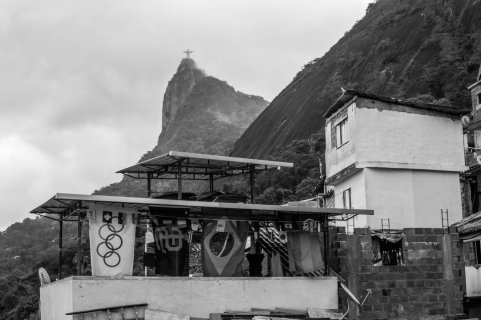
The Christ the Redeemer statue is visible above the Santa Marta favela in Rio de Janeiro. Photo from Joao Velozo for NPR. 

In addition to these issues (and the high-profile Zika virus, which is causing health concerns in multiple countries[7]), concerns surrounding water quality and cleanliness in Brazil has garnered considerable attention. A recent scene involving the diving and water polo pools turning a swamp-green color because of an algae bloom left some athletes complaining of itchy eyes.[8] While the Olympic Games have brought international attention to the impact of water quality on the athletes and visitors, the residents of Rio have been dealing with theses concerns on a daily basis for much longer. With almost 13 million people living in and around Rio, the current sewage system is struggling to cope. One news report[9] notes that “about 50 percent of what Brazilians flush down the toilet ends up in the country’s waterways. Diseases related to contaminated water are the second leading cause of death for children under five in Brazil.” Tests performed in a variety of areas, including the sailing venue of Guanabara Bay, over the course of a year found high levels of “superbugs of the sort found in hospitals on the shores of the bay.” The possibility of hospital sewage entering the municipal sewage system remains a concern.[10]

An economic recession, compounded by water concerns, political unrest, and a presently faltering healthcare system all leave many Cariocas— citizens of Rio– who rely on the public health system in a challenging and hazardous situation across the social, medical, and political spheres. With hopes of local profits from the Olympic Games ranging in the billions of dollars, much is at stake for both residents and investors.[11] Despite the risks and tribulations, many residents welcome the international event and attention, and credit the Olympics for cultivating “several underutilized, often abandoned spaces have been transformed to ones that appeal and cater to local residents”. Many “beautification” projects leave residents hoping the installation of new art and the newly constructed spaces will leave a lasting impression on its residents and visitors long after the games end.[12]  Despite this optimism, the citizens of Rio are not impacted equally by the Games.[13] The improved infrastructures will likely benefit those who already have access to services. Tourism, and tourism cash, has been weak in the favelas, or shantytowns, which house at least 25% of the population in Rio. The infrastructure inequities have even bypassed some neighborhoods entirely, leaving those residents out of the celebrations.[14]

Overall, these Olympic Games promise once again to bring the world’s cultures together in competition and camaraderie, yet they do not do so without controversy. This global spectacle illuminates athletics and sportsmanship, as well as the intersections between cultural events, politics and nationalism, power and profit, and community health. These larger issues lead to questions about what will happen to the residents of Rio after the Games have drawn to a close.


[1] https://culturemedicinepsychiatry.com/2014/07/11/news-the-2014-world-cup-and-healthcare-in-brazil/

[2] http://www.dailycal.org/2014/07/08/uc-berkeley-faculty-graduate-students-look-world-cup-different-light/

[3] http://www.reuters.com/article/us-brazil-health-emergency-idUSKBN0U716Q20151224

[4] http://www.cnn.com/2016/06/18/americas/brazil-rio-state-emergency-funding-olympics/

[5]http://www.reuters.com/article/us-brazil-health-emergency-idUSKBN0U716Q20151224

[6] http://wuwm.com/post/let-s-do-numbers-money-spent-rio-olympics#stream/0

[7] http://www.nytimes.com/2016/01/29/world/americas/brazil-zika-rio-olympics.html?_r=0

[8] http://uk.reuters.com/article/uk-olympics-rio-diving-pool-idUKKCN10O0UW?feedType=RSS&feedName=sportsNews

[9] http://wuwm.com/post/rios-water-problems-go-far-beyond-olympics#stream/0

[10] http://edition.cnn.com/2016/08/02/sport/rio-2016-olympic-games-water-quality-sailing-rowing/index.html

[11] http://www.newsweek.com/rio-2016-who-stands-benefit-successful-olympics-453094

[12] http://www.kvia.com/news/rio-olympics-bring-beautification-projects/40884340

[13] http://www.npr.org/sections/thetorch/2016/08/11/487769536/in-rios-favelas-hoped-for-benefits-from-olympics-have-yet-to-materialize

[14] http://www.reuters.com/video/2016/08/14/olympic-infrastructure-causes-suffering?videoId=369565427

Book Release: Eigen’s “Mad-Doctors in the Dock”

Screen Shot 2016-06-28 at 4.00.17 PM

Image via JHU Press website

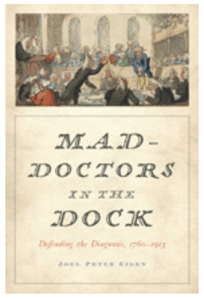
To be published this November 2016 from Johns Hopkins University Press is Joel Peter Eigen’s Mad-Doctors in the Dock: Defending the Diagnosis, 1760-1913. This medical history examines the foundations and early development of the criminal insanity defense in England. Drawing on testimony and documents from almost 1,000 trials, this text examines how physicians, surgeons, and other health care providers connected diagnosis with legal culpability.  The text promises to carefully assess the dynamic relationships between criminal justice, mental health, medicine, and the emergent disciplines of forensic psychology and psychiatry. This book will be of equal interest to anthropologists of medicine and law, as well as psychological anthropologists, historians and sociologists of medicine, and cross-disciplinary scholars in the medical humanities.

To learn more about this upcoming release, click here.

About the Author: Joel Peter Eigen serves as the Charles A. Dana Professor of Sociology at Franklin and Marshall College as well as Principal Fellow (Honorary) at the University of Melbourne. This text is the third in a series that Eigen has published on the history of the insanity defense. The first book, Witnessing Insanity: Madness and Mad-Doctors in the English Court, was released in 1995 by Yale University Press and is available here. The second book, Unconscious Crime: Mental Absence and Criminal Responsibility in Victorian London, was published in 2003 by Johns Hopkins University Press. It can be purchased here.

Issue Highlight Vol 40 Issue 2: Global Health Diplomacy in Ethiopia

cropped-cards.jpg

Across the past few weeks, we have been spotlighting new articles from our June 2016 issue, which you can access in full here. The theme of this special issue is The Clinic in Crisis: Medicine and Politics in the Context of Social Upheaval. This week, we visit Lauren Carruth’s article “Peace in the Clinic: Rethinking ‘Global Health Diplomacy’ in the Somali Region of Ethiopia.” You can read the full article at this link.


In this article, Carruth argues that the politics of global health manifest not only at the scale of “interstate” interactions between governments, NGOs, and international assemblies, but at the local and interpersonal levels between individuals who are giving, receiving, and managing clinical care in “politically insecure” places. Through ethnographic research on two health programs in the Somali region of Ethiopia, the author argues that medical care provision can alternatively strain and strengthen political relationships between people across ethnic and social boundaries.

For instance, Somali people in Ethiopia often refused to seek medical services from the local clinic, Aysha Health Center. Somali patients complained that the Habesha (a native Ethiopian group) nurses were insensitive and uninterested in treating their health concerns. Many Somali informants offered up the same story as evidence: three mothers went to the clinic, and their three children had different ailments. Yet the Habesha nurses did not examine the children, and offered the same drugs to each of the mothers without diagnosing each patient. Somali patients also had difficulty securing a translator who could assist them in conversations with clinicians, who spoke Amharic. The Habesha clinic staff countered that the Somali patients were adverse to biomedical care, instead trusting native folk healers over the clinicians. They added that Somali patients would not adhere to the medication regimens or treatment plans that they recommended. In this case, the friction between Habesha caregivers and Somali patients intensified long-standing ethnic and political tensions at the local scale.

Carruth presents another case, however, where medical aid eases inter-ethnic relationships and ameliorate social rifts between opposing groups. She describes a mobile UNICEF clinic staffed by two Somali clinicians of the Ogaden clan operating in Ethiopia. Though these Somali clinicians were caring for fellow Somali patients, the patients descended from a less politically powerful line which did not have the dominant social standing of the Ogaden: a clan with significant regional power in Ethiopia. Though the patients were of opposing clans, such as the Issa, the two clinicians listened intently to the patients’ complaints, recalled their family lines when they returned for further treatment, and even offered resources like supplementary nutrition to ailing patients despite UNICEF limitations on what types of patients could receive these rations. The patients adored the mobile clinic staff, and the clinicians became integrated into the marginalized communities they served. This example, Carruth notes, highlights the potential for medical aid to facilitate positive and deeply personal relationships between factions in regions that have otherwise experienced significant social unrest.

Carruth concludes that in order to successfully deliver medical aid to places encountering social upheaval or unrest, it is critical to unite oppositional groups within clinical spaces themselves. Providing medical resources and building clinics alone, she notes, fails to address the need to facilitate positive relationships between individuals mired in conflict. Instead, to ease political and social tensions, Carruth posits that clinics and similar treatment centers can serve as sites of caring, communal exchange between otherwise opposed social groups.

Issue Highlight Vol 40 Issue 2: Reproductive Experiences Amongst Haredi Jewish Women

cropped-cards.jpg

Over the next few blog updates, we will be spotlighting new articles from our June 2016 issue, which you can access in full here. The theme of this special issue is The Clinic in Crisis: Medicine and Politics in the Context of Social Upheaval. In addition to articles that address the topics of societal unrest, political change, and human health, this installment also turns to how people navigate change and decision-making within the contexts of their own lives. Specifically, one article questions whether individual autonomy over medical decisions is a characteristic of medical care across cultural contexts. In Teman, Ivry, and Goren’s article “Obligatory Effort [Hishtadlut] as an Explanatory Model: A Critique of Reproductive Choice and Control,” we learn that the notion of reproductive choice and control does not cleanly map onto the procreative experiences of Haredi (ultra-Orthodox Jewish) women. To access this article in full, click here.


Reproductive technologies have expanded the range of procreative choices a woman and members of her family confront: should birth control be used to limit the number of children she wishes to have? Should assisted reproductive technologies (ARTs) be used to facilitate conception, or should a woman abort a fetus that has tested positive for a developmental or congenital ailment? The authors of this article suggest that in these discussions, another question has emerged. Are these decisions truly reflective of individual choice, or do individual mothers and members of their community perceive the reproductive course as one over which no person has ultimate control?

Amongst Haredi (ultra-Orthodox Jewish) women in both the United States and Israel, the authors observed another way that individuals framed their reproductive experiences. Rather than describing their procreative choices as a form of individual control over one’s life course, the Haredi women referenced hishtadlut, or obligatory effort: the notion that they were obliged to God to try to become pregnant, but not responsible for the outcome if they were unable to do so. In hishtadlut, women have “room for effort” in that they may flexibly interpret and enact what constitutes a serious attempt to become pregnant or maintain a healthy pregnancy per their religious duty to God to have children. In this explanatory framing, women recognize that they must consciously make choices that would enable God to enact a divine plan for them: however, they are not accountable for the outcome if, having invested the “effort,” God’s plan does not come to fruition or leads to the birth of a child with a developmental disability or congenital condition.

The concept of hishtadlut extended to the use of various reproductive technologies. For instance, there are many concerns about hereditary genetic illnesses like Tay-Sachs disease within the Haredi community. To ameliorate this issue, blood samples from young Haredi men and women enrolled in high school are collected and catalogued into an anonymous database. If two families are arranging a marriage between a son and a daughter, they are able to consult the database to confirm whether or not both individuals are genetic carriers of an illness. This prevents unions between two carriers who would have a greater likelihood of having a child with a genetic illness; thus a genetic carrier would be paired with a non-carrier spouse. Most women interviewed for the article agreed that this technological system facilitated the will of God, as it reduced the chance that a couple would face the difficulty of raising a disabled or an ill child. Here the technology is seen as a “blessing” from God, as it allows families and couples to avoid “heartbreak,” while bolstering a couple’s ability to have healthy children per God’s divine plan.

In other instances, technology is viewed as irrelevant out of the hishtadlut principle. For example, the Haredi women perceived genetic testing for fetal developmental or other congenital illnesses as having little purpose. In Jewish law, abortions beyond 40 days after conception are prohibited, and all fetal diagnostic testing occurs after this point in a woman’s pregnancy. Thus, the women held that the test was inconsequential, as God’s will for them and their fetus had already been ordained. If a baby was born with a disability, this was part of their fate as decided by God. Here “choice” is viewed as God’s choice for the mother and baby, rather than the mother’s own control over whether or not to give birth to a child with potential developmental or congenital conditions.

As Teman, Ivry, and Goren’s research illustrates, “choice” and “control” do not necessarily apply to the reproductive experiences of women and their families across cultures. Indeed, in a deeply religious community such as the Haredi Jews, “choice” is attributed to God while individual reproductive decision-making is cast as a means to allow God to work through individuals to enact divine will. Haredi women did not describe themselves as accountable for becoming pregnant (or having a healthy child), but they did feel obligated to use technologies and consciously make reproductive decisions or avoid certain interventions. These actions, they held, would enable God to direct their journey to motherhood and to fulfill their purpose as parents.


Issue Highlight Vol 40 Issue 2: Hospitals as Sites of Conflict in Pakistan

cropped-cards.jpg

In the coming blog posts, we will be highlighting new articles from our June 2016 issue, which you can access in full here. The theme of this special issue is The Clinic in Crisis: Medicine and Politics in the Context of Social Upheaval. This week, we will overview Emma Varley’s article “Abandonments, Solidarities and Logics of Care: Hospitals as Sites of Sectarian Conflict in Gilgit-Baltistan.” Read the full article here.


As our past blog highlights have suggested, the clinical space can both act as a site of political protest and serve to facilitate political unity. Varley’s article expands upon these themes by arguing that the clinic can also become a microcosm of inter-group tensions, wherein the hospital itself relays a picture of broader social conflict. Through her analysis of a crisis in a Pakistani hospital, Varley ethnographically demonstrates how Sunni-Shia conflicts manifest in the clinic, and how these tensions are navigated by health professionals employed there.

Varley recounts a shooting and raid which occurred at a hospital in Gilgit-Baltistan in January 2005. Shia gunmen had entered the regional hospital to hunt down Sunni male patients, aiming to retaliate after the assassination of a Shia leader killed by Sunnis. One women’s health ward, operated by nurses of the neutral Ismaili group, was left untouched after the nurses hid Sunni male patients. The nurses protected the men by insisting to the gunmen that there would be no male patients on a female ward: drawing both upon their social role as neutral Ismaili and their gendered role as caregivers of women, who were seen as uninvolved in the conflict at hand. Meanwhile, in a surgical theatre, physicians pretended as if the assassinated Shia leader on their operating table was still alive: hoping to placate the gunmen who threatened them until police or military forces could arrive to dispel the violence. Orderlies and other guards on the wards had, in some cases, fled: leaving clinical staff to defend or otherwise conceal the Sunni patients, and in other cases, fellow Sunni providers.

In reflecting on this incident, Varley notes that the hospital became an example of an “abandoned” space, one in which the necessary governmental protections and securities were not in place to ensure the safety of all patients and clinicians. The onus of protecting patients fell upon the clinicians who staffed the hospital: illustrating both the selflessness of individuals in assisting one another across oppositional group divides, and the potential for hospitals to become sites of medical and political refuge. This increased the trust between Shia providers and their Sunni colleagues in medicine. Conversely, the incident intensified professional divisions between Shia and Sunni providers, as Sunni clinicians later departed the larger regional hospital and took up employment in new Sunni health centers where they felt less at risk.

Though Varley reminds us that conflict is “corrosive” within medical professional relationships, it may also enable “renewed” feelings of trust between caregivers of opposing groups when political unrest unites them under a common aim. In sum, the hospital may serve a site of caregiving exchanges that expand beyond the bounds of medical encounters, as it becomes a sites of political action and negotiation between social groups.

Conference Feature: “Other Psychotherapies”

2012cover

This week on the blog, we are highlighting an upcoming conference on global psychotherapies across geography and time. This feature was written by our CMP social media intern Sonya Petrakovitz, PhD student in anthropology at Case Western Reserve University.


“Other Psychotherapies – across time, space, and culture”

University of Glasgow

Monday, April 3, 2017 – Tuesday, April 4, 2017

This conference brings contemporary forms of Western knowledge about mental health and well-being into dialogue with psychotherapeutic approaches from ‘other’ geographically, historically, or otherwise ‘distant’ cultures. Specifically, presentations will address ancient and medieval approaches to psychotherapy and how those techniques have become incorporated into today’s approaches. The sessions will also explore the development of psychological practices over time and across changing spatialities of care practices, specifically how post-colonial and indigenous forms of healing influenced the perceived credibility of psychotherapies. They will likewise examine the therapeutic/salutogenic dimensions of subcultures.

Addressing psychotherapy in this way brings together multiple disciplines and expands our understandings of medicine, health, culture, therapies, and pedagogies. The themes of the conference would be of interest to historians, physicians, literary scholars, mental health practitioners, anthropologists, and anyone interested in learning about different perspectives on psychotherapies within a broader global context.

For interested applicants, visit the Call for Papers page at http://otherpsychs.academicblogs.co.uk/. The Conference Committee invites abstracts of up to 300 words for 20-minute presentations, to be submitted by no later than August 31, 2016. Abstracts should be emailed to  arts-otherpsychs@glasgow.ac.uk along with a short biography of 100 words or less.

Issue Highlight Vol 40 Issue 2: Medical Humanitarianism and Conflict in Turkey

cropped-cards.jpg

In the next few blog updates, we will be spotlighting new articles from our June 2016 issue, which you can access in full here. The theme of this special issue is The Clinic in Crisis: Medicine and Politics in the Context of Social Upheaval. This week, we will overview Salih Can Aciksoz’s article “Medical Humanitarianism Under Atmospheric Violence: Health Professionals in the 2013 Gezi Protests in Turkey.” Read the full article here.


Aciksoz’s article begins by painting a scene. In the summer of 2013, protests erupted throughout Turkey, leading to violent clashes between armed police forces and civilian protestors. Humanitarian health workers began to establish make-shift infirmaries near known sites of conflict to treat wounded protestors, yet soon themselves became targets of the police who directed tear gas and turned their weapons upon the infirmaries. Those tasked with quashing riots and subduing protests soon fixed their ire on the health professionals who cared for wounded protestors: viewing these clinicians not as neutral aid workers, but instead as complicit members of the uprisings they were attempting to quell. In time, emergency healthcare offered to protestors was deemed criminal activity by the Turkish government.

The author frames the Gezi Protests in terms of the security of medical spaces. Medical humanitarianism, he notes, is premised on the neutrality of care giving centers which serve as a “safe space” for medical aid to be delivered in times of “crisis” to anyone in need. However, this designation as a safe space relies on the authority of a state to recognize it as such. The Turkish government’s criminalization of the humanitarian infirmaries aligned health professionals with protestors, despite any claims to political neutrality. In Turkey, the ability for make-shift infirmaries to serve as neutral care centers was further threatened by the use of a particular weapon: tear gas and similar chemical weapons. An indiscriminate gas could transform entire physical areas– especially enclosed ones– into dangerous structures where all people were at risk of exposure. The use of gas by police forces inside clinics prevented these spaces from being both politically neutral and medically safe for patients and health professionals within.

The state’s designation of infirmaries as a site of criminal activity, and health professionals’ attendance to protestors as insurgent, did not always align with the accounts that Ackisoz collected from Turkish clinicians themselves. Even whenever health professionals confessed that they sympathized with the cause of the protestors, they nevertheless distinguished their political beliefs from their medical obligation. Many described their medical involvement with the protests as a natural response to crisis: as understandable as if they were responding to victims of an earthquake or other disaster. Yet their work also bordered on activism, as numerous clinicians sought to aid protestors after noting the failures of state-operated hospitals and ambulances to attend to the medical needs of all injured protestors.

In sum, Ackisoz argues that what constitutes “medical humanitarianism” borders on many other domains of society: on the state, on the government’s definition of both criminality and on appropriate use of force, on what constitutes political dissidence and whether or not “humanitarianism” is strictly neutral whenever any medical action has the potential to shed light on political failings. The article demonstrates that the ethnographic and social constructivist lenses are well-suited to the analysis of the troubled boundaries between politics and medicine, and between healing and the state in periods of upheaval.


Summer 2016 Update Schedule

cards3

As we head into June, the Culture, Medicine & Psychiatry blog will shift into its summer update schedule of bi-monthly posts. New updates will continue to go live here on our website, and will be spotlighted on our Twitter and Facebook accounts. This summer, we look forward to sharing our latest articles with you, which will arrive in the June 2016 issue. Want to see what will be published at the journal soon? Check out our online first articles here.

As always, we continue to accept submissions for guest commentaries and blog posts on our website. We are also happy to feature new academic book releases by our colleagues in medical anthropology, sociology, and humanities, as well as medical science and technology studies. For details, contact our social media editor Julia Knopes at jcb193@case.edu.

Wishing all the best to our readers,

The CMP Editorial Team