Interview with Sandrine Vollebregt

The next few months we’ll be highlighting authors who have published in Culture, Medicine, and Psychiatry.
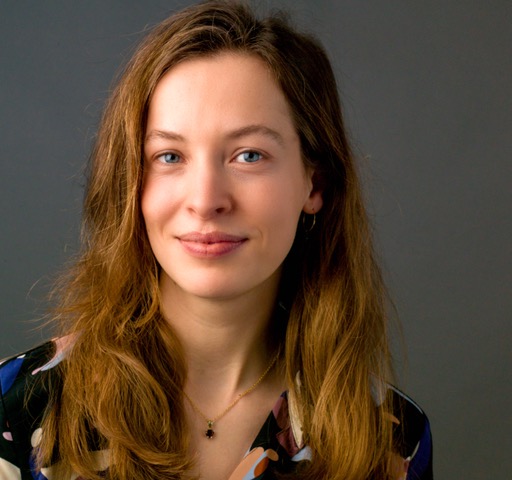
Sandrine Vollebregt, MD, is affiliated with Doctors of the World in Amsterdam, the Netherlands. Sandrine is a 30-year old medical doctor from the Netherlands, based in Amsterdam. She has worked in a primary health clinic for refugees on the Greek island Samos, and in acute psychiatry and the emergency department in the Netherlands. In her free time, she likes to listen to podcasts, cycle and write. 

What is your article Help-Seeking Undocumented Migrants in the Netherlands: Mental Health, Adverse Life Events, and Living Conditionsabout?

In this article we looked at how many undocumented migrants visiting a low-threshold free non-governmental health service had mental health problems. Undocumented migrants are a diverse group comprised of amongst others rejected asylum seekers or labor migrants without a visa. They do not exist officially, cannot work legally, often have poor and uncertain housing conditions, and have in practice a restricted access to health care due to logistical and cultural barriers.

Tell us a little bit about yourself and your research interests.

I am 30 years old and I live in Amsterdam, the Netherlands, in a living community. I am a medical doctor and I have a specific interest in psychiatry. Currently, I am doing a course on global health and tropical medicine at the Royal Tropical Institute. I am very interested in migrant and refugee health, as I believe dealing with migration in a way that respects human rights is one of the great issues of our time. I hope that studying the health of migrants, and looking at how this connects to migration policies, can contribute to this discussion in a positive way by providing evidence based arguments.

What drew you to this project?

I was still a medical student when I saw a call for a student to analyze data on mental health of undocumented migrants in the Netherlands. At the time I just came back from volunteering for the first time in a refugee camp on the island Lesbos in Greece, and I was shocked by the conditions that refugees live in at the borders of Europe. I wanted to learn more about the situation of refugees and undocumented migrants in the Netherlands, my own country. When I started working on this study, I also became a volunteer doctor in a mobile clinic for undocumented migrants that visits certain neighborhoods, squats and shelters. By doing this, I gained deeper connection to and understanding of the people I was studying.

What was one of the most interesting findings?

Mental health problems are very common amongst the group of undocumented migrants we studied. In our study, 81% of the people scored above a threshold for common mental disorders. Common mental disorders are anxiety disorder, depression and psychosomatic disorders. We saw that having traumatic experiences was strongly linked to mental health issues and also to psychotic phenomena, like hearing voices. The traumatic experiences that were documented in the medical files were often severe, like torture and rape.

What are you reading, listening to, and/or watching right now?

I am currently reading a Dutch book of Lieke Marsman which would in English be called ‘The opposite of a human being’, a poetic novel on climate change. I just started the podcast ‘Burn It Down’, an American podcast about a discriminatory and masculine culture at the Amsterdam Fire Department.

If there was one takeaway or action point you hope people will get from your work, what would it be?

Mental health problems are common in undocumented migrants. Health care professionals should be aware of this, explore problems actively and refer to psychological help when necessary. But on a deeper level, I hope that we start asking each other critical questions about how our policies shape the health of undocumented migrants.

Thank you for your time!


Other ways to connect:
LinkedIn
Issue Highlight: Vol 39 Issue 3, Suicide in Rural Kenya

When a new issue of Culture, Medicine & Psychiatry is released, we feature a series of blog posts that highlight these latest publications in our journal. The current September issue includes articles that address psychiatric conditions and the experiences of people with mental illness across cultures. Readers may access the full issue at Springer here: http://link.springer.com/journal/11013/39/3/page/1. In this issue highlight, we will discuss an article on ethnographic analyses of suicide and distress amongst three communities in northern Kenya.


cards3

Suicide in Three East African Pastoralist Communities and the Role of Researcher Outsiders for Positive Transformation: A Case Study

Bilinda Straight, Ivy Pike, Charles Hilton, and Matthias Oesterle – Pages 557-578

http://link.springer.com/article/10.1007/s11013-014-9417-4

The authors of this article strive to establish a nuanced and ethnographically rich understanding of suicide and mental distress in an under-studied population of three distinct, yet interacting, pastoral communities in northern central Kenya. These three groups– the Pokot, Samburu, and Turkana– are engaged in intercommunity conflicts over territory and land use agreements, despite the communities’ shared and entangled oral histories. Such tensions are only exacerbated by mutual fear of raids by other groups, dearths in food available for forage, and the theft of livestock from individuals who sell the animals to finance political campaigns. Poverty is likewise aggravated by these patterns of loss and violence.

This turbulent social environment creates widespread mental distress amongst the three communities, yet individuals from each group stressed to the research team that they felt obligated to persevere despite these pressures, making admitting psychological suffering (and especially confessing thoughts about suicide) deeply taboo. Therefore, any mental health intervention would have to be responsive to the extent to which Pokot, Samburu, and Turkana culture disallow individuals from discussing or even thinking about suicide: an act which could create even more social strain on the family of the person who committed it. The researchers confirmed this inability to discuss suicide by the high rates of non-response on a survey question which asked participants whether or not they had experienced suicidal thoughts.

Suicide thus proves to be a unique case for anthropological analysis because it is both driven by the social conditions of those who take their own lives, as well as disruptive to the communities in which these people lived. Its treatment by global health workers must in turn be sensitive to cultural beliefs that forbid conversation about suicide, especially in communities where the death of an individual may contribute to already extraordinary social distress.

Book Release: Carlo Caduff’s “The Pandemic Perhaps”

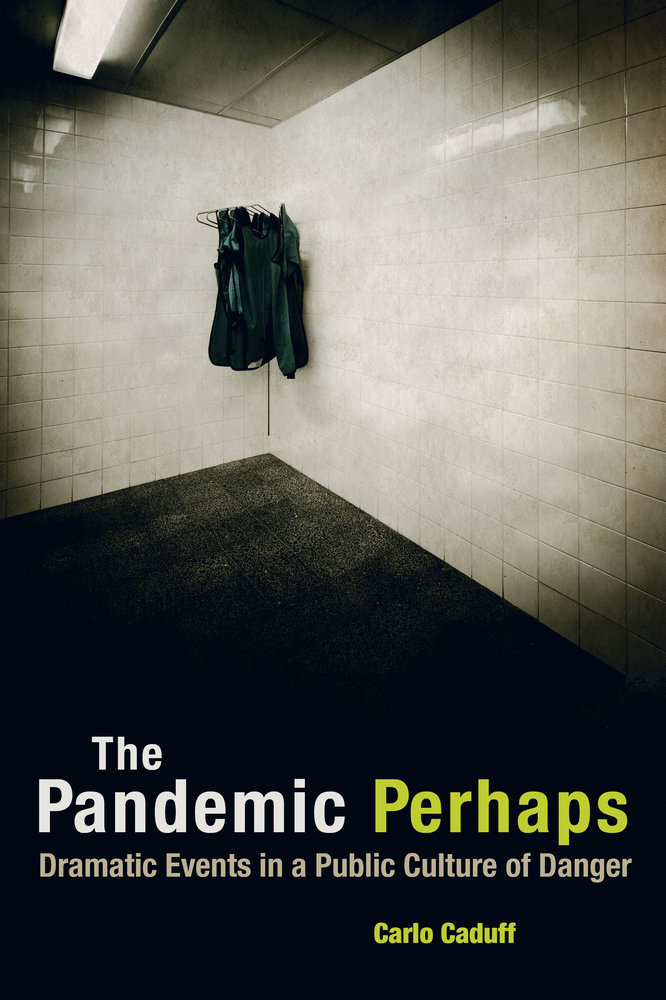
Image via UC Press site

Image via UC Press site

Released this August 2015 from University of California Press is Carlo Caduff’s The Pandemic Perhaps: Dramatic Events in a Public Culture of Danger. In the text, Caduff focuses on alerts in 2005 posted by American experts about a deadly, approaching influenza outbreak. These urgent messages warned that the outbreak would have crippling effects on the economy and potentially end the lives of millions of people. Even though this potentially-catastrophic outbreak ultimately never occurred, preparedness efforts for the slated pandemic carried on.

The text is the product of anthropological fieldwork carried out amongst public health agents, scientists, and other key players in New York City surrounding the influenza scare. Caduff demonstrates how these figures framed the potential outbreak, and how they sought to capture the public’s attention regarding the disease. The book grapples with questions about information, perceived danger, and the meaning of safety in the face of large-scale epidemics. Likewise, Caduff examines how institutions and individuals come to cope with the uncertainty of new outbreaks.

The book will be of interest to cultural medical anthropologists as well as epidemiologists and scholars in public health. Caduff’s work will no doubt shed a timely new light on the way that the threat of epidemics shapes health policy and public perceptions of disease and security.

Caduff is Lecturer in the Department of Social Science, Health, and Medicine at King’s College London. His research addresses the anthropology of science, technology, and medicine, as well as issues surrounding knowledge, expertise, safety, and disease.


For more information on the book, visit the publisher’s website here: http://www.ucpress.edu/book.php?isbn=9780520284098

Current Issue: Preview of Books Received, Part Two

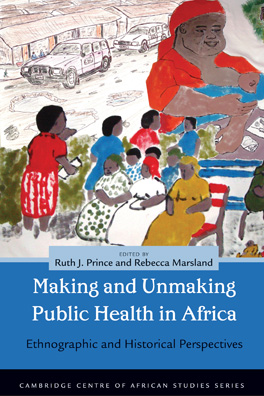
In this special feature on the blog, we’re highlighting recent book publications that have been submitted for review to Culture, Medicine, and Psychiatry. This week, we are pleased to present a short overview of Making and Unmaking Public Health in Africa: Ethnographic and Historical Perspectives, a volume of works edited by Ruth J. Prince and Rebecca Marsland. This book addresses the experience of African public health initiatives from numerous vantage points. Published by the Ohio University Press, a paperback version was released in December 2013. You can learn more about the book here: http://www.ohioswallow.com/book/Making+and+Unmaking+Public+Health+in+Africa.

Book cover image via the Ohio University Press website.

Book cover image via the Ohio University Press website.

Prince and Marsland’s edited collection was the result of a 2008 workshop at the University of Cambridge hosted by the Centre of African Studies and the Department of Social Anthropology. Africa has long served as an “arena” for discussions about global health, human rights, and humanitarian aid, but the notion of health-for-all is complicated against a backdrop of African state formation, international interventions, and transnational policies.

This text explores what public health means for clinical professionals, patients, government officials, and citizens throughout Africa. Instead of generalizing what the meaning of public health to these groups might be, this book aims to establish a rich, complex anthropology of African public health that weighs the importance of politics, culture, and local understanding to the definition and delivery of public health initiatives. The volume covers topics in numerous countries including Uganda, Nigeria, Kenya, and Tanzania, and takes a blended historical-anthropological approach to studying public health.


These brief summaries are intended to give our readers a glimpse into the newest academic publications that we’re excited to discuss in our journal and with our followers on social media. For a full list of books that have been submitted for review at CMP, click this link: http://link.springer.com/article/10.1007/s11013-014-9383-x. This page also has information regarding the submissions process for authors who’d like their academic releases reviewed in the journal, as well as information for those interested in composing a review. For more information on this process, please contact managing editor Brandy Schillace.