Current Issue Highlight: Vol. 38 Issue 4, December 2014

In our “Current Issue Highlight” series, we provide brief synopses of some of the original articles and commentaries published in our latest issue of Culture, Medicine, and Psychiatry. We hope these glimpses into our recent publications serve as a taste of the research we publish, as well as offer fresh insights on the intersections of culture, disease, health, and healing.

“The Ethics of Ambivalence and the Practice of Constraint in US Psychiatry”

Paul Brodwin

“This article,” the abstract begins, “investigates the ambivalence of front-line mental health clinicians toward their power to impose treatment against people’s will.” Ambivalence is itself a psychological construct that describes the tensions between love and hate, or multiple perspectives, within both individual subjects as well as the collective social group: here, psychiatric health workers. Central to this article is the friction generated between the clinicians’ self-concept as caregivers and their professional drive to control patients. Such ambivalence about clinical work in psychiatry is evident in the ethnographic research presented here.

Brodwin’s piece reminds us that anthropology is perfectly situated to draw meaning from these problematic and conflicted perspectives within a social group. Rather than reconciling the participants’ feelings and drawing one universal message from them, Brodwin presents us with an authentic picture of the complicated world of clinical psychiatric practice. He concludes, “To understand the paradox, fieldwork should focus especially on the moments when people’s sense of unease erupts into collective life.”

Link to article: http://link.springer.com/article/10.1007/s11013-014-9401-z

“A Village Possessed by ‘Witches’: A Mixed-Methods Case–Control Study of Possession and Common Mental Disorders in Rural Nepal”

Ram P. Sapkota, et al.

In this article, the authors probe an important question: if we consider spirit possession and psychopathology as separate categories, rather than assume possession as a form of mental illness, how might we describe mental illness within a population who has experienced spirit possession? For societies in which spirit encounters are frequent and socially normative, reading mental illness as distinct from possession is particularly critical when exploring local psychic events.

Nepal provided fertile intellectual grounds for exploring this question because spiritual possession occurs regularly. When the researchers delivered educational sessions on psychosomatic and psychosocial illnesses, suggesting that spirit possession might be a type of mental distress, villagers in the study resisted this notion. They argued that possession was rooted in cosmological and supernatural disturbances, making them altogether different psychological phenomena.

Instead of casting possession as a brand of psychiatric illness, the authors suggest that we might view possession as a coping mechanism against other mental duress. In another way, we could conceive of possession as a cultural idiom of distress: reframing illness in terms of a socially acceptable category of experience that is widely shared.

Link to article: http://link.springer.com/article/10.1007/s11013-014-9393-8

“Confinement and Psychiatric Care: A Comparison Between High-Security Units for Prisoners and for Difficult Patients in France”

Livia Velpry & Benoît Eyraud

Focusing on French mental health care, this article explores the evolving use of confinement as part of the treatment of mentally ill individuals who exhibit violent behavior. The authors parallel the nature of confinement in French psychiatric wards to the security practices of high-security prison units.

In their research, Velpry and Eyraud discovered that the public appeal to heightened security in psychiatric institutions, as well as executive action from the president, led to a “turn” towards new confinement measures. Second, psychiatrists used this new narrative of control to justify control techniques that they argued gave patients “psychic structure.” Rather than standing as its own therapeutic measure, physicians employed confinement as a means of managing “difficult” patients.

As an object of inquiry, this recent trend in French psychiatry recalls the complementary trajectories of care and justice, power and control, as well as reflects on the changing landscape of what we define as therapy.

Link to article: http://link.springer.com/article/10.1007/s11013-014-9400-0

“Psychiatry with Teeth: Notes on Coercion and Control in France and the United States”

Anne M. Lovell & Lorna A. Rhodes

This commentary piece on the articles published in the current issue highlights the “rough edge” of the use of constraint and coercion to subdue “difficult” psychiatric patients. Lovell and Rhodes note that many of the articles demonstrate how these forms of discipline and control are enacted at the local scale, and remind us that the exchange between psychiatric patient and the care institution is the site of the strongest conflict when we look at systems of control. What is the border between “care and custody,” the issue asks? How do we as anthropologists contribute to the knowledge about these complex social interactions?

Furthermore, the authors observe that the geographic emphasis on psychiatric care in France and the United States is hardly accidental. Although care practices for the mentally ill differ widely between the two countries, the focus on constraint and control is similarly present in the scholarly literature produced on psychiatry in each place. Likewise, in French and American research, there is a mutual tendency to study mental health care in terms of autonomy, freedom, humanism, and democracy.

Link to commentary: http://link.springer.com/article/10.1007/s11013-014-9420-9


Want to see a preview and abstracts of all the articles in the current issue? Find details on the full issue here: http://link.springer.com/journal/11013/38/4/page/1
From the Archive: Biomedicine, Chinese Medicine, and Psychiatry

In the “From the Archive” series, we will highlight articles published throughout the journal’s history. We look forward to sharing with our readers these samples of the innovative research that CMP has published on the cultural life of medicine across the globe.

cards3

At the journal, we often present fascinating work on psychiatric care throughout the world, including Joshua Breslau’s 2001 article “Pathways through the Border of Biomedicine and Traditional Chinese Medicine: A Meeting of Medical Systems in a Japanese Psychiatry Department” (volume 25 issue 3.) 

In this piece, Breslau recounts stories of the two medical systems interacting during a meeting of clinicians employing, to varying degrees, traditional Chinese medicine (TCM) alongside biomedical interventions within a Japanese psychiatric department. The author asserts that Japan is perhaps the most common ground for the two medical systems to meet, and that it represents the “traffic” of medical knowledge between Japan, the Asiatic mainland, and the rest of the world. Indeed, Japan has had a lengthy history of exchange with foreign medical systems,beginning with the 18th-century import of anatomy textbooks from Holland. Combined with expanded trade with “the West” in the 19th century and the later resurgence of local Japanese interest in Chinese herbal remedies during the 1970s, we see that the two medical systems have both held a prominent position in the dynamic medical landscape in Japan.

Breslau observes that the two medical systems complement one another most strikingly in psychiatry, where kanpo (herbal treatments) are used both to diminish the uncomfortable side effects of psychoactive medications and to treat conditions for which there are few biomedical interventions. Exemplifying this blended approach to care, the author notes that Dr. Nakai, professor of psychiatry at Kobe University, examines the tongue to diagnose his patients. This method of diagnosis has its roots in TCM, and was taught to Dr. Nakai from a visiting Chinese student; many such Chinese students, having studied TCM, go to Japan to learn “Western medicine.” Although there is little formal education in TCM available in Japan, these interpersonal (and intercultural) exchanges are important mechanisms for sharing diverse medical techniques.

Another physician, Dr. Song, initially specialized in the use of acupuncture to treat psychiatric patients in China. Breslau theorizes that although it seems anomalous for traditional medicine to find a niche in conditions that generally fall under the scope of biomedicine, Dr. Song’s work is a productive blend of psychiatric treatments from both medical systems. Whereas patients in the Chinese biomedical settings were admitted alone, patients and their families stayed together in the TCM centers for mental health, thereby offering a support network that the biomedical patients lacked. In Japan, Dr. Song combined TCM and biomedical approaches. She established an “open ward” psychiatric unit that welcomed patients and their families, and employed both pharmaceutical and herbal remedies depending on the severity and the stage of psychiatric distress suffered by the patient.

Breslau’s piece reminds us of the complicated ways in which cultures are in contact with one another. Rather than reading medicine in China and Japan as a contest, where biomedicine and traditional Chinese medicine are at odds in the race to be deemed “most effective,” it is more accurate to describe the ways that the systems are in dialogue– often in the same clinical settings.

You can find the contents of the full issue in which Breslau’s article is published here: http://link.springer.com/journal/11013/25/3/page/1

Current Issue: Preview of Books Received, Part Two

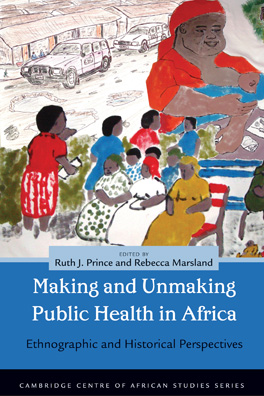
In this special feature on the blog, we’re highlighting recent book publications that have been submitted for review to Culture, Medicine, and Psychiatry. This week, we are pleased to present a short overview of Making and Unmaking Public Health in Africa: Ethnographic and Historical Perspectives, a volume of works edited by Ruth J. Prince and Rebecca Marsland. This book addresses the experience of African public health initiatives from numerous vantage points. Published by the Ohio University Press, a paperback version was released in December 2013. You can learn more about the book here: http://www.ohioswallow.com/book/Making+and+Unmaking+Public+Health+in+Africa.

Book cover image via the Ohio University Press website.

Book cover image via the Ohio University Press website.

Prince and Marsland’s edited collection was the result of a 2008 workshop at the University of Cambridge hosted by the Centre of African Studies and the Department of Social Anthropology. Africa has long served as an “arena” for discussions about global health, human rights, and humanitarian aid, but the notion of health-for-all is complicated against a backdrop of African state formation, international interventions, and transnational policies.

This text explores what public health means for clinical professionals, patients, government officials, and citizens throughout Africa. Instead of generalizing what the meaning of public health to these groups might be, this book aims to establish a rich, complex anthropology of African public health that weighs the importance of politics, culture, and local understanding to the definition and delivery of public health initiatives. The volume covers topics in numerous countries including Uganda, Nigeria, Kenya, and Tanzania, and takes a blended historical-anthropological approach to studying public health.


These brief summaries are intended to give our readers a glimpse into the newest academic publications that we’re excited to discuss in our journal and with our followers on social media. For a full list of books that have been submitted for review at CMP, click this link: http://link.springer.com/article/10.1007/s11013-014-9383-x. This page also has information regarding the submissions process for authors who’d like their academic releases reviewed in the journal, as well as information for those interested in composing a review. For more information on this process, please contact managing editor Brandy Schillace.

Current Issue: Preview of Books Received, Part One

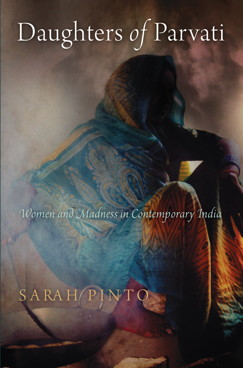
In this special feature on the blog, we’re highlighting recent book publications that have been submitted for review to Culture, Medicine, and Psychiatry. This week, we’d like to give you a short overview of Sarah Pinto’s new book Daughters of Parvati: Women and Madness in Contemporary India, from the University of Pennsylvania Press (more information here: http://www.upenn.edu/pennpress/book/15224.html)

Book cover image courtesy of the University of Pennsylvania Press website

Book cover image courtesy of the University of Pennsylvania Press website

Released earlier this year, Sarah Pinto’s book chronicles the experiences of women at a number of different psychiatric care institutions throughout Northern India. Pinto questions the poor treatment of female patients, the licensing process for mental health caregivers in these settings, as well as the overprescription of psychoactive medications to Indian women. Pinto pays close attention to the ways women in particular experience difficulty and distress as the primary caretakers of their families and households.

The goddess Parvati, whom the book is in part titled after, represents intense love for someone far away that borders on, and becomes, a form of suffering. Pinto invokes the name of this figure as a way to remind us of the mental strain that familial love can cause, especially for the Indian women at the heart of her moving ethnographic account.


These brief summaries are intended to give our readers a glimpse into the newest academic publications that we’re excited to discuss in our journal and with our followers on social media. For a full list of books that have been submitted for review at CMP, click this link: http://link.springer.com/article/10.1007/s11013-014-9383-x. This page also has information regarding the submissions process for authors who’d like their academic releases reviewed in the journal, as well as information for those interested in composing a review. For more information on this process, please contact managing editor Brandy Schillace.

News: Must-See Medical Museums in the USA


Boston, MA

The Warren Anatomical Museum in partnership with Harvard University contains the skeletal remains and the infamous tamping iron of Phineas Gage, as well as phrenological casts and other objects in the history of the study of the human body.

The Public Health Museum is located on the grounds of the former Tewksbury Hospital, and features exhibits on the development of public health in history.

Chicago, IL

The International Museum of Surgical Science, located on the shores of Lake Michigan just north of “The Magnificent Mile,” is a collection of surgical instruments, medical artifacts, and displays on the history of anatomical and surgical learning housed in a beautifully restored former mansion.

The Museum of Science and Industry in the Hyde Park neighborhood is an enormous building which houses not only a permanent collection of plastinated and preserved cadaveric specimens, but features many exhibits on human health, the body, and other areas of scientific and industrial development.

Cleveland, OH

The Dittrick Museum of Medical History houses a newly-renovated exhibit on medical instruments and devices, as well as the Percy Skuy Collection of artifacts in the history of contraception and abortion. It also features exhibitions on the history of birth and on medical practice in the Cleveland area.

Danville, KY

The McDowell House Museum is the restored home and office of Dr. Ephraim McDowell, who for the first time in history in 1809 successfully removed an ovarian tumor. The museum features a collection of early medical equipment in the USA, gardens, and a recreated 19th century apothecary.

Houston, TX

The Health Museum features a series of interactive exhibits about the human body and disease, with rotating exhibitions on various aspects of biomedical technology and science. It is a family-friendly destination if you happen to be in town with little ones.

Indianapolis, IN

The Indiana Medical Museum can be found on the grounds of the former Central State Hospital, inside the old pathology building. The museum highlights the early history of biomedical psychiatry, and in its own words: “maintains a collection of scientific artifacts from the nineteenth and twentieth centuries in a completely authentic setting. Constructed in 1895 and inaugurated in 1896, the nineteen-room Pathological Department Building, as it was then called, is equipped with three clinical laboratories, a photography lab, teaching amphitheatre, autopsy room, and library.”

Kirksville, MO

The Museum of Osteopathic Medicine at A.T. Still University is the first museum dedicated to osteopathic care. It is home to an impressive collection of over 50,000 artifacts in the history of osteopathy, many from the founder of the field: Dr. Andrew T. Still, whose cabin is on the museum grounds.

New York, NY

The Morbid Anatomy Museum, newly opened by independent scholar Joanna Ebenstein, is located in Brooklyn. It features an array of exhibits on the intersections of death, art, and medicine, as well as a coffee café on the bottom level.

Philadelphia, PA

The Mütter Museum is a world-renowned collection of medical oddities and human pathological specimens, including (not for the faint of heart) the mummified body of a woman whose fat chemically decomposed into a soap-like material. The Mütter Museum has partnered with the Penn Museum of Archaeology and Anthropology to offer a one-price two-museum admission ticket, if you wish to visit both institutions.

Rangley, ME

The Wilhelm Reich Museum, situated inside the former home and estate of psychiatrist and psychoanalyst Dr. Wilhelm Reich, displays Dr. Reich’s collection of scientific devices and artwork. It also features a bookstore with the widest selection of his publications, as well as a conference center on the estate grounds.

Rochester, NY

The Rochester Medical Museum and Archive is located in the Rochester Academy of Medicine, and houses a collection of photos, articles, and vignettes on display that document the history of medicine in the Rochester area. The museum also features a climate-controlled storage area for clinical costumes and other artifacts in the history of medicine.

Washington, DC

The National Museum of Health and Medicine highlights not only the historical development of medicine in America, but the impact of medicine during important moments in American history, such as the Civil War and the assassination of President Abraham Lincoln.

The NIH US National Library of Medicine, an impressive collection of medical books and artifacts, is open to the public.

The National Museum of Civil War Medicine features exhibits on medicine and care in the Civil War era, as well as highlighting the changing roles of women and medical professionals in the delivery of treatment at that time.

News: 2015 Conferences in Cultural Studies of Medicine and Medical Humanities

The following is a list of conferences in 2015 with upcoming submission deadlines in the fall. If you are a conference organizer or have a conference you’d like to share in the fields of medical anthropology, medical humanities, or the social science of medicine, please email blog editor Julia Balacko at jcb193@case.edu with the location and date(s) of the conference, as well as submission deadlines. Conferences are listed by the date they will be held.

Medical Humanities for Drew University Transatlantic Connections Conference

January 14-18 2015 Donegal, Ireland

Deadline for submissions: Nov 1st 2014

Ageing Histories, Mythologies and Taboos: CFP Interdisciplinary Conference

University of Bergen, January 30th-31st 2015

Deadline for submissions: Sept 1st 2014

Vesalius and the Invention of the Modern Body

February 26-28th 2015

Washington University in St. Louis and Saint Louis University

(No submissions – invited speakers)

Playing Age (Anthropology and Gerontology)

University of Toronto, Feb. 27-28, 2015

Deadline for submissions: Sept 5th 2014

Medicine and Poetry: From the Greeks to the Enlightenment

March 20th, 2015 University of Miami Coral Gables, Florida

Deadline for abstracts: October 3rd, 2014

The Examined Life Conference: Writing, Humanities, and the Arts of Medicine

The University of Iowa, April 16th-18th 2015

(No submissions- workshop-based conference)

The American Association for the History of Medicine Conference

New Haven, CT, April 30th-May 3rd

Deadline for abstracts: Sept 26th 2014

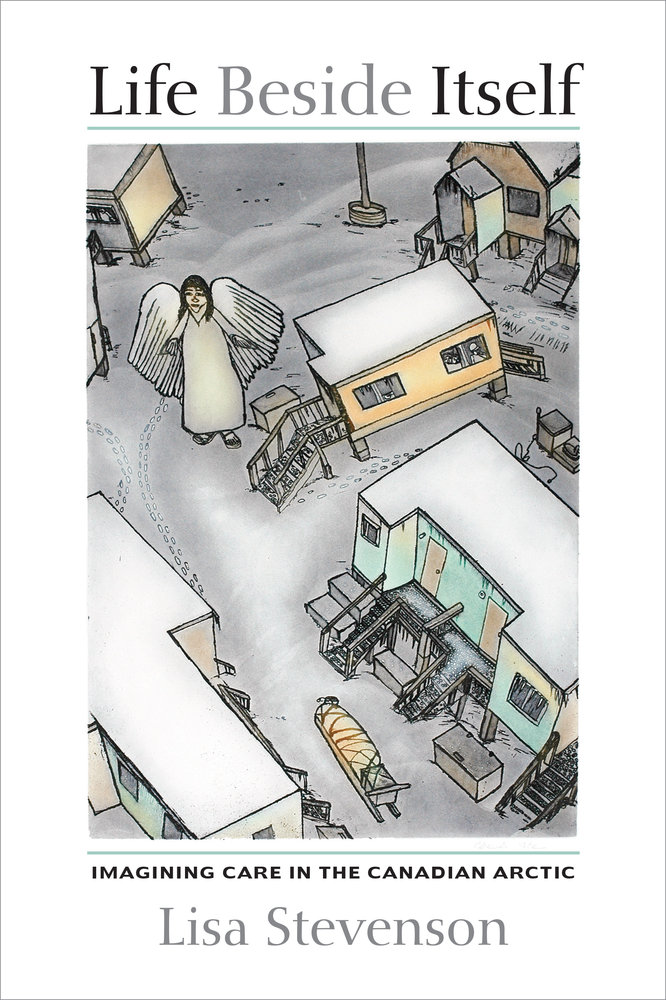
Book Release: Stevenson’s “Life Beside Itself: Imagining Care in the Canadian Arctic”

Cover of Stevenson's book. Rights credited to UC Press.

Cover of Stevenson’s book. Rights credited to UC Press.

This August 2014, Margaret Elizabeth Stevenson’s book on death, illness, and the understanding of life among the Inuit in the Canadian Arctic is set to be released by the University of California Press. The volume will explore two public health crises among the Inuit– a tuberculosis outbreak in the 1950s-60s as well as a suicide epidemic that began in the 1980s and extends into today. In these circumstances, Stevenson reports on how the Inuits cope with the death of their loved ones, realizing that what constitutes “life” is more than just the physical survival of the body.

To read the first chapter of the publication and find further details about Stevenson’s work, check out the page at the university press website here: http://www.ucpress.edu/book.php?isbn=9780520282940

Welcome to the Culture, Medicine, and Psychiatry Website

From all of us on the CMP Journal editorial board, we’d like to extend a few opening words as we launch our new homepage.

This website will feature important information about the article submission process to the journal, as well as detail the newest installments of the journal’s current issue. It will also feature updates on the latest publications in the field of medical anthropology and allied work in the medical humanities, as well as current events that impact our understanding of human health and illness experience throughout the world today. More extensive blog posts exploring the cultural dimensions of medicine and health will be posted to this site as well, composed both by our blog administrator as well as guest writers.

It is our hope that the website will provide an active hub for scholarly work and contemporary trends in medical anthropology and the cultural study of medicine. We thank you for visiting our site and invite you to return for continued updates!

Best wishes,

Atwood Gaines, MA, MPH, PhD

Brandy Schillace, MA, PhD

Catherine Osborn, BA, BS

Stephanie McClure, MA, MPH, PhD

Ariel Casciso, BA, MA

Julia Balacko, MA (blog editor)

Special Issue: Humanness and Modern Psychotropy

The latest issue of Culture, Medicine, and Psychiatry is now up at Springer.com!

Culture, Medicine and Psychiatry

 Volume 38 ˙ Number 2 ˙ June 2014

 Special Issue: Humanness and Modern Psychotropy

Guest Editors:Michael Oldani and Stefan Ecks

Forward:

On Deep History and Psychotropy

Ben Campbell

Introduction: Anthropological Engagements with Modern Psychotropy

Michael Oldani and Stefan Ecks

Special Issue ORIGINAL ARTICLES

Promise and Deceit: Pharmakos, Drug Replacement Therapy, and the Perils of Experience

Todd Meyers

“We Always Live in Fear”: Antidepressant prescriptions by unlicensed doctors in India

Stephen Ecks

The earlier the better – Alzheimer’s prevention, early detection, and the quest for pharmacological interventions

Annette Leibing

Drugs and the Single Woman: Pharmacy, Fashion, Desire and Destitution in India

Sarah Pinto

Deep Pharma: Psychiatry, Anthropology and Pharmaceutical Detox

Michael Oldani

Commentary

Cultural Scripts: The Elusive Role of Psychotropic Drugs in Treatment

Carolyn Rouse

ORIGINAL ARTICLES

Bentuhua: Culturing Psychotherapy in Postsocialist China

Li Zhang

Review Essay

Hendricks, Ruud. Autistic Company. New York: Rodopi, 2012

Ariel Cascio

 Opinion

Keep Your Sunny Side: A Street Level Look at Homelessness

Stephen G. Frischmuth

BOOK REVIEWS

Peter Redfield, Life in Crisis: The Ethical Journey of Doctors Without Borders. Berkely: University of California Press, Berkley, 2013.

By Darryl Stellmach

BOOKS RECEIVED

COMINGS AND GOINGS

END MATTERS