From the Archive: Eating Disorders Amongst Japanese Women

In our “From the Archive” series, we revisit an article published in past issues of Culture, Medicine & Psychiatry. This week, we’re highlighting a piece on eating disorders in Japan, originally featured in our December 2004 issue.

cropped-cropped-2009cover-copy1.jpg

Kathleen Pike and Amy Borovoy’s article “The Rise of Eating Disorders in Japan: Issues of Culture and Limitations of the Model of ‘Westernization'” makes a poignant case for the importance of context when examining eating disorders across the world. In this piece, they argue that studies of eating disorders abroad have often attributed the etiology of these illnesses to an increasing visibility and presence of Western beauty standards that accompany the spread of new technologies, medias, and communication tools. While Western beauty ideals have been problematically exported to the non-Western and developing worlds in other cases, Pike and Borovoy suggest that this model does not account for the experience of eating disorders in Japan.

Westernization and modernization, they note, are two distinct processes: and Japan, which has developed economically but retained many of its traditional social roles, exemplifies this difference. Modernization is the process of economic and technological development as a nation shifts from traditional to modern (often, mechanized). Westernization may be defined as the process of integrating the lifestyle, values, and experiences of Western cultures into the fabric of society, especially during periods of modernization and economic change.

Despite the drive for modernization, Japanese women are still expected to be homemakers and mothers rather than career women in the new economy. The Japanese have not adopted the individualistic and feministic sensibilities of the Western world, and the domestic burden– both caring for the home and children, and tending to older family members– squarely falls upon wives and mothers. This creates enormous stress for young women, who wish to extend their adolescent years and savor the freedom between childhood and their adult lives, as defined by marrying and becoming a homemaker. Modernization allows young Japanese women to obtain jobs, travel widely, and earn an education, but traditional social roles do not create a space for women to enjoy such a designated period of freedom without familial commitment. The inevitability of domestic life, then, is ever-present in the lives of women who yearn for fewer responsibilities– even if just for a time. This creates feelings of distress, unease, or unhappiness in many young women.

Pike and Borovoy observe that Japanese women do not reject food (anorexic behavior) or induce vomiting (bulimic behavior) out of a desire for thinness or due to fat phobia, as women with eating disorders almost universally experience in Western nations. Rather, Japanese women stress that they reject food because it worsens their digestive complaints, which are connected to the anxiety and stress they feel out of dissatisfaction with their social role (or lack thereof.) The tension between women’s expected social functions, and their desire to live and work in some other way, therefore spurs disordered eating within this broader frame of mental distress.

As we see, women’s experiences of Japanese eating disorders are entwined in the fabric of traditional social life, and not rooted exclusively in imported ideas of the body, independence, and individualism per the Western way of life. Indeed, the non-fat phobic symptomatology of eating disorders reflects the essential differences between Japanese women with eating disorders and their peers in Western nations. The study highlights the centrality of culture in studies of mental illness, and the way that these conditions emerge out of a local social world.


To find the full article online, click here: http://link.springer.com/article/10.1007/s11013-004-1066-6
Vol. 39 Issue 1 March 2015: Medicalizing Heroin

In addition to our From the Archive series, where we highlight past articles in the journal’s history, the CMP blog features selected previews of our latest issue. This week, we again take a sneak peek into an article from the March issue: the first installment of 2015’s Volume 39 of Culture, Medicine & Psychiatry.


Heroin: From Drug to Ambivalent Medicine

On the Introduction of Medically Prescribed Heroin and the Emergence of a New Space for Treatment

Birgitte Schepelern Johansen • Katrine Schepelern Johansen. Pages 75-91. Link to article: http://link.springer.com/article/10.1007/s11013-014-9406-7

This article examines the reintroduction of heroin as a medicine, as opposed to illicit drug, in the treatment of substance abuse patients. Unlike existing research on this topic, the authors here emphasize the exchanges between the users, the staff, and the material space of the implementation of heroin: the built and organizational environments of the clinic, rather than just the actors in this space alone.

Heroin exists in a complicated place in these clinics: it is (paradoxically) utilized to minimize addiction to it. Rather than marginalizing the drug, this process of managed heroin prescription lends the drug a central place in the lives of users and staff, albeit a place that ambivalently lies between drug use as pleasure and drug injection as a form of medicalized control.

cards3

When considering the rooms in the clinic where the staff injects heroin into clients, the authors note that the space is strictly regulated. Staff observe incoming clients, while those who carry out injections do not permit the patients from selecting where the drug is administered. Likewise, this clinical space is not used for socializing: clients don’t casually talk while waiting, and typically depart this area and linger in the facility’s more casual cafe after receiving their injection. The clinical space removes the use of heroin from the context of pleasure-seeking, and assumes control for the drug’s use. Although the substance is the same, heroin users’ experiences of the drug in recreational settings is deliberately set apart from its use in the clinic.

Yet distinguishing the clinical space where heroin is injected, while no doubt increasing medicalized control over the substance, also complicates the notion of the drug as unquestionably destructive. Clients move into a social, casual environment in the cafe after initial injection. Even the clinical space itself underscores the intimacy of intravenous drug use, as staff and clients engage one-on-one during the injections. The staff similarly struggle with the complex nature of heroin as an illegal drug, made most evident by the strict safeguarding of the location where heroin is stored.

Although the medicalization of heroin abuse may serve to diminish the criminal stigma surrounding use of the drug, medical models of treatment remain entangled in older ideas of substance illegality, criminality, and the stringent enforcement of substance abuse policies. Conversely, the clinical treatment space and its organization is arranged in such a way that muddies the boundary between pleasure and treatment. The authors thereby illustrate the complexity of moving towards a medical model of heroin treatment, and how notions of control evolve with the changing landscape of substance abuse policy.

AAA 2014: Sessions on Psychiatry, Mental Illness, and Drugs

For our readers attending the American Anthropological Association annual meeting this year, we’re featuring a list of sessions sure to pique your interest in various aspects of mental illness, health, drugs, and psychiatric care. The following selection of sessions was drawn from this year’s AAA online presentation schedule for the 2014 annual meeting, to be held this year in Washington, DC from December 3-7th (for more information, click here: http://www.aaanet.org/meetings). Sessions in the list are organized by chronological date and time.

If you would like your session to be added to this list, please email a link to the session description on the AAA website to: jcb193@case.edu.

Global Mental Healthcare: Challenges, Controversies and Innovations

Wednesday, December 3rd 2pm-3:45pm

http://aaa.confex.com/aaa/2014/webprogram/Session12926.html

“Global” Knowledge, “Local” Care, and Subjectivity: Producing an Anthropology of Psychosis

Wednesday, December 3rd 2pm-3:45pm

http://aaa.confex.com/aaa/2014/webprogram/Session11392.html

Psyche and the Brain in the 21st Century

Wednesday, December 3rd 4pm-5:45pm

http://aaa.confex.com/aaa/2014/webprogram/Session11636.html

Transcendance and the Everyday in Responses to Trauma

Thursday, December 4th 2:30-4:15pm

http://aaa.confex.com/aaa/2014/webprogram/Session11838.html

What Drugs Produce

Saturday, December 6th 9am-10:45am

http://aaa.confex.com/aaa/2014/webprogram/Session11124.html

Psychological Disorder and Subjectivity in Socio-Political Context

Saturday, December 6th 11am-12:45pm

http://aaa.confex.com/aaa/2014/webprogram/Session12768.html

Ordering, Morality and Triage: Producing Medical Anthropology Beyond the Suffering Subject Part 2: Mental Health and Illness

Saturday, December 6th 2:30pm-4:15pm

http://aaa.confex.com/aaa/2014/webprogram/Session11809.html

Professional Perspectives in the Anthropology of Drugs

Saturday, December 6th 6:30pm-8:15pm

http://aaa.confex.com/aaa/2014/webprogram/Session11263.html

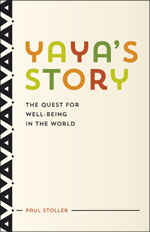
Book Release: Paul Stoller’s “Yaya’s Story: The Quest for Well-Being in the World”

9780226178790

Image from UC Press website

Out this month from the University of Chicago Press is Paul Stoller’s book Yaya’s Story: The Quest for Well-Being in the World. The text traces the author’s friendship with a Songhay trader from Niger named Yaya Harouna: a man who moved to the United States as Stoller, an anthropologist, had likewise made a journey from the USA to Africa as a Peace Corps volunteer. Their story begins whenever Stoller meets Yaya selling artwork in an African market in New York City’s Harlem neighborhood, where Stoller carried out research.

Although the men’s histories are markedly different, they become close after the two are each diagnosed with cancer: this serves as the heart of Yaya’s Story, and the experience upon which the two men’s culturally divergent, yet not entirely dissimilar, narratives cross paths. With extensive publications in the genres of both ethnography and memoir, Stoller is certain to blend keen anthropological insight with deeply personal accounts of human suffering, endurance, and resilience in the face of illness across cultures in his latest book.

Stoller, Professor of Anthropology at West Chester University, is a 1994 winner of a Guggenheim Fellowship and the 2013 recipient of the prestigious Anders Retzius Gold Medal in Anthropology from the King of Sweden.

You can find out more about the book here, at the UC Press website:

http://www.press.uchicago.edu/ucp/books/book/chicago/Y/bo18882897.html

Publication Highlight: “Online First” Articles (Oct 2014), Part One

The following collection of articles are from our “Online First” file at our publisher’s website: http://link.springer.com/journal/11013. The full text of these articles will be released in upcoming issues of Culture, Medicine, and Psychiatry, but here we’d like to lend our readers a glimpse into the innovative research in medical anthropology and social medicine that the journal publishes.

Clicking the title of each paper will send you to the “Online First” page for each article, including a full list of authors and abstracts.

cards

A Village Possessed by “Witches”: A Mixed-Methods Case–Control Study of Possession and Common Mental Disorders in Rural Nepal

Ram P. Sapkota, et al

Practicing and Resisting Constraint: Ethnography of “Counter Response” in American Adolescent Psychiatric Custody

Katherine Hejtmanek

The Invisibility of Informal Interpreting in Mental Health Care in South Africa: Notes Towards a Contextual Understanding

Leslie Swartz & Sanja Kilian

Learning Disabilities’ as a ‘Black Box’: On the Different Conceptions and Constructions of a Popular Clinical Entity in Israel

Ofer Katchergin

From the Archive: Biomedicine, Chinese Medicine, and Psychiatry

In the “From the Archive” series, we will highlight articles published throughout the journal’s history. We look forward to sharing with our readers these samples of the innovative research that CMP has published on the cultural life of medicine across the globe.

cards3

At the journal, we often present fascinating work on psychiatric care throughout the world, including Joshua Breslau’s 2001 article “Pathways through the Border of Biomedicine and Traditional Chinese Medicine: A Meeting of Medical Systems in a Japanese Psychiatry Department” (volume 25 issue 3.) 

In this piece, Breslau recounts stories of the two medical systems interacting during a meeting of clinicians employing, to varying degrees, traditional Chinese medicine (TCM) alongside biomedical interventions within a Japanese psychiatric department. The author asserts that Japan is perhaps the most common ground for the two medical systems to meet, and that it represents the “traffic” of medical knowledge between Japan, the Asiatic mainland, and the rest of the world. Indeed, Japan has had a lengthy history of exchange with foreign medical systems,beginning with the 18th-century import of anatomy textbooks from Holland. Combined with expanded trade with “the West” in the 19th century and the later resurgence of local Japanese interest in Chinese herbal remedies during the 1970s, we see that the two medical systems have both held a prominent position in the dynamic medical landscape in Japan.

Breslau observes that the two medical systems complement one another most strikingly in psychiatry, where kanpo (herbal treatments) are used both to diminish the uncomfortable side effects of psychoactive medications and to treat conditions for which there are few biomedical interventions. Exemplifying this blended approach to care, the author notes that Dr. Nakai, professor of psychiatry at Kobe University, examines the tongue to diagnose his patients. This method of diagnosis has its roots in TCM, and was taught to Dr. Nakai from a visiting Chinese student; many such Chinese students, having studied TCM, go to Japan to learn “Western medicine.” Although there is little formal education in TCM available in Japan, these interpersonal (and intercultural) exchanges are important mechanisms for sharing diverse medical techniques.

Another physician, Dr. Song, initially specialized in the use of acupuncture to treat psychiatric patients in China. Breslau theorizes that although it seems anomalous for traditional medicine to find a niche in conditions that generally fall under the scope of biomedicine, Dr. Song’s work is a productive blend of psychiatric treatments from both medical systems. Whereas patients in the Chinese biomedical settings were admitted alone, patients and their families stayed together in the TCM centers for mental health, thereby offering a support network that the biomedical patients lacked. In Japan, Dr. Song combined TCM and biomedical approaches. She established an “open ward” psychiatric unit that welcomed patients and their families, and employed both pharmaceutical and herbal remedies depending on the severity and the stage of psychiatric distress suffered by the patient.

Breslau’s piece reminds us of the complicated ways in which cultures are in contact with one another. Rather than reading medicine in China and Japan as a contest, where biomedicine and traditional Chinese medicine are at odds in the race to be deemed “most effective,” it is more accurate to describe the ways that the systems are in dialogue– often in the same clinical settings.

You can find the contents of the full issue in which Breslau’s article is published here: http://link.springer.com/journal/11013/25/3/page/1

Current Issue: Preview of Books Received, Part Two

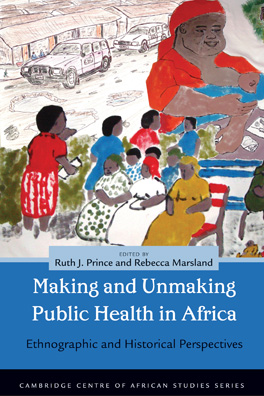
In this special feature on the blog, we’re highlighting recent book publications that have been submitted for review to Culture, Medicine, and Psychiatry. This week, we are pleased to present a short overview of Making and Unmaking Public Health in Africa: Ethnographic and Historical Perspectives, a volume of works edited by Ruth J. Prince and Rebecca Marsland. This book addresses the experience of African public health initiatives from numerous vantage points. Published by the Ohio University Press, a paperback version was released in December 2013. You can learn more about the book here: http://www.ohioswallow.com/book/Making+and+Unmaking+Public+Health+in+Africa.

Book cover image via the Ohio University Press website.

Book cover image via the Ohio University Press website.

Prince and Marsland’s edited collection was the result of a 2008 workshop at the University of Cambridge hosted by the Centre of African Studies and the Department of Social Anthropology. Africa has long served as an “arena” for discussions about global health, human rights, and humanitarian aid, but the notion of health-for-all is complicated against a backdrop of African state formation, international interventions, and transnational policies.

This text explores what public health means for clinical professionals, patients, government officials, and citizens throughout Africa. Instead of generalizing what the meaning of public health to these groups might be, this book aims to establish a rich, complex anthropology of African public health that weighs the importance of politics, culture, and local understanding to the definition and delivery of public health initiatives. The volume covers topics in numerous countries including Uganda, Nigeria, Kenya, and Tanzania, and takes a blended historical-anthropological approach to studying public health.


These brief summaries are intended to give our readers a glimpse into the newest academic publications that we’re excited to discuss in our journal and with our followers on social media. For a full list of books that have been submitted for review at CMP, click this link: http://link.springer.com/article/10.1007/s11013-014-9383-x. This page also has information regarding the submissions process for authors who’d like their academic releases reviewed in the journal, as well as information for those interested in composing a review. For more information on this process, please contact managing editor Brandy Schillace.

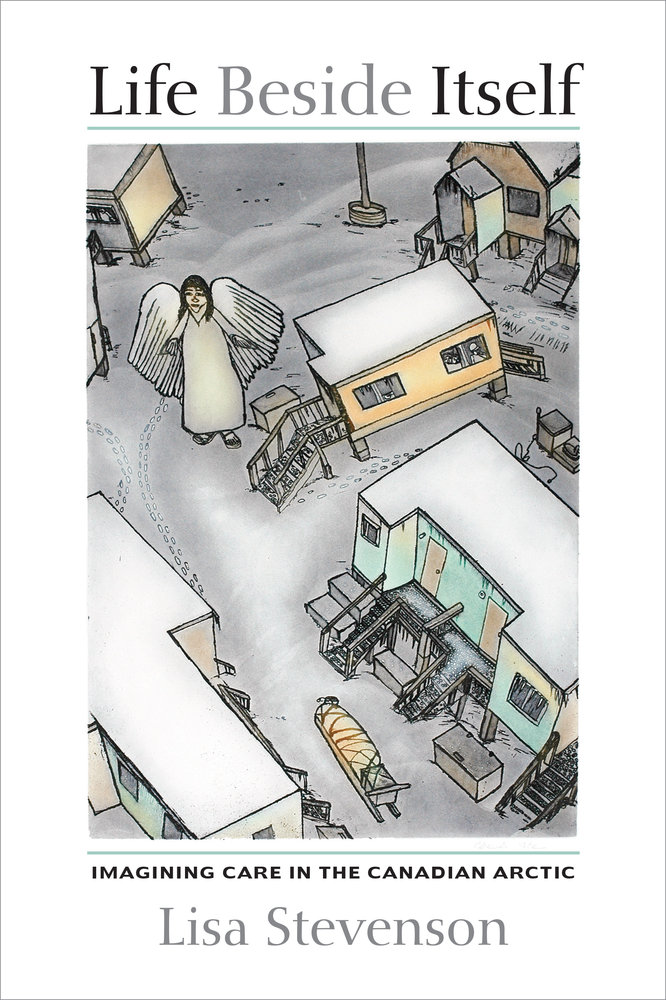
Book Release: Stevenson’s “Life Beside Itself: Imagining Care in the Canadian Arctic”

Cover of Stevenson's book. Rights credited to UC Press.

Cover of Stevenson’s book. Rights credited to UC Press.

This August 2014, Margaret Elizabeth Stevenson’s book on death, illness, and the understanding of life among the Inuit in the Canadian Arctic is set to be released by the University of California Press. The volume will explore two public health crises among the Inuit– a tuberculosis outbreak in the 1950s-60s as well as a suicide epidemic that began in the 1980s and extends into today. In these circumstances, Stevenson reports on how the Inuits cope with the death of their loved ones, realizing that what constitutes “life” is more than just the physical survival of the body.

To read the first chapter of the publication and find further details about Stevenson’s work, check out the page at the university press website here: http://www.ucpress.edu/book.php?isbn=9780520282940