Issue Highlight: Vol 39 Issue 3, Maya Mental Disorders in Belize

With each new issue of Culture, Medicine & Psychiatry, we feature a series of blog posts that highlight the latest publications in our journal. This September’s issue includes articles that address psychiatric conditions and the experiences of people with mental illness across numerous cultures. Readers may access the full issue at Springer here: http://link.springer.com/journal/11013/39/3/page/1. In today’s issue highlight, we will examine a study on indigenous nosologies of mental illness amongst the Maya of Belize.


cropped-cards.jpg

Narrative Structures of Maya Mental Disorders

Andrew R. Hatala, James B. Waldram, and Tomas Caal – Pages 449-486

http://link.springer.com/article/10.1007/s11013-015-9436-9

To understand the compatibility of divergent medical traditions, it is first essential to describe how medical systems classify and interpret disorders in particular ways. With this aim in mind, the authors of this ethnographic study sought to develop an picture of indigenous mental illness nosology amongst the Q’eqchi’ Maya of southern Belize. They also asked how this knowledge may alternatively coexist, or compete, with biomedical concepts of suffering.

In order to learn about this indigenous medical epistemology, the authors worked with the Maya Healers’ Association, a professional, self-regulated group of twelve healers who maintain a garden of medicinal plants for research and who strive to reinvigorate traditional medical practice in Belize. Across ninety-four interviews with healers, the authors uncovered four illness categories that the participants used to describe the roots of mental illnesses: “thinking too much,” fright, the day of birth, and spirit “attacks.”

These descriptions are sometimes cross-compatible with DSM-V nosologies, as the researchers discovered that “thinking too much” was also listed as a symptom in biomedical models of mental illness. However, unlike the DSM-V, Maya healers tended to characterize overthinking as a “genre” of illness experience rather than as a discrete symptom. Maya healers also characterize mental illnesses as existing within the heart, the mind, and the spirit: thereby expanding the implications of mental illness beyond brain physiology, the proximate explanation employed by biomedical psychiatry.

The authors conclude that it is essential to understand the similarities in the two nosologies to facilitate collaboration between indigenous and biomedical healers, but add that both groups must also be aware of the differences in classificatory schemes that they use to interpret mental illness. In this way, people with mental disorders in Belize may best receive care that accounts for all of the ways they might seek care and understand their illness across the boundaries of medical systems.

Guest Blog: The Autism Spectrum, Anorexia, and Gender

This week on the blog, we are hosting a guest post by Carolyn Smith, MA, a third-year PhD student in medical anthropology at Case Western Reserve University. Carolyn studies the intersections of mental health, eating, and the body, blending biological and cultural approaches. This blog post complements our July 2015 issue on autism, which you can read more about in the links provided at the end of the guest post.


In Autism spectrum disorders: Toward a gendered embodiment model, Cheslack-Postava and Jordan-Young[1] argue the importance of gender theory in understanding the preponderance of male cases with autism spectrum disorders (ASD) in the United States. In addition to evidence of autism as sex-linked, the authors argue that there is evidence as well for biases in diagnosing autism, and that social environment likely plays a role in male susceptibility. The literature on anorexia nervosa offers a parallel argument: anorexia nervosa, like autism, is often described in terms of biological risk factors[2] yet it remains a socially charged, deeply gendered diagnosis. In the USA and other societies with thin female beauty ideals, for instance, anorexia nervosa is most widely attributed to women.[3]

Both anorexia nervosa and ASD are recognized by the American Psychological Association (APA) and have specific criteria. While these categorizations are justifiably scrutinized by medical anthropologists, here I use the APA criteria as a cultural document that reflect what conditions that biomedical practitioners in the United States are cataloguing when they demarcate mental conditions. Anorexia nervosa is an eating disorder characterized as one of the most fatal mental illnesses in the United States.[4] Diagnostic criteria in the Diagnostic and Statistical Manual of Mental Disorders, Fifth Edition (DSM-V) includes restrictive eating and an intense fear of gaining weight/persistent behaviors to prevent weight gain. [5] One key criterion for anorexia is being of low body weight with the absence of any other pathology. The inclusion criteria have changed over the years, as have social ideas about the disorder and who suffers from it. Meanwhile, autism is classified as a neurodevelopmental disorder with social deficits and rigid behaviors.[6] The understandings of autism, like anorexia nervosa, have also changed over time in the United States.
cards3

Yet gendered categories for these conditions persist. In the realm of psychiatric health, autism is assumed to be a male disorder, and anorexia nervosa, a woman’s diagnosis. This simple categorization overlooks the extent to which anorexia and autism are demonstrably comorbid in studies carried out in the USA and the UK.[7] [8] [9] One study from the UK, in fact, found that anorexics, restrictive-type were five times more likely than the general population to score as high on the Autism Questionnaire as someone with an ASD. 9 This finding offers no simple cause-and-effect explanation for how the two disorders are linked. However, this new data suggests that the body, the mind, gender roles, and dieting behaviors may be entwined in ways that resonate with cultural beliefs and categories.

There are competing theories about the etiologies of anorexia as well as autism, each with gendered overtones that do not reflect the findings of associations between the two psychiatric conditions. One theory of autism is that it is linked to a “hypermasculinized” brain.[10] Meanwhile, in a 2012 article for Psychology Today, Maestripieri argues that anorexia may be due to a “hyperfeminine” brain. The two conditions, it seems, appear to be “oppositional.”[11] However, these theories do not capture the wide diversity of cultural perspectives within the USA or UK, meaning there may be unique gendered understandings of psychiatric disorders between social groups that are not accounted for in existing research. In either case, what is clear is that cultural categories of psychiatric conditions in the US and UK may be missing how patients (of any gender, from numerous cultural backgrounds) live and seek care with either condition.

These gendered categories become even more complex for individuals diagnosed as both autistic and anorexic. The comorbidity of ASD and anorexia is complicated by the fact that restrictive dieting in anorexia may lead to cognitive impairment, which subsequently causes behaviors that might be confused with cognitive patterns on the autism spectrum. However, people with anorexia do report having autistic traits prior to the onset of their eating disorder, and people recovering from anorexia appear more often than non-anorexics to fall along the autism spectrum. 6,7 Thus, the two illnesses co-produce one another in ways that cross traditional gender lines (autism as male, anorexia as female) while also making it difficult, if not impossible, to isolate each condition from the other. Here medical anthropologists can offer valuable perspectives from the view of patients, who may describe their eating patterns and body image in terms that span and challenge existing diagnostic divisions.

Though there may be no empirical means to measure the extent to which ASD and anorexia overlap, existing theories about socialization may shed some light on how these two illnesses co-occur. There are numerous common traits between anorexia nervosa and ASD, including perfectionism, social withdrawal, and obsessive thinking.6 Girls and women with anorexia appear to have other similar traits to boys and men with autism: systematizing, a fascination with details, and resistance to change. Anorexic individuals with these autistic traits, Baron-Cohen hypothesizes, could become fixated on the systemic relationships behind body weight, shape, and food intake.[12]Of course, this would depend on whether or not the person with autism was brought up in a cultural environment where food intake and body shape are viewed as something that can and should be regulated at all. Here is where socialization may play a crucial role in the development of anorexia nervosa out of behavioral patterns attributed most often to autism.

The comorbidity of ASD and anorexia nervosa presents an anthropologically complex case where discrete classifications of mental illness may not reflect the connectedness of the two conditions. Likewise, the gendering of each illness as dualistic male-autistic and female-anorexic overlooks the extent to which the conditions share behaviors, tendencies, and thought patterns. Though national clinical studies in the USA and the UK suggest a connection between autism and anorexia, cultural readings of gender, eating, and self-regulation amongst patients with comorbid cases might better illuminate how these conditions manifest on the local scale, and between cultural groups.


Additional Reading

Publications:

Jaffa, T., Davies, S., Auyeung, B., Allison, C., & Wheelwright, S. (2013). Do girls with anorexia nervosa have elevated autistic traits. Mol Autism, 4(1), 24.

Nilsson, E. W., Gillberg, C., Gillberg, I. C., & Raastam, M. (1999). Ten-year follow-up of adolescent-onset anorexia nervosa: personality disorders. Journal of the American Academy of Child & Adolescent Psychiatry, 38(11), 1389-1395.

Oldershaw, A., Treasure, J., Hambrook, D., Tchanturia, K., & Schmidt, U. (2011). Is anorexia nervosa a version of autism spectrum disorders?. European Eating Disorders Review, 19(6), 462-474.

Websites: 

ASD and Autism

https://www.psychologytoday.com/blog/games-primates-play/201208/the-extreme-female-brain

http://www.medicalnewstoday.com/articles/264666.php

https://books.google.com/books?hl=en&lr=&id=iPGFAgAAQBAJ&oi=fnd&pg=PR10&dq=malson+the+thin+woman&ots=sQPGnzOFN1&sig=ZSv8OMyuNAFQ3UgBOWZTEX5lHAg#v=onepage&q=malson%20the%20thin%20woman&f=false

CMP Special Issue Features: July 2015 Issue on Autism

https://culturemedicinepsychiatry.com/2015/07/08/special-issue-highlight-the-anthropology-of-autism-part-1/

https://culturemedicinepsychiatry.com/2015/07/22/special-issue-highlight-the-anthropology-of-autism-part-2/

https://culturemedicinepsychiatry.com/2015/08/05/autism-in-brazil-and-italy-two-cases-from-the-june-2015-special-issue/


References Cited

[1] Cheslack-Postava, K., & Jordan-Young, R. M. (2012). Autism spectrum disorders: toward a gendered embodiment model. Social science & medicine, 74(11), 1667-1674. “Our argument is fully biosocial, and our main points in advancing it are to articulate a model for autism, specifically for explaining the male-female disparities in prevalence, that does not exclude social environmental variables, and is therefore more biologically satisfying; and to demonstrate concrete mechanisms whereby autism may become more prevalent in males as a result of social structures and processes related to gender (p. 1673).”

[2] Bulik, C. M., Slof-Op’t Landt, M. C., van Furth, E. F., & Sullivan, P. F. (2007). The genetics of anorexia nervosa. Annu. Rev. Nutr., 27, 263-275.

[3] Malson, H. (2003). The thin woman: Feminism, post-structuralism and the social psychology of anorexia nervosa. Routledge.

[4] Arcelus J, Mitchell AJ, Wales J, Nielsen S. Mortality Rates in Patients With Anorexia Nervosa and Other Eating Disorders: A Meta-analysis of 36 Studies. Arch Gen Psychiatry. 2011;68(7):724-731.

[5] IBD

[5] IBD

[6] American Psychiatric Association. (2013). Diagnostic and statistical manual of mental disorders: DSM-5 (5th ed.).

[7] Zucker, N. L., Losh, M., Bulik, C. M., LaBar, K. S., Piven, J., & Pelphrey, K. A. (2007). Anorexia nervosa and autism spectrum disorders: guided investigation of social cognitive endophenotypes. Psychological bulletin, 133(6), 976.

[8] Nilsson, E. W., Gillberg, C., Gillberg, I. C., & Raastam, M. (1999). Ten-year follow-up of adolescent-onset anorexia nervosa: personality disorders. Journal of the American Academy of Child & Adolescent Psychiatry, 38(11), 1389-1395.

[9] Baron-Cohen., Jaffa, T., Davies, S., Auyeung, B., Allison, C., & Wheelwright, S. (2013). Do girls with anorexia nervosa have elevated autistic traits. Mol Autism, 4(1), 24.

[10] Baron-Cohen, S. (2002). The extreme male brain theory of autism. Trends in cognitive sciences, 6(6), 248-254.

[11] Maestripieri, D. (2012 August 23). The Extreme Female Brain: Where eating disorders really come from. Psychology Today. Retrieved from https://www.psychologytoday.com “Therefore, just like Autism Spectrum Disorders may be the product of the combination of the extremely high systemizing and low empathizing tendencies that characterize the extreme male brain, eating disorders may be a manifestation of high negative evaluation anxiety that originates from the combination of the extremely high empathizing and low systemizing characteristics of the extreme female brain.”

[12] (2013 August 10). Anorexia and autism – are they related? Medical News Today. Retrieved from http://www.medicalnewstoday.com

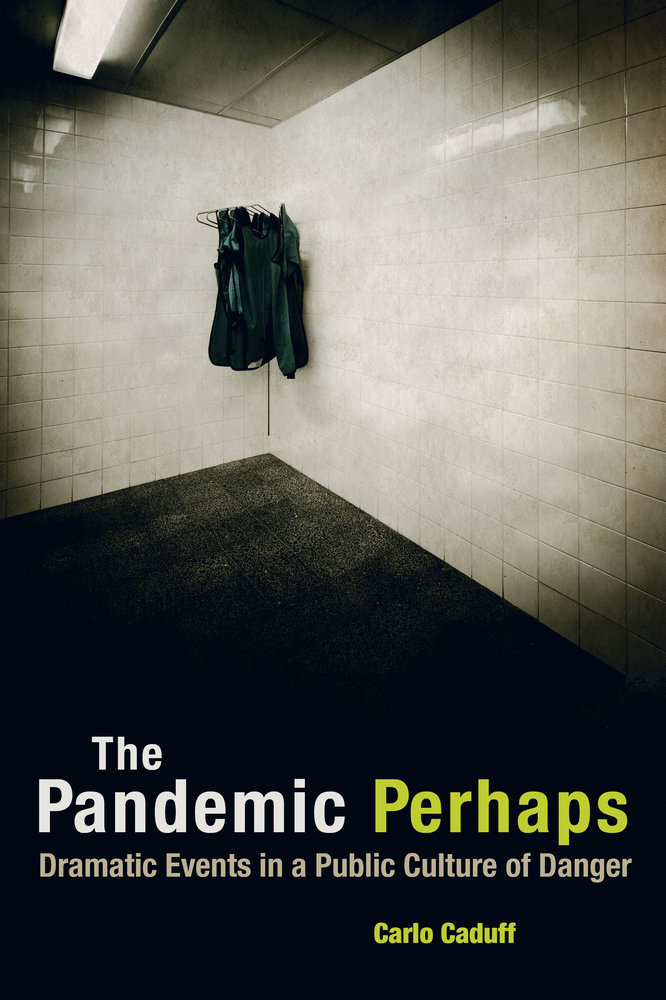
Book Release: Carlo Caduff’s “The Pandemic Perhaps”

Image via UC Press site

Image via UC Press site

Released this August 2015 from University of California Press is Carlo Caduff’s The Pandemic Perhaps: Dramatic Events in a Public Culture of Danger. In the text, Caduff focuses on alerts in 2005 posted by American experts about a deadly, approaching influenza outbreak. These urgent messages warned that the outbreak would have crippling effects on the economy and potentially end the lives of millions of people. Even though this potentially-catastrophic outbreak ultimately never occurred, preparedness efforts for the slated pandemic carried on.

The text is the product of anthropological fieldwork carried out amongst public health agents, scientists, and other key players in New York City surrounding the influenza scare. Caduff demonstrates how these figures framed the potential outbreak, and how they sought to capture the public’s attention regarding the disease. The book grapples with questions about information, perceived danger, and the meaning of safety in the face of large-scale epidemics. Likewise, Caduff examines how institutions and individuals come to cope with the uncertainty of new outbreaks.

The book will be of interest to cultural medical anthropologists as well as epidemiologists and scholars in public health. Caduff’s work will no doubt shed a timely new light on the way that the threat of epidemics shapes health policy and public perceptions of disease and security.

Caduff is Lecturer in the Department of Social Science, Health, and Medicine at King’s College London. His research addresses the anthropology of science, technology, and medicine, as well as issues surrounding knowledge, expertise, safety, and disease.


For more information on the book, visit the publisher’s website here: http://www.ucpress.edu/book.php?isbn=9780520284098

From the Archive: Global Health, Biomedical Difference, and Medical Training

In our “From the Archive” series, we revisit articles from past issues of the journal. In this installment, we review Betsey Brada’s article “‘Not Here’: Making the Spaces and Subjects of ‘Global Health’ in Botswana,” from the June 2011 special issue on the theme of “Anthropologies of Clinical Training in the 21st Century.”

cropped-cropped-2009cover-copy1.jpg

What do we mean when we employ the term “global health,” particularly about the nature of caregiving in other cultural contexts? In her ethnographic research at a training hospital in Botswana, Betsey Brada posits one theory of the term as engaged with by medical and pre-medical students, missionary doctors, resident medical staff, and other key clinicians at the field site. Brada finds that while global health is often narrowly defined as biomedicine performed in “resource poor” or “resource limited” regions, this definition in fact relies intensely on a complex, comparative understanding of place, technology, and biomedical skill.

For example, Brada describes one case where a German man on vacation in Botswana broke his leg and required surgery. Upon returning to his home country for a follow-up examination of his healing leg, the man’s physicians were surprised at the skill of the procedure, remarking that it was commendable given that it was performed abroad. The German physicians had therefore assumed that care in a “resource limited” context was correspondingly of a lower quality than biomedical care delivered in a developed country, even though clinicians often tout the “universality” of biomedicine as a cultural boundary-crossing (if not hegemonic) mode of scientific healing. The medical staff in Botswana remarked that many physicians in developed countries believed biomedicine in the developing world to be crude, simplistic, and backwards: even though staff members at the Botswana hospital had been trained at advanced facilities across the world, many of them in developed countries.

Students studying and volunteering at the hospital were also repeatedly instructed in lectures to understand the differences between pharmaceutical use in the United States versus medications available in Botswana. American physicians described an extensive list of common medication available in the hospital’s pharmacy in terms of how it was no longer used in the United States, but had to suffice “here.” This example, too, underscores the tangled relationships between space, technology, and an understanding of global biomedicine primarily in terms of nations offering cutting-edge care versus those countries that had, in their perspectives, fallen behind.

Brada also argues that medical anthropology and linguistic anthropology have much to contribute to one another, although the disciplines are not often engaged in scholarly conversation. She notes that the careful analysis of language used to distinguish “here” (Botswana) from the developed world, including the United States and Europe, demonstrates the division between spaces that is central to definitions of global health as given in biomedicine. Brada asserts that an understanding of “global health” only emerges whenever we attend to the terminology that physicians, staff, and students use to separate medicine in the developed world, from medical standards implemented on the global scale by the WHO, to the terms used to describe medical care in local, foreign contexts.

The June 2011 special issue features other fascinating articles that address the cultural situatedness of biomedical knowledge, and how medical concepts are translated to future clinical practitioners. To learn more about this issue, see the links below.


To find the article and abstract on our Spring site, click here: http://link.springer.com/article/10.1007/s11013-011-9209-z

For the full special issue, including links to other articles in the June 2011 installment, click here: http://link.springer.com/journal/11013/35/2/page/1

From the Archive: Eating Disorders Amongst Japanese Women

In our “From the Archive” series, we revisit an article published in past issues of Culture, Medicine & Psychiatry. This week, we’re highlighting a piece on eating disorders in Japan, originally featured in our December 2004 issue.

cropped-cropped-2009cover-copy1.jpg

Kathleen Pike and Amy Borovoy’s article “The Rise of Eating Disorders in Japan: Issues of Culture and Limitations of the Model of ‘Westernization'” makes a poignant case for the importance of context when examining eating disorders across the world. In this piece, they argue that studies of eating disorders abroad have often attributed the etiology of these illnesses to an increasing visibility and presence of Western beauty standards that accompany the spread of new technologies, medias, and communication tools. While Western beauty ideals have been problematically exported to the non-Western and developing worlds in other cases, Pike and Borovoy suggest that this model does not account for the experience of eating disorders in Japan.

Westernization and modernization, they note, are two distinct processes: and Japan, which has developed economically but retained many of its traditional social roles, exemplifies this difference. Modernization is the process of economic and technological development as a nation shifts from traditional to modern (often, mechanized). Westernization may be defined as the process of integrating the lifestyle, values, and experiences of Western cultures into the fabric of society, especially during periods of modernization and economic change.

Despite the drive for modernization, Japanese women are still expected to be homemakers and mothers rather than career women in the new economy. The Japanese have not adopted the individualistic and feministic sensibilities of the Western world, and the domestic burden– both caring for the home and children, and tending to older family members– squarely falls upon wives and mothers. This creates enormous stress for young women, who wish to extend their adolescent years and savor the freedom between childhood and their adult lives, as defined by marrying and becoming a homemaker. Modernization allows young Japanese women to obtain jobs, travel widely, and earn an education, but traditional social roles do not create a space for women to enjoy such a designated period of freedom without familial commitment. The inevitability of domestic life, then, is ever-present in the lives of women who yearn for fewer responsibilities– even if just for a time. This creates feelings of distress, unease, or unhappiness in many young women.

Pike and Borovoy observe that Japanese women do not reject food (anorexic behavior) or induce vomiting (bulimic behavior) out of a desire for thinness or due to fat phobia, as women with eating disorders almost universally experience in Western nations. Rather, Japanese women stress that they reject food because it worsens their digestive complaints, which are connected to the anxiety and stress they feel out of dissatisfaction with their social role (or lack thereof.) The tension between women’s expected social functions, and their desire to live and work in some other way, therefore spurs disordered eating within this broader frame of mental distress.

As we see, women’s experiences of Japanese eating disorders are entwined in the fabric of traditional social life, and not rooted exclusively in imported ideas of the body, independence, and individualism per the Western way of life. Indeed, the non-fat phobic symptomatology of eating disorders reflects the essential differences between Japanese women with eating disorders and their peers in Western nations. The study highlights the centrality of culture in studies of mental illness, and the way that these conditions emerge out of a local social world.


To find the full article online, click here: http://link.springer.com/article/10.1007/s11013-004-1066-6

Vol. 39 Issue 1 March 2015: Medicalizing Heroin

In addition to our From the Archive series, where we highlight past articles in the journal’s history, the CMP blog features selected previews of our latest issue. This week, we again take a sneak peek into an article from the March issue: the first installment of 2015’s Volume 39 of Culture, Medicine & Psychiatry.


Heroin: From Drug to Ambivalent Medicine

On the Introduction of Medically Prescribed Heroin and the Emergence of a New Space for Treatment

Birgitte Schepelern Johansen • Katrine Schepelern Johansen. Pages 75-91. Link to article: http://link.springer.com/article/10.1007/s11013-014-9406-7

This article examines the reintroduction of heroin as a medicine, as opposed to illicit drug, in the treatment of substance abuse patients. Unlike existing research on this topic, the authors here emphasize the exchanges between the users, the staff, and the material space of the implementation of heroin: the built and organizational environments of the clinic, rather than just the actors in this space alone.

Heroin exists in a complicated place in these clinics: it is (paradoxically) utilized to minimize addiction to it. Rather than marginalizing the drug, this process of managed heroin prescription lends the drug a central place in the lives of users and staff, albeit a place that ambivalently lies between drug use as pleasure and drug injection as a form of medicalized control.

cards3

When considering the rooms in the clinic where the staff injects heroin into clients, the authors note that the space is strictly regulated. Staff observe incoming clients, while those who carry out injections do not permit the patients from selecting where the drug is administered. Likewise, this clinical space is not used for socializing: clients don’t casually talk while waiting, and typically depart this area and linger in the facility’s more casual cafe after receiving their injection. The clinical space removes the use of heroin from the context of pleasure-seeking, and assumes control for the drug’s use. Although the substance is the same, heroin users’ experiences of the drug in recreational settings is deliberately set apart from its use in the clinic.

Yet distinguishing the clinical space where heroin is injected, while no doubt increasing medicalized control over the substance, also complicates the notion of the drug as unquestionably destructive. Clients move into a social, casual environment in the cafe after initial injection. Even the clinical space itself underscores the intimacy of intravenous drug use, as staff and clients engage one-on-one during the injections. The staff similarly struggle with the complex nature of heroin as an illegal drug, made most evident by the strict safeguarding of the location where heroin is stored.

Although the medicalization of heroin abuse may serve to diminish the criminal stigma surrounding use of the drug, medical models of treatment remain entangled in older ideas of substance illegality, criminality, and the stringent enforcement of substance abuse policies. Conversely, the clinical treatment space and its organization is arranged in such a way that muddies the boundary between pleasure and treatment. The authors thereby illustrate the complexity of moving towards a medical model of heroin treatment, and how notions of control evolve with the changing landscape of substance abuse policy.

AAA 2014: Sessions on Psychiatry, Mental Illness, and Drugs

For our readers attending the American Anthropological Association annual meeting this year, we’re featuring a list of sessions sure to pique your interest in various aspects of mental illness, health, drugs, and psychiatric care. The following selection of sessions was drawn from this year’s AAA online presentation schedule for the 2014 annual meeting, to be held this year in Washington, DC from December 3-7th (for more information, click here: http://www.aaanet.org/meetings). Sessions in the list are organized by chronological date and time.

If you would like your session to be added to this list, please email a link to the session description on the AAA website to: jcb193@case.edu.

Global Mental Healthcare: Challenges, Controversies and Innovations

Wednesday, December 3rd 2pm-3:45pm

http://aaa.confex.com/aaa/2014/webprogram/Session12926.html

“Global” Knowledge, “Local” Care, and Subjectivity: Producing an Anthropology of Psychosis

Wednesday, December 3rd 2pm-3:45pm

http://aaa.confex.com/aaa/2014/webprogram/Session11392.html

Psyche and the Brain in the 21st Century

Wednesday, December 3rd 4pm-5:45pm

http://aaa.confex.com/aaa/2014/webprogram/Session11636.html

Transcendance and the Everyday in Responses to Trauma

Thursday, December 4th 2:30-4:15pm

http://aaa.confex.com/aaa/2014/webprogram/Session11838.html

What Drugs Produce

Saturday, December 6th 9am-10:45am

http://aaa.confex.com/aaa/2014/webprogram/Session11124.html

Psychological Disorder and Subjectivity in Socio-Political Context

Saturday, December 6th 11am-12:45pm

http://aaa.confex.com/aaa/2014/webprogram/Session12768.html

Ordering, Morality and Triage: Producing Medical Anthropology Beyond the Suffering Subject Part 2: Mental Health and Illness

Saturday, December 6th 2:30pm-4:15pm

http://aaa.confex.com/aaa/2014/webprogram/Session11809.html

Professional Perspectives in the Anthropology of Drugs

Saturday, December 6th 6:30pm-8:15pm

http://aaa.confex.com/aaa/2014/webprogram/Session11263.html

Book Release: Paul Stoller’s “Yaya’s Story: The Quest for Well-Being in the World”

9780226178790

Image from UC Press website

Out this month from the University of Chicago Press is Paul Stoller’s book Yaya’s Story: The Quest for Well-Being in the World. The text traces the author’s friendship with a Songhay trader from Niger named Yaya Harouna: a man who moved to the United States as Stoller, an anthropologist, had likewise made a journey from the USA to Africa as a Peace Corps volunteer. Their story begins whenever Stoller meets Yaya selling artwork in an African market in New York City’s Harlem neighborhood, where Stoller carried out research.

Although the men’s histories are markedly different, they become close after the two are each diagnosed with cancer: this serves as the heart of Yaya’s Story, and the experience upon which the two men’s culturally divergent, yet not entirely dissimilar, narratives cross paths. With extensive publications in the genres of both ethnography and memoir, Stoller is certain to blend keen anthropological insight with deeply personal accounts of human suffering, endurance, and resilience in the face of illness across cultures in his latest book.

Stoller, Professor of Anthropology at West Chester University, is a 1994 winner of a Guggenheim Fellowship and the 2013 recipient of the prestigious Anders Retzius Gold Medal in Anthropology from the King of Sweden.

You can find out more about the book here, at the UC Press website:

http://www.press.uchicago.edu/ucp/books/book/chicago/Y/bo18882897.html

Publication Highlight: “Online First” Articles (Oct 2014), Part One

The following collection of articles are from our “Online First” file at our publisher’s website: http://link.springer.com/journal/11013. The full text of these articles will be released in upcoming issues of Culture, Medicine, and Psychiatry, but here we’d like to lend our readers a glimpse into the innovative research in medical anthropology and social medicine that the journal publishes.

Clicking the title of each paper will send you to the “Online First” page for each article, including a full list of authors and abstracts.

cards

A Village Possessed by “Witches”: A Mixed-Methods Case–Control Study of Possession and Common Mental Disorders in Rural Nepal

Ram P. Sapkota, et al

Practicing and Resisting Constraint: Ethnography of “Counter Response” in American Adolescent Psychiatric Custody

Katherine Hejtmanek

The Invisibility of Informal Interpreting in Mental Health Care in South Africa: Notes Towards a Contextual Understanding

Leslie Swartz & Sanja Kilian

Learning Disabilities’ as a ‘Black Box’: On the Different Conceptions and Constructions of a Popular Clinical Entity in Israel

Ofer Katchergin

From the Archive: Biomedicine, Chinese Medicine, and Psychiatry

In the “From the Archive” series, we will highlight articles published throughout the journal’s history. We look forward to sharing with our readers these samples of the innovative research that CMP has published on the cultural life of medicine across the globe.

cards3

At the journal, we often present fascinating work on psychiatric care throughout the world, including Joshua Breslau’s 2001 article “Pathways through the Border of Biomedicine and Traditional Chinese Medicine: A Meeting of Medical Systems in a Japanese Psychiatry Department” (volume 25 issue 3.) 

In this piece, Breslau recounts stories of the two medical systems interacting during a meeting of clinicians employing, to varying degrees, traditional Chinese medicine (TCM) alongside biomedical interventions within a Japanese psychiatric department. The author asserts that Japan is perhaps the most common ground for the two medical systems to meet, and that it represents the “traffic” of medical knowledge between Japan, the Asiatic mainland, and the rest of the world. Indeed, Japan has had a lengthy history of exchange with foreign medical systems,beginning with the 18th-century import of anatomy textbooks from Holland. Combined with expanded trade with “the West” in the 19th century and the later resurgence of local Japanese interest in Chinese herbal remedies during the 1970s, we see that the two medical systems have both held a prominent position in the dynamic medical landscape in Japan.

Breslau observes that the two medical systems complement one another most strikingly in psychiatry, where kanpo (herbal treatments) are used both to diminish the uncomfortable side effects of psychoactive medications and to treat conditions for which there are few biomedical interventions. Exemplifying this blended approach to care, the author notes that Dr. Nakai, professor of psychiatry at Kobe University, examines the tongue to diagnose his patients. This method of diagnosis has its roots in TCM, and was taught to Dr. Nakai from a visiting Chinese student; many such Chinese students, having studied TCM, go to Japan to learn “Western medicine.” Although there is little formal education in TCM available in Japan, these interpersonal (and intercultural) exchanges are important mechanisms for sharing diverse medical techniques.

Another physician, Dr. Song, initially specialized in the use of acupuncture to treat psychiatric patients in China. Breslau theorizes that although it seems anomalous for traditional medicine to find a niche in conditions that generally fall under the scope of biomedicine, Dr. Song’s work is a productive blend of psychiatric treatments from both medical systems. Whereas patients in the Chinese biomedical settings were admitted alone, patients and their families stayed together in the TCM centers for mental health, thereby offering a support network that the biomedical patients lacked. In Japan, Dr. Song combined TCM and biomedical approaches. She established an “open ward” psychiatric unit that welcomed patients and their families, and employed both pharmaceutical and herbal remedies depending on the severity and the stage of psychiatric distress suffered by the patient.

Breslau’s piece reminds us of the complicated ways in which cultures are in contact with one another. Rather than reading medicine in China and Japan as a contest, where biomedicine and traditional Chinese medicine are at odds in the race to be deemed “most effective,” it is more accurate to describe the ways that the systems are in dialogue– often in the same clinical settings.

You can find the contents of the full issue in which Breslau’s article is published here: http://link.springer.com/journal/11013/25/3/page/1