Book Release: Carlo Caduff’s “The Pandemic Perhaps”

Image via UC Press site

Image via UC Press site

Released this August 2015 from University of California Press is Carlo Caduff’s The Pandemic Perhaps: Dramatic Events in a Public Culture of Danger. In the text, Caduff focuses on alerts in 2005 posted by American experts about a deadly, approaching influenza outbreak. These urgent messages warned that the outbreak would have crippling effects on the economy and potentially end the lives of millions of people. Even though this potentially-catastrophic outbreak ultimately never occurred, preparedness efforts for the slated pandemic carried on.

The text is the product of anthropological fieldwork carried out amongst public health agents, scientists, and other key players in New York City surrounding the influenza scare. Caduff demonstrates how these figures framed the potential outbreak, and how they sought to capture the public’s attention regarding the disease. The book grapples with questions about information, perceived danger, and the meaning of safety in the face of large-scale epidemics. Likewise, Caduff examines how institutions and individuals come to cope with the uncertainty of new outbreaks.

The book will be of interest to cultural medical anthropologists as well as epidemiologists and scholars in public health. Caduff’s work will no doubt shed a timely new light on the way that the threat of epidemics shapes health policy and public perceptions of disease and security.

Caduff is Lecturer in the Department of Social Science, Health, and Medicine at King’s College London. His research addresses the anthropology of science, technology, and medicine, as well as issues surrounding knowledge, expertise, safety, and disease.


For more information on the book, visit the publisher’s website here: http://www.ucpress.edu/book.php?isbn=9780520284098

Autism in Brazil and Italy: Two Cases From the June 2015 Special Issue

Our July 2015 entries on the blog highlighted individual articles from our latest release, the June 2015 Special Issue on the conceptualization of autism (which you can access here.) These articles, focused centrally on anthropological and ethnographic accounts of autism across the world, explore contemporary issues surrounding identity, subjectivity, citizenship, biosociality, neurodiversity, and disability. In this week’s installment, we visit two more articles from the issue to investigate concepts of autism and its treatment in two countries: Brazil and Italy.


Autism in Italy: Rigidity and the Culture of Therapy

Read the full article by M. Ariel Cascio here: http://link.springer.com/article/10.1007/s11013-015-9439-6

In Italy, therapy and educational professionals who work with young adults with autism (ages 14-34) note that autism is often marked by a desire for intense social structure and timeliness: what they describe as “rigidity” or “rigid mind.” While the desire for structure is considered a core feature of the autism diagnosis across the world, Italian professionals who serve in community-based therapy, day centers, and residential homes for people with autism nevertheless have a complex relationship with “rigidity” as a mechanism for treatment.

Cascio interviewed both staff members at centers and programs for young people with autism as well as mental health and social service professionals throughout the region who worked on autism across the life course. These professionals voiced the value in creating structure for people with autism to assist in their development of improved social skills. Therapeutic centers and programs are themselves operated within an institutional structure that facilitates organized social interactions, both between their clients with autism and amongst staff members. However, professionals who worked at these programs often felt stymied by expectations from parents and their peers who wished for children with autism to adhere to a particular therapeutic regimen, diet, or activity schedule. The professionals likewise cautioned one another that taking any staunch, singular, and indeed “rigid” route to therapeutic intervention could prove counterintuitive to helping people with autism develop new social skills. Professionals embraced the idea of providing structure while, simultaneously, seeking to blend behavioral therapies to match individual client needs, as well as to create opportunities for clients to engage in valuable, less structured social activity.

These concerns about rigidity in the treatment of autism arrive at a time when older social structures for the care of neurodiverse individuals have been disassembled. In the 1970s, new social movements led to the deinstitutionalization of mental hospitals and care facilities, replacing the separation of mentally ill and neurodiverse individuals with integration policies that mandated new employment opportunities and equal-opportunity education for the developmentally disabled. Local mental health services attached to the national health care system provide psychiatric, behavioral, and therapeutic services that accompany other integration policies. This state of flux, at the societal level, refutes the notion that social services for autism must remain “rigid” and immmovable: they, too, change and develop with time given broader changes in the resources and services made available by the state to the disabled.

The Italian case presents a unique perspective on both the relationship between care professionals and the nature of diagnosis and treatment, as well as between concepts of autism at the scale of individual treatment and at the level of the state and national systems of health care. Like the discussion on Brazil, Italy similarly provides a fascinating context for the study of autism as a condition that is diagnosed globally, yet treated and conceptualized locally.

cropped-cropped-2009cover-copy1.jpgAutism in Brazil: Diagnosis, Identity, and Treatment Models

Read the full article by Clarice Rios and Barbara Costa Andrada here: http://link.springer.com/article/10.1007/s11013-015-9448-5

Brazil’s model for delivering social services to the developmentally disabled was directly modeled after the Italian system of deinstitutionalization and social integration of the mentally ill and neurodiverse. Treatment interventions for people with autism, however, were not included in Brazilian social services until the early 2000s, when adolescent and child mental health conditions were integrated into existing mental health systems. This shift increased programming for people with autism, however concerns accompanied this new system about the nature of diagnosis and treatment, as expressed differently by mental health professionals and the parents of children with autism.

Rather than viewing autism as an integral piece of an individual’s identity, Brazilian mental health professionals instead employ a social model of disability that stresses the environment that a person with autism exists within. Therapies emphasize social inclusion and bolstering all mental health clients’ sense of autonomy, so as to combat the exclusion and institutionalization of the individual. This model did not emphasize treatment plans specific to autism, but rather sought to improve the lives of all clients with mental disabilities. Mental health professionals voiced concerns about creating autism-specific services, saying that these programs would exclude people with other forms of mental disability from seeking appropriate care (and exclude people with autism from engagement with people of other mental disabilities.)

Parent activists who have children with autism, on the other hand, take an identity-based approach to championing the rights of people with autism. They argued that by underscoring the specific nature of autism as a mental disability, and providing services tailored to the treatment of autism, their children would be better prepared for social inclusion. Parents feared under-diagnosis of the condition, which would mean that their children– failing to have a certified diagnosis by a health professional– would be unable to seek out care resources and early intervention programs to improve behavioral and social outcomes.

In both instances, the authors stress that the dichotomy between medical and social models of disability is scarcely stable when examining autism in Brazil. Mental health professionals and parents of children with autism both grasp the importance of medical certification of autism (diagnosis) as a means to access services (that are aligned with the social model of illness.) However, parents and professionals disagree on the nature of these services; parents hold that social inclusion for people with autism requires an understanding of their difference from non-autistic people, while professionals strive to avoid employing specific diagnosis categories as a means to separate the kind of care and services they deliver to clients with other mental health conditions.

The Brazilian case thus highlights the nature of autism and mental disability as both a medical and a social condition: one that must be negotiated, treated, and diagnosed in light of its manifold implications for human health, development, and social life.

Special Issue Highlight: The Anthropology of Autism, Part 2

In this week’s entry, we continue our issue highlight on the current special issue of Culture, Medicine & Psychiatry. Released in June 2015, the latest issue explores anthropological research on autism, both across the world and between communities of people with autism and their families. Like the first part of this feature, we will explore two articles in the current special issue.


 “But-He’ll Fall!”: Children with Autism, Interspecies Intersubjectivity, and the Problem of ‘Being Social’

Olga Solomon

Autism-spectrum disorders (ASD) are described in diagnostic manuals as an impairment of one’s ability to successfully relate to and understand other people. Yet this definition of autism relies on a specific notion of sociality that, Solomon argues, becomes much more complicated when considering autistic individuals’ interaction with therapy animals.

Solomon compares two cases that highlight autistic children’s understandings of what it means to be social: one without animals, and another with animals featured prominently in the therapeutic intervention. In the first instance, a child she calls Rosalyn is being tested in a psychological facility. The child attempts to engage in conversation with the psychologist and her parent, but is dismissed. She also shows a picture she has drawn to the psychologist, yet is again dismissed and offered a standardized picture book to complete another diagnostic task. Rosalyn’s own experiences and perspectives are cut from the diagnosis, while artificial tasks and measures that are foreign to her—such as the picture book—are substituted for “real” social materials worth engaging with.

Unlike Rosalyn, whose encounter with the psychologist in the office offers her little opportunity to demonstrate her connections to other people on her own terms, a girl named Kid has a much different experience in animal-based therapy. While Kid has no friends in school and struggles to engage socially, she demonstrates concern for her therapy dog. She worries in one interaction that she might drop him from her lap, and in another vignette, notes to her family that she fears the family dog might be jealous of her interactions with the therapy dog.

In Kid’s case, the presence of animals provided an opportunity for her to demonstrate her understandings of their emotional state and to express her feelings towards them. Rosalyn likewise attempted to engage with her psychologist and mother while in the office, but her attempts to interact were brushed aside and supplanted with artificial testing activities that did not elicit an empathetic response.

Solomon posits that these findings align with theory after the post-human turn, whenever the human actor became destabilized as the center of all social interaction and new notions of sociality began to consider interspecies engagements, particularly in the works of Donna Haraway. When animals enter the picture, these non-human actors prove central to understandings of social relationships that might not otherwise be seen in strictly human-to-human interaction, as in the case of Rosalyn.

Click here for the full article: http://link.springer.com/article/10.1007/s11013-015-9446-7

cards3

Making Meaningful Worlds: Role-Playing Subcultures and the Autism Spectrum

Elizabeth Fein

Like Solomon, Fein explores another case where individuals on the autism spectrum learn to interact and engage with others on their own, productive terms. Fein draws on ethnographic research of a summer camp for teens with autism, where they role-play as magicians, scientists, and other fantastical characters.

At the camp, the teens posit themselves in new social roles, explore new identities, and forge relationships with others in novel ways. They largely practiced live-action role playing (LARP), stylized as LARPing, an activity where participants dress and act as mythical characters in a live-action fantasy game. The founders of the camp, called the Journeyfolk, realized that ASD youth were drawn to these fantasy role-playing communities, where a shared mythology and a story arc that pitted villains against heroes created a common social space for participants.

Although participants of the games had unique behavioral qualities—in one team, for instance, there was someone who jumped on other players and another with intense hyperactivity—they accepted that they had to overcome these individual differences in order to work together. Likewise, older players who gravitated to the roles of heroes in the LARP events were often instructed to act as villains: challenging them to take on new roles beyond their own desire to act as a specific character.

The game and the camp provided a strong external structure that guided participants through tasks and activities: structure that individuals on the autism spectrum often need to navigate social situations effectively. Conversely, it also promoted a storytelling environment where characters that teens acted struggled with deep, internal, psychological quandaries, such as battling off evil spirits that possessed team mates, and struggling with being a mythological human/inhuman hybrid being. They could draw upon their real-life struggles, such as anger issues, in order to create characters that—like them—were challenged to solve problems in light of these personal difficulties.

Fein concludes, in part, that these camps both provide the structure and the social patterning that autism-spectrum individuals need to engage with others positively, while also encouraging neurodiversity by valorizing fringe nerd culture and allowing individuals to create characters that are informed by the behavioral patterns and psychological struggles of those who play them in the games.

To access this article, click here: http://link.springer.com/article/10.1007/s11013-015-9443-x


To access all of the articles in this issue, click here: http://link.springer.com/journal/11013/39/2/page/1

Special Issue Highlight: The Anthropology of Autism, Part 1

The newly released June 2015 special issue of Culture, Medicine & Psychiatry addresses anthropological studies of autism from around the world, including the United States, India, and Italy. In this installment and the next entry on the blog, we will explore four articles published in the latest issue. This research spans the fields of disability studies, psychological anthropology, and medical anthropology, and touch on themes of identity, subjectivity, family caregiving, and community. Here, we will focus on two articles in this publication.


Parenting a Child with Autism in India: Narratives Before and After a Parent–Child Intervention Program

Rachel S. Brezis, et al.

Throughout India, there are limited social services and support networks for individuals with autism and their families. Furthermore, neurodiverse (and mentally ill) individuals have historically been cared for in private by family members in India, where they are hidden from the community and may be treated as a mark of shame on the household. However, despite these challenges, Indian parents of children with autism are increasingly seeking out professional programs that educate them about autism and appropriate caregiving strategies.

One such program in New Delhi, the Parent-Child Training Program (PCTP), evidences the changing view towards autism in India. The program aims to educate parents about autism and, in so doing, encourage them to educate others about the experience of raising a child with the condition. Parents bring their child to PCTP and learn alongside them. As the first program in India to provide such training, its examination proves essential in understanding the way that various populations (here in India) are now approaching the shifting landscape of autism.

Brezis and colleagues studied the PCTP to discover how the training was altering parents’ perceptions of autism and relationships with their children. They interviewed 40 pairs of parents at the beginning and end of the 3-month program, encouraging the parents to speak for five minutes without prompts regarding their child and their relationship to the child.

The authors found that parents who participated in the three-month program were less likely to describe their children in relation to an assumed “normality,” although mothers proved to be more likely than fathers to self-reflect on their relationship with their child. Similarly, while parents described their child’s behaviors no less frequently in the second and final interview, they did not note behavior in relation to other individuals’ behavior perceived as “normal.”

To learn more about this research, click here for a link to the article: http://link.springer.com/article/10.1007/s11013-015-9434-y

cards3

Custodial Homes, Therapeutic Homes, and Parental Acceptance: Parental Experiences of Autism in Kerala, India and Atlanta, GA USA

Jennifer C. Sarrett

Like Brezis et al, Sarrett also investigates Indian caregiving and parental experiences of autism, while comparing this context to autism and the family in the United States. In both cases, Sarrett asks how the home as space and place impacts the meaning of disability for people with autism. She interviewed seventeen caregivers in Atlanta and thirty-one in Kerala, and observed seventeen families in Kerala and five families in Atlanta who had also participated in interviews. Sarrett concludes that though there are some similarities in the constellation of autism-specific and biomedical services that may be available to Keralite and American families, the arrangement of households themselves drastically changes the way autistic children are cared for in each location.

In Kerala, for example, mothers serve as both full-time child caregivers as well as domestic laborers, often spending long hours washing clothes by hand and cooking from scratch. Keralite children with autism have few interactive toys that are specifically geared to engaging them, few devices that may control their movements and behaviors (such as baby gates) or assist them in communication (such as an electronic device that voices requests for food or other needs.) Such tools are common in Atlanta households. However, they have consistent household care from mothers who manage all domestic labor with no outside employment.

Households with autistic children in Atlanta, meanwhile, are specifically retrofitted for the needs of the child. There are picture cards that children may use to show caregivers and parents an item of food that they wish to eat, as well as a calendar in the kitchen or office that marks doctors’ appointments and family events geared for socialization with the autistic child. Baby gates, cabinet locks, and other safety devices ensure the child does not come into contact with household dangers (such as kitchen knives and cleaning solutions.)

In sum, these tools are designed to change and improve the behavior of the child. The home itself is structured to be a therapeutic space: requiring material and financial resources that Keralite families do not have to physically adjust their households. Instead, Keralite families focus not on improving or altering an autistic child’s behavior, but rather emphasize consistent caregiving for the child. In both cases, however, parents are committed to creating an environment (be it material or social) in which a child with autism can be integrated into the activities of the household, and thus into the family’s social world. Despite cultural, and certainly resource, differences between Indian and American families, they share a common commitment to building home support systems for their developmentally disabled children.

Click here to access the full text of this article: http://link.springer.com/article/10.1007/s11013-015-9441-z


To access all of the articles in this issue, click here: http://link.springer.com/journal/11013/39/2/page/1

From the Archive: Global Health, Biomedical Difference, and Medical Training

In our “From the Archive” series, we revisit articles from past issues of the journal. In this installment, we review Betsey Brada’s article “‘Not Here’: Making the Spaces and Subjects of ‘Global Health’ in Botswana,” from the June 2011 special issue on the theme of “Anthropologies of Clinical Training in the 21st Century.”

cropped-cropped-2009cover-copy1.jpg

What do we mean when we employ the term “global health,” particularly about the nature of caregiving in other cultural contexts? In her ethnographic research at a training hospital in Botswana, Betsey Brada posits one theory of the term as engaged with by medical and pre-medical students, missionary doctors, resident medical staff, and other key clinicians at the field site. Brada finds that while global health is often narrowly defined as biomedicine performed in “resource poor” or “resource limited” regions, this definition in fact relies intensely on a complex, comparative understanding of place, technology, and biomedical skill.

For example, Brada describes one case where a German man on vacation in Botswana broke his leg and required surgery. Upon returning to his home country for a follow-up examination of his healing leg, the man’s physicians were surprised at the skill of the procedure, remarking that it was commendable given that it was performed abroad. The German physicians had therefore assumed that care in a “resource limited” context was correspondingly of a lower quality than biomedical care delivered in a developed country, even though clinicians often tout the “universality” of biomedicine as a cultural boundary-crossing (if not hegemonic) mode of scientific healing. The medical staff in Botswana remarked that many physicians in developed countries believed biomedicine in the developing world to be crude, simplistic, and backwards: even though staff members at the Botswana hospital had been trained at advanced facilities across the world, many of them in developed countries.

Students studying and volunteering at the hospital were also repeatedly instructed in lectures to understand the differences between pharmaceutical use in the United States versus medications available in Botswana. American physicians described an extensive list of common medication available in the hospital’s pharmacy in terms of how it was no longer used in the United States, but had to suffice “here.” This example, too, underscores the tangled relationships between space, technology, and an understanding of global biomedicine primarily in terms of nations offering cutting-edge care versus those countries that had, in their perspectives, fallen behind.

Brada also argues that medical anthropology and linguistic anthropology have much to contribute to one another, although the disciplines are not often engaged in scholarly conversation. She notes that the careful analysis of language used to distinguish “here” (Botswana) from the developed world, including the United States and Europe, demonstrates the division between spaces that is central to definitions of global health as given in biomedicine. Brada asserts that an understanding of “global health” only emerges whenever we attend to the terminology that physicians, staff, and students use to separate medicine in the developed world, from medical standards implemented on the global scale by the WHO, to the terms used to describe medical care in local, foreign contexts.

The June 2011 special issue features other fascinating articles that address the cultural situatedness of biomedical knowledge, and how medical concepts are translated to future clinical practitioners. To learn more about this issue, see the links below.


To find the article and abstract on our Spring site, click here: http://link.springer.com/article/10.1007/s11013-011-9209-z

For the full special issue, including links to other articles in the June 2011 installment, click here: http://link.springer.com/journal/11013/35/2/page/1

Book Release: Wailoo’s “Pain: A Political History”

Image via JHU Press

Image via JHU Press

This October 2015, Johns Hopkins University Press is slated to release Keith Wailoo’s Pain: A Political History. Wailoo’s book examines how the definition of chronic pain in the United States developed and changed alongside broader political and economic changes. The book begins with the culture of treatment following World War II, when public and political attitudes towards pain considered physical suffering real and potentially disabling. With decreasing support of disability programs throughout the 1980s, however, the validity and legitimacy of chronic pain came under question.

New conversations beginning in the 1990s about euthanasia reinvigorated the conversation surrounding pain, no doubt bolstered today by current discussions of medical marijuana laws and the burgeoning use of prescription painkillers for recreation purposes. This renewed interest in the nature and the extent of pain have enlivened the debate around who experiences pain, how we certify pain, and at what point pain requires medical intervention.

The book strives to illuminate the historical foundations of today’s contemporary pain medication and treatment market, particularly in terms of the liberal and conservative political trends between the 1950s and today. Wailoo’s account culminates with an exploration of the contemporary state of pain care: a severe imbalance between the overmedicated and the underserved who cannot access treatment for their chronic pain. Pain: A Political History will certainly prove insightful for historians of medicine as well as political-economic medical anthropologists, theorists of neoliberalism, and medical anthropologists carrying out research in the United States.

Wailoo is Professor of History and Public Affairs as well as the Vice Dean of the Woodrow Wilson School of Public and International Affairs at Princeton University.


To learn more about the book, click on JHU Press’ page here: https://jhupbooks.press.jhu.edu/content/pain

Book Release: Buchbinder’s “All in Your Head: Making Sense of Pediatric Pain”

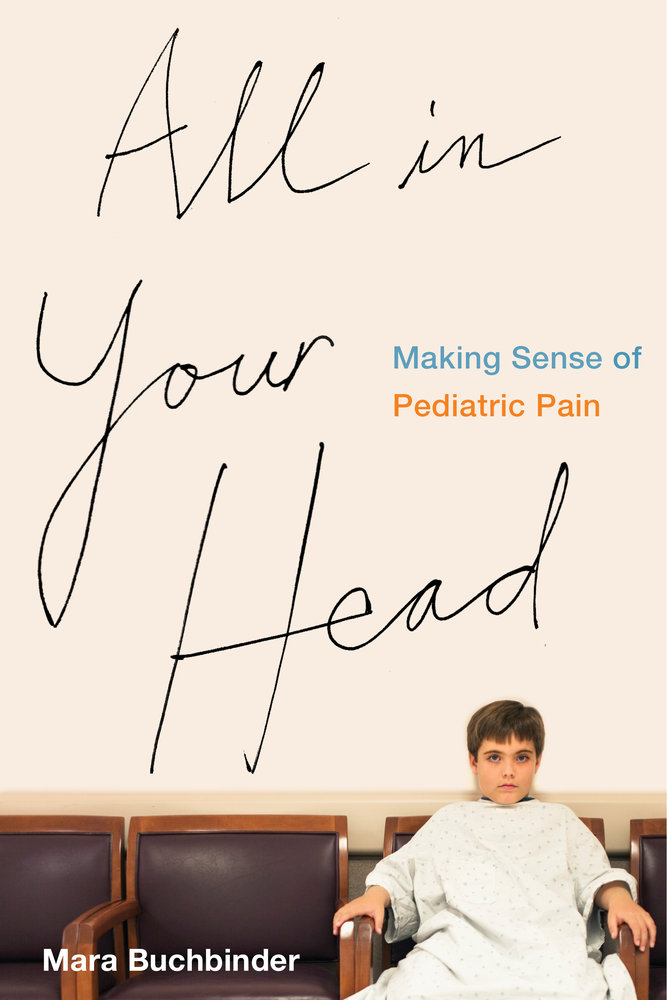
This May 2015, Mara Buchbinder’s book All in Your Head: Making Sense of Pediatric Pain will be released by the University of California Press. The book grapples with the difficulty of expressing internal states to others via language, as these inner subjective experiences are often considered impossible to actualize in words. Buchbinder strives to honor this private experience of pain while studying how language surrounding pain and pain management is relational in nature. She explores how pain is described, managed, and treated in medical settings.

Image via UC Press

Image via UC Press

The text is a product of ethnographic research in numerous pediatric units in California hospitals. Buchbinder considers the social lives of physicians, caregivers, clinicians, parents, and children, all with a stake in alleviating pain and interpreting troubling or perplexing symptoms. Rather than allowing pain to be read solely as an isolating, private matter, the author argues that the treatment of pain is a complex social phenomenon. By focusing on narratives, conversations, and metaphors used by participants to illustrate the nature of pain, Buchbinder’s account underscores the power of language to generate shared meanings for human suffering.

All in Your Head will prove of interest to linguistic and medical anthropologists alike, as well as to scholars in the medical humanities with an interest in textual and communicative analysis in clinical settings. To learn more about this upcoming book, visit the publication page at the University of California Press here: http://www.ucpress.edu/book.php?isbn=9780520285224

ABOUT THE AUTHOR

Mara Buchbinder is Assistant Professor of Social Medicine at UNC-Chapel Hill, where she also teaches coursework in anthropology. She has previously coauthored the book Saving Babies? The Consequences of Newborn Genetic Screening.

Guest Blog: Culture, Medicine, and Neuropsychiatry

This week, we are featuring a special guest blog post by M. Ariel Cascio, PhD. Here, she discusses neuropsychiatry in the Italian context and within the United States.

In the 21st century, anthropologists and allied scholars talk frequently of the biologization, cerebralization or neurologization of psychiatry. Many make reference to the 1990s, the “Decade of the Brain” that closed out the last century. They talk about “brain diseases” as a dominant discourse in discussions of mental illness. The 2014 Annual Meeting of the American Anthropological Association hosted a panel on “reflections on mind and body in the era of the ‘cerebral subject.’” In these and other ways, scholars write and talk about increasing dominance of brain discourses in discussion of psychological and psychiatric topics. This dominance has historical roots, for example in German (Kraepelinian) psychiatry, and authors in Culture, Medicine & Psychiatry and elsewhere have written about the historical context and local manifestations of this dominance of the neurological in the psy- sciences.

In this blog post I explore a situation in which neurology and psychiatry have long co-existed: the Italian field of neuropsychiatry. While the field “neuropsychiatry” is not unknown in the United States, and similar terms are used in other countries as well, I offer some comments specifically on the Italian context. The example of Italian neuropsychiatry provides one case of a particular historical relationship between neurology, psychiatry, and psychology that would be of interest to any historical or anthropological scholars of psychiatry.

The Italian medical system distinguishes between neuropsychiatry and psychiatry, neuropsichiatria infantile and psichiatria. Neuropsichiatria infantile (child neuropsychiatry), abbreviated NPI but sometimes referred to simply as neuropsichiatria (neuropsychiatry), addresses neurological, psychiatric, and developmental problems in children under age 18. Psichiatria (psychiatry) treats adults starting at age 18. As such, it is tempting to simply distinguish child and adult psychiatry. However, neuropsychiatry and psychiatry actually have distinct origins and practices. As the names imply, neuropsychiatry links neurology and psychiatry. Adult psychiatry, however, does not.

While Italian psychiatry has its roots in early 19th century organicist and biological approaches, in the 1960s a younger generation of psychiatrists, most prominently Franco Basaglia, aligned themselves with phenomenology and existential psychiatry. These psychiatrists crystallized their ideas into the ideology of Psichiatra Democratica (Democratic Psychiatry) and the initiative of “Basaglia’s Law,” the 1978 Law 180 which began Italy’s process of deinstitutionalization, generally considered to be very successful (Donnelly 1992). While childhood neuropsychiatry is indeed the counterpart to adult psychiatry, more than just the age group served differentiates these fields. If Italian psychiatry has its roots in Basaglia and the ideology of democratic psychiatry, neuropsychiatry has its roots at the turn of the 20th century, in the works of psychiatrist Sante de Sanctis, psychopedagogue Giuseppe F. Montesano, and pedagogue Maria Montessori.

In this way, neuropsychiatry’s origins bridged psychiatry and pedagogy (Bracci 2003; Migone 2014). Giovanni Bollea has been called the father of neuropsychiatry for his role in establishing the professional after World War II (Fiorani 2011; Migone 2014). Fiorani (2011) traces the use of the term neuropsychiatry (as opposed to simply child psychiatry, for example) to Bollea’s desire to honor the distinctly Italian tradition and legacy following Sante de Sanctis.

Several features distinguish psychiatry and neuropsychiatry. Migone (2014) argues that child neuropsychiatry has taken more influence from French psychoanalytic schools, whereas adult psychiatry has taken more influence from first German and then Anglo-Saxon psychiatries. Migone further explains:

Child and adolescent psychiatry in Italy is therefore characterized by a reduced use of medications (if compared to the United States), and by a diffuse use of dynamic psychotherapy, both individual and family therapy (from the mid-1970s systemic therapy spread). The attention to the family and the social environment is extremely important for understand the clinical case during the developmental years. [My translation]

Moreover, neuropsychiatry is known for being multidisciplinary and working in equipe, teams of psychiatrists, psychologists, social workers and so on. It incorporates psychoanalysis, psychotherapy, dynamic psychology, psychological testing, social interventions, and more (Fiorani 2011).

This extremely brief overview outlines key characteristics of Italian neuropsychiatry and the ways it is distinguished from Italian psychiatry, as well as from U.S. psychiatry. Italian neuropsychiatry provides one example of a long-standing relationship between neurology, psychiatry, psychology, philosophy, and pedagogy. By drawing attention to this medical specialty and the complexities of the different fields it addresses, I hope to have piqued the interest of historical and anthropological scholars. I include English and Italian language sources for further reading below.


References and Further Reading – English

Donnelly, Michael. 1992. The Politics of Mental Health in Italy. London ; New York: Routledge.

Feinstein, Adam. 2010. A History of Autism: Conversations with the Pioneers. Malden, MA: Wiley-Blackwell.

Levi, Gabriel, and Paola Bernabei. 1997. Italy. In Handbook of Autism and Pervasive Developmental Disorders. 2nd edition. Donald J. Cohen and Fred R. Volkmar, eds. New York, NY: John Wiley & Sons.

Nardocci, Franco. 2009. The Birth of Child and Adolescent Neuropsychiatry: From Rehabilitation and Social Inclusion of the Mentally Handicapped, to the Care of Mental Health during Development. Ann Ist Super Sanità 45: 33–38.

References and Further Reading – Italian

Bracci, Silvia. 2003. Sviluppo della neuropsichiatria in Italia ed Europa. Storia delle istituzioni psichiatriche per l’infanzia. In L’Ospedale psichiatrico di Roma. Dal Manicomio Provinciale alla Chiusura. Antonio Iaria, Tommaso Losavio, and Pompeo Martelli, eds. Pp. 145–161. Bari: Dedalo.

Fiorani, Matteo. 2011. Giovanni Bollea, 1913-2011: Per Una Storia Della Neuropsichiatria Infantile in Italia. Medicina & Storia 11(21/22): 251–276.

Migone, Paolo. 2014. Storia Della Neuropsichiatria Infantile (prima Parte). Il Ruolo Terapeutico 125: 55–70.

Russo, Concetta, Michele Capararo, and Enrico Valtellina. 2014. A sé e agli altri. Storia della manicomializzazione dell’autismo e delle altre disabilità relazionali nelle cartelle cliniche di S. Servolo. 1. edizione. Milano etc.: Mimesis.


ABOUT THE AUTHOR

M. Ariel Cascio is an anthropologist specializing in the cultural study of science and biomedicine, psychological anthropology, and the anthropology of youth. She recently successfully defended her dissertation on autism in Italy at Case Western Reserve University. She can be reached at ariel.cascio@case.edu. Her blog, written in Italian and English, can be viewed here: https://arielcascio.wordpress.com/.

Preview of Books Received: Vol. 38 Issue 4, Dec 2014

The following are previews of two books received for review at Culture, Medicine, and Psychiatry. These previews provide a snapshot of recent publications in medical anthropology, cultural studies, and the history of medicine. For a full list of books received in December 2014, click here: http://link.springer.com/article/10.1007/s11013-014-9395-6

Image via Berghahn Books

Image via Berghahn Books

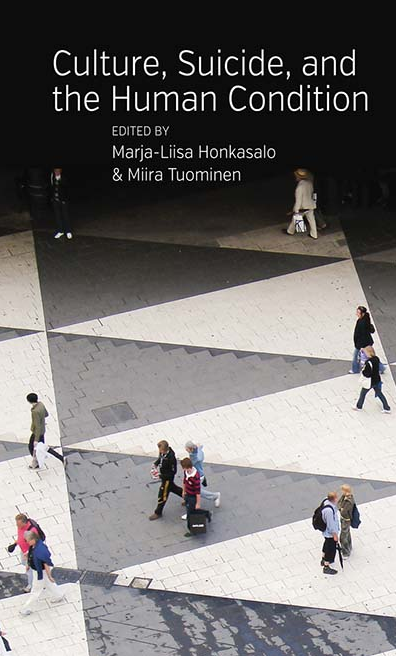
Culture, Suicide, and the Human Condition

Edited by Marja-Liisa Honkasalo and Miira Tuominen / Afterword by Arthur Kleinman

This collection of research on suicide argues that suicide is not “a separate realm of pathological behavior,” but instead a human action contextualized by a suicidal person’s cultural, historical, and ethnic roots. However, “the context never completely determines the decision,” allowing the authors to focus on suicide as both cultural and psychological phenomena. The authors emphasize individual action and choice regarding the decision to commit suicide. Similarly, the collection presents a complicated puzzle: suicidal narratives make sense of self-killing to a community, and depict suicide as a “solution to common human problems.”

Culture, Suicide, and the Human Condition was released in March 2014 by Berghahn Books. More details on the book here: https://www.berghahnbooks.com/extras/docs/flyer/HonkasaloCulture_9781782382348.html

Image via MIT Press

Image via MIT Press

A Metaphysics of Psychopathology

Peter Zachar

Zachar’s book asks what constitutes the “real” in psychopathology. He states that in psychiatry, pathologies are assumed to be “real,” while in psychology, the “realness” of a pathology is debated in terms of its roots in personality, superego, or in “general intelligence.” Neither discipline, however, aims to pin down what “real” entails for mental illness and conditions. Some pathologies move from being cast off as imaginary to being embraced as legitimate, such as PTSD, and others, like multiple personality disorder, are classified as real only to be later considered imaginary. Zachar takes a philosophical approach to considering what “real” means in terms of psychiatric and psychological classification, proposing a new classificatory system that the summary asserts “avoids both relativism and essentialism.” He then uses this model to interpret recent “controversies” in the inclusion of certain mental disorders within existing classificatory systems.

A Metaphysics of Psychopathology was released in March 2014 by MIT Press: http://mitpress.mit.edu/books/metaphysics-psychopathology

Book Release: Sharon R. Kaufman’s “Ordinary Medicine”

Via the Duke UP website

Via the Duke UP website

In May 2015, Sharon R. Kaufman’s book Ordinary Medicine: Extraordinary Treatments, Longer Lives, and Where to Draw the Line is set to be released by Duke University Press. The text will address the contested division between what is a life-saving therapy and what proves to be over-treatment of older patients. This divide, Kaufman states, is frequently negotiated by pharmaceutical, biomedical, and insurance industries. Treatments that might seem aggressive or unnecessary to address late-life health concerns have become common procedures.

Drawing on ethnographic accounts from older patients, their families, and their physicians, Kaufman demonstrates how patients and their caregivers decide how much medical intervention is enough, or when it has gone too far. Kaufman considers what this new, medicalized meaning of the “end-of-life” means for patients and for the social world of medicine, while inviting us to consider how we might refresh the goals of medicine when caring for older patients.

Kaufman has previously published on a related topic in her book And a Time to Die: How American Hospitals Shape the End of Life. She is the Chair of the Department of Anthropology, History and Social Medicine at the University of California, San Francisco.

See more about the book from the publisher’s website here:

https://www.dukeupress.edu/Ordinary-Medicine/index.html