Article Highlight: Vol 40 Issue 4, Social Withdrawal in Japan

cropped-cropped-2009cover-copy1.jpg

The December 2016 issue of Culture, Medicine & Psychiatry is now available here. In this series of article highlights, we will explore publications included in the latest issue. This week, we present a highlight on Ellen Rubinstein’s article “Emplotting Hikikomori: Japanese Parents’ Narratives of Social Withdrawal” (which you can access here.) Rubinstein observes that there has been a flurry of public attention to hikikomori, a socio-medical condition typically experienced by young people that is characterized by increasing, marked social withdrawal.

Rubinstein notes that though there is a perception of hikikomori as a condition of isolation, parents of “hikikomori children” often crafted narratives about their children’s illness that suggested it had discernible stages, signs of progress, and possibility of recovery. These narratives engaged parents in the present, facilitating connectedness between hikikomori children and their families, and thus challenging the assumption that hikikomori is a condition of perpetual or crippling isolation. For instance, some parents at a support group for hikikomori children and their families stated that their children were more mature than others, as their time away from other people encouraged them to be meditative and thoughtful.

One mother, named Kawano-san, first described her son’s hikimori as a process of productive, but not permanent, isolation in an interview with Rubinstein. Kawano-san said that her son’s withdrawal might lend him an opportunity to step away from the social world, assess his future, and prepare for college after initially failing to pass university entrance exams. She felt certain that this period would be one of reflection and reassessment, before the son eventually entered university. Kawano-san also criticized the expectation amongst many Japanese families that children should be extroverted and talkative, instead saying that her son was not pathologically isolated but simply different. Eight months after this initial interview, Kawano-san was interviewed for the second time about her son’s condition. The son had not entered college as Kawano-san expected, but the mother had readjusted her narrative such that she began to acknowledge that path might not be viable for her son. She instead noted that her son could have a disability, or that he simply needed more time to process his feelings. Kawano-san ultimately accepted that her initial expectations did not match her son’s experience, and began to try new approaches to her son’s condition: like encouraging her husband and daughter to write birthday messages to him that might make him feel more welcomed and included in their family unit.

Rubinstein examines similar cases to Kawano-san and her son, finding that many families engaged in a process of narrative emplotment and un-emplotment of their children’s hikikomori. Their narratives thereby gave order or meaning to what otherwise seemed like an ongoing and static psychological condition. Alternatively, they situated their children’s experiences in other contexts: such as expected developmental and social growth, and the efficacy of biomedical interventions or support groups for the condition. Parents of hikikomori children were not inactive bystanders, but rather active interpreters of their children’s experiences and advocates of their unique individual needs. The parents learned to read their children’s condition and support them accordingly, complicating the notion that hikikomori is solely about individual isolation or inaction.

Issue Highlight Vol 40 Issue 3: The Mental Health Treatment Gap Across Africa

In the coming weeks, we will be presenting special highlights of our latest installment of the journal, released September 2016 (accessible here.) This week, we explore Sara Cooper’s article “‘How I Floated on Gentle Webs of Being’: Psychiatrists’ Stories About the Mental Health Treatment Gap in Africa.” The full article is available here.


cards3

As Cooper notes in the outset of her article, clinicians and global health workers have identified a “gap” in available mental health services in Africa, and developed programs targeted at the resolution of lacking mental health services across the continent. Despite widespread attempts to research and resolve this gap, however, there remains concern about the problems that arise when a global, top-down approach to mental health services is applied in African contexts. Responding to this concern, Cooper sought out views on the treatment gap at the local level, specifically amongst African psychiatrists. Cooper gathered and analyzed narratives from twenty-eight psychiatrists from South Africa, Uganda, Nigeria, and Ethiopia. She found that while a biomedical, rationalistic narrative about the gap was certainly present, another, more phenomenological understanding of the “gap” emerged from the narratives of three of her participants, which urged a more sensitive approach to the implementation of mental health services in Africa.

Cooper first found that some of the psychiatrists in her study repeatedly turned to a dominant (or master) biomedical narrative to explain why the mental health treatment gap existed in their respective countries. In other words, the psychiatrists relied on a rationalistic, deductive, and material explanation that accounted for the mental health treatment landscapes across Africa. For instance, many of the psychiatrists argued that the lack of physical resources– hospitals, beds, clinicians to staff treatment centers– led patients to seek out non-biomedical interventions like prayer-based or spiritual-based care. The participants agreed that if there were enough services available, patients would not turn to complementary or religious forms of treatment. In their perspective, alternative forms of care were a substitute for biomedicine, rather than a legitimate venue for patients to seek mental health assistance in the absence of (or even alongside) biomedical resources.

Indeed, the act of seeking out these alternative treatments was viewed by the psychiatrists as a rational response: one borne out of the creativity of patients who weighed available options and selected the most appropriate, present service (rather than a complex response to a pluralism of local medical systems.) Conversely, however, the psychiatrists also argued that patients underutilized health services and lacked “mental health literacy,” or the knowledge needed to preface the choice to seek out biomedical assistance. Through these examples, and others, Cooper observes that this sub-cohort of psychiatrists tended to return to a rationalistic understanding of medical treatment that may not always have been sensitive to other means of medical decision-making or to the scope of biomedical interventions.

Yet Cooper also discovered that there were notable fractures in the biomedical “master narrative,” wherein psychiatrists’ narratives reveal concerns about the role of biomedical mental health services in addressing treatment gaps. Three psychiatrists admitted that biomedicine might not necessarily address the full scope of a patient’s mental illness or health concerns in the broader context of their lives or personal needs. For example, these three participants noted that the psychiatrist might have to explain that available treatments could potentially fail to fully resolve a patient’s complaint, or that they might have to accept that a patient’s past traumas, or troubling social circumstances, were beyond that which the psychiatrist could ameliorate through medical means. Here, the treatment “gap” is conceptual: the ideological place where a patient’s hopes, experiences, and expectations about their care may not be perfectly matched to the psychiatrist’s available treatments and medical diagnoses.

In this sub-cohort, one psychiatrist remarked that the “paternalistic” method of biomedical treatment could be unproductive, as the clinician may not be able to fully mend the patient’s health due to the social, personal, and individual complexities of the patient case. Another psychiatrist recounted a patient’s case in detail, noting that while he believed this person suffered from delusions, it was his responsibility to help the patient by trying to understand his view of reality, suffering, and personal struggle. Yet another psychiatrist recounted equally challenging cases, where they recognized that patients often were not satisfied with simply a cleanly-defined diagnosis or treatment plan, but required a more robust means of reordering and improving their lives with the psychiatrist’s guidance.

Cooper states that “for these psychiatrists, in taking people’s experiences and meanings seriously, on their own terms, one comes to appreciate that their understandings and behaviours are deeply complex and varied, affected by all sorts of social, cultural and emotional realities and rationalities.” Though the master narrative of biomedical rationality remained prominent, these alternative narratives were sensitive to the lived experiences and individual realities of the patient. They also explored the treatment gap, but viewed the “gap” as the product of complex interactions between psychiatrists and their patients. For the latter three participants, the “gap” was caused not by a lack of resources or knowledge, but by the friction between practitioners’ and patients’ expectations about the treatment of mental illness, and a mismatch between practitioners’ medical skills and the self-professed needs and understandings of patients. “According to the three psychiatrists in this [part of the] study,” Cooper concludes, “increasing the availability of services necessitates first and foremost rethinking the nature of the kinds of services that are expanded, and the associated epistemologies upon which these are based.”

Book Release: Eigen’s “Mad-Doctors in the Dock”

Screen Shot 2016-06-28 at 4.00.17 PM

Image via JHU Press website

To be published this November 2016 from Johns Hopkins University Press is Joel Peter Eigen’s Mad-Doctors in the Dock: Defending the Diagnosis, 1760-1913. This medical history examines the foundations and early development of the criminal insanity defense in England. Drawing on testimony and documents from almost 1,000 trials, this text examines how physicians, surgeons, and other health care providers connected diagnosis with legal culpability.  The text promises to carefully assess the dynamic relationships between criminal justice, mental health, medicine, and the emergent disciplines of forensic psychology and psychiatry. This book will be of equal interest to anthropologists of medicine and law, as well as psychological anthropologists, historians and sociologists of medicine, and cross-disciplinary scholars in the medical humanities.

To learn more about this upcoming release, click here.

About the Author: Joel Peter Eigen serves as the Charles A. Dana Professor of Sociology at Franklin and Marshall College as well as Principal Fellow (Honorary) at the University of Melbourne. This text is the third in a series that Eigen has published on the history of the insanity defense. The first book, Witnessing Insanity: Madness and Mad-Doctors in the English Court, was released in 1995 by Yale University Press and is available here. The second book, Unconscious Crime: Mental Absence and Criminal Responsibility in Victorian London, was published in 2003 by Johns Hopkins University Press. It can be purchased here.

Issue Highlight: Vol 39 Issue 4, Stimulant Use in the University

This blog post is the last in a three-part series highlighting our newest installment of Culture, Medicine & Psychiatry (released December 2015) which readers can access here. This week, we explore Petersen, Nørgaard, and Traulsen’s research on the use of prescription stimulants amongst university students in New York City. The full article is available here.


cropped-cards.jpg

In recent dialogues on the widespread use of prescription stimulants amongst university students, drugs are often described as enhancing productivity or a student’s ability to successfully focus on academic work. However, Petersen, Nørgaard, and Traulsen found that university students in New York City often cited the use of these drugs as rendering their work more pleasurable, “fun,” and “rewarding.” Their study included 20 students spanning BA, MA, and PhD programs: representing a diverse sample that, in the aggregate, universally suggested that the use of stimulants in an educational setting was not centrally connected to academic output or production. This outcome, the researchers assert, complicates existing neoliberal readings of American personhood, premised on the idea that the self is primarily cultivated and disciplined through labor and individual productivity.

For example, rather than feeling shameful about using stimulants to improve study skills or produce better work, the students instead expressed guilt for enjoying their academic labors and for transforming “monotonous” and “boring” activities into an engaging experience. The “optimization” of the mind to perform intensive intellectual labor was not related strictly to productivity, which would evoke traditional neoliberal notions of the person-as-producer. Instead, the students described the drugs as optimizing pleasure first, which rendered them more productive as a secondary consequence.

Take this instance: a 32-year old PhD student, identified as Ben, reported using Adderall when he felt too “lazy” to initiate work. Rather than continuing by discussing the extent of his productivity while on the drug, he instead explains that the drug makes him eager “to tackle” his projects. This is often the case for students who struggle to find the desire to complete academic tasks that are not interesting enough to begin without being made pleasurable through stimulant use. Further, another student added that using stimulants helped him to “reconnect” with his interest in sociology during a difficult class on social science theory. In other cases, using Adderall kept students from being distracted from social media or entertainment websites: not because they lacked the inherent ability to be productive, but because without the drug, these sources of interest were simply more engaging than the work at hand. In other instances, students noted that stimulants made them feel more secure and positive about the quality of their work, and helped them to diminish the physical and mental stresses that came with “all-nighters,” or extended overnight studying stints.

Throughout all these cases, enhancement is not described as a means to make the human brain meet the demands of a “high-speed society.” Instead, “enhancement” relates to students’ satisfaction with their resulting work, to their enjoyment of otherwise “boring” tasks, and to reduced the negative psychosomatic effects of studying or working on a limited time frame.

The authors do not eschew the neoliberal model through these cases: indeed, they suggest that the use of stimulants does have cognitive effects that bolster students’ abilities to produce academic work. However, they note that we must complicate a strictly neoliberal model that would indicate that stimulants are employed by students strictly in order to achieve a certain amount of studying or to complete an assigned amount of work. Enhancement may include productivity, but for students who use stimulant drugs, it also involves increasing the pleasure of finishing intellectual labors, and decreasing the negative consequences of engaging in challenging or otherwise tedious academic work.

In this way, cognitive-enhancing drugs indeed fortify the mind and the conception of the self as a producer and academic laborer. However, they also shape human experience by altering students’ sense of confidence, their satisfaction with academic work, and their passion for their chosen topics of study. In these ways, enhancement drugs not only increase productivity in the neoliberal sense: they also broadly impact notions of pleasure and individual ability related to students’ quest to heighten academic production.


Guest Blog: The Autism Spectrum, Anorexia, and Gender

This week on the blog, we are hosting a guest post by Carolyn Smith, MA, a third-year PhD student in medical anthropology at Case Western Reserve University. Carolyn studies the intersections of mental health, eating, and the body, blending biological and cultural approaches. This blog post complements our July 2015 issue on autism, which you can read more about in the links provided at the end of the guest post.


In Autism spectrum disorders: Toward a gendered embodiment model, Cheslack-Postava and Jordan-Young[1] argue the importance of gender theory in understanding the preponderance of male cases with autism spectrum disorders (ASD) in the United States. In addition to evidence of autism as sex-linked, the authors argue that there is evidence as well for biases in diagnosing autism, and that social environment likely plays a role in male susceptibility. The literature on anorexia nervosa offers a parallel argument: anorexia nervosa, like autism, is often described in terms of biological risk factors[2] yet it remains a socially charged, deeply gendered diagnosis. In the USA and other societies with thin female beauty ideals, for instance, anorexia nervosa is most widely attributed to women.[3]

Both anorexia nervosa and ASD are recognized by the American Psychological Association (APA) and have specific criteria. While these categorizations are justifiably scrutinized by medical anthropologists, here I use the APA criteria as a cultural document that reflect what conditions that biomedical practitioners in the United States are cataloguing when they demarcate mental conditions. Anorexia nervosa is an eating disorder characterized as one of the most fatal mental illnesses in the United States.[4] Diagnostic criteria in the Diagnostic and Statistical Manual of Mental Disorders, Fifth Edition (DSM-V) includes restrictive eating and an intense fear of gaining weight/persistent behaviors to prevent weight gain. [5] One key criterion for anorexia is being of low body weight with the absence of any other pathology. The inclusion criteria have changed over the years, as have social ideas about the disorder and who suffers from it. Meanwhile, autism is classified as a neurodevelopmental disorder with social deficits and rigid behaviors.[6] The understandings of autism, like anorexia nervosa, have also changed over time in the United States.

cards3

Yet gendered categories for these conditions persist. In the realm of psychiatric health, autism is assumed to be a male disorder, and anorexia nervosa, a woman’s diagnosis. This simple categorization overlooks the extent to which anorexia and autism are demonstrably comorbid in studies carried out in the USA and the UK.[7] [8] [9] One study from the UK, in fact, found that anorexics, restrictive-type were five times more likely than the general population to score as high on the Autism Questionnaire as someone with an ASD. 9 This finding offers no simple cause-and-effect explanation for how the two disorders are linked. However, this new data suggests that the body, the mind, gender roles, and dieting behaviors may be entwined in ways that resonate with cultural beliefs and categories.

There are competing theories about the etiologies of anorexia as well as autism, each with gendered overtones that do not reflect the findings of associations between the two psychiatric conditions. One theory of autism is that it is linked to a “hypermasculinized” brain.[10] Meanwhile, in a 2012 article for Psychology Today, Maestripieri argues that anorexia may be due to a “hyperfeminine” brain. The two conditions, it seems, appear to be “oppositional.”[11] However, these theories do not capture the wide diversity of cultural perspectives within the USA or UK, meaning there may be unique gendered understandings of psychiatric disorders between social groups that are not accounted for in existing research. In either case, what is clear is that cultural categories of psychiatric conditions in the US and UK may be missing how patients (of any gender, from numerous cultural backgrounds) live and seek care with either condition.

These gendered categories become even more complex for individuals diagnosed as both autistic and anorexic. The comorbidity of ASD and anorexia is complicated by the fact that restrictive dieting in anorexia may lead to cognitive impairment, which subsequently causes behaviors that might be confused with cognitive patterns on the autism spectrum. However, people with anorexia do report having autistic traits prior to the onset of their eating disorder, and people recovering from anorexia appear more often than non-anorexics to fall along the autism spectrum. 6,7 Thus, the two illnesses co-produce one another in ways that cross traditional gender lines (autism as male, anorexia as female) while also making it difficult, if not impossible, to isolate each condition from the other. Here medical anthropologists can offer valuable perspectives from the view of patients, who may describe their eating patterns and body image in terms that span and challenge existing diagnostic divisions.

Though there may be no empirical means to measure the extent to which ASD and anorexia overlap, existing theories about socialization may shed some light on how these two illnesses co-occur. There are numerous common traits between anorexia nervosa and ASD, including perfectionism, social withdrawal, and obsessive thinking.6 Girls and women with anorexia appear to have other similar traits to boys and men with autism: systematizing, a fascination with details, and resistance to change. Anorexic individuals with these autistic traits, Baron-Cohen hypothesizes, could become fixated on the systemic relationships behind body weight, shape, and food intake.[12]Of course, this would depend on whether or not the person with autism was brought up in a cultural environment where food intake and body shape are viewed as something that can and should be regulated at all. Here is where socialization may play a crucial role in the development of anorexia nervosa out of behavioral patterns attributed most often to autism.

The comorbidity of ASD and anorexia nervosa presents an anthropologically complex case where discrete classifications of mental illness may not reflect the connectedness of the two conditions. Likewise, the gendering of each illness as dualistic male-autistic and female-anorexic overlooks the extent to which the conditions share behaviors, tendencies, and thought patterns. Though national clinical studies in the USA and the UK suggest a connection between autism and anorexia, cultural readings of gender, eating, and self-regulation amongst patients with comorbid cases might better illuminate how these conditions manifest on the local scale, and between cultural groups.


Additional Reading

Publications:

Jaffa, T., Davies, S., Auyeung, B., Allison, C., & Wheelwright, S. (2013). Do girls with anorexia nervosa have elevated autistic traits. Mol Autism, 4(1), 24.

Nilsson, E. W., Gillberg, C., Gillberg, I. C., & Raastam, M. (1999). Ten-year follow-up of adolescent-onset anorexia nervosa: personality disorders. Journal of the American Academy of Child & Adolescent Psychiatry, 38(11), 1389-1395.

Oldershaw, A., Treasure, J., Hambrook, D., Tchanturia, K., & Schmidt, U. (2011). Is anorexia nervosa a version of autism spectrum disorders?. European Eating Disorders Review, 19(6), 462-474.

Websites: 

ASD and Autism

https://www.psychologytoday.com/blog/games-primates-play/201208/the-extreme-female-brain

http://www.medicalnewstoday.com/articles/264666.php

https://books.google.com/books?hl=en&lr=&id=iPGFAgAAQBAJ&oi=fnd&pg=PR10&dq=malson+the+thin+woman&ots=sQPGnzOFN1&sig=ZSv8OMyuNAFQ3UgBOWZTEX5lHAg#v=onepage&q=malson%20the%20thin%20woman&f=false

CMP Special Issue Features: July 2015 Issue on Autism

https://culturemedicinepsychiatry.com/2015/07/08/special-issue-highlight-the-anthropology-of-autism-part-1/

https://culturemedicinepsychiatry.com/2015/07/22/special-issue-highlight-the-anthropology-of-autism-part-2/

https://culturemedicinepsychiatry.com/2015/08/05/autism-in-brazil-and-italy-two-cases-from-the-june-2015-special-issue/


References Cited

[1] Cheslack-Postava, K., & Jordan-Young, R. M. (2012). Autism spectrum disorders: toward a gendered embodiment model. Social science & medicine, 74(11), 1667-1674. “Our argument is fully biosocial, and our main points in advancing it are to articulate a model for autism, specifically for explaining the male-female disparities in prevalence, that does not exclude social environmental variables, and is therefore more biologically satisfying; and to demonstrate concrete mechanisms whereby autism may become more prevalent in males as a result of social structures and processes related to gender (p. 1673).”

[2] Bulik, C. M., Slof-Op’t Landt, M. C., van Furth, E. F., & Sullivan, P. F. (2007). The genetics of anorexia nervosa. Annu. Rev. Nutr., 27, 263-275.

[3] Malson, H. (2003). The thin woman: Feminism, post-structuralism and the social psychology of anorexia nervosa. Routledge.

[4] Arcelus J, Mitchell AJ, Wales J, Nielsen S. Mortality Rates in Patients With Anorexia Nervosa and Other Eating Disorders: A Meta-analysis of 36 Studies. Arch Gen Psychiatry. 2011;68(7):724-731.

[5] IBD

[5] IBD

[6] American Psychiatric Association. (2013). Diagnostic and statistical manual of mental disorders: DSM-5 (5th ed.).

[7] Zucker, N. L., Losh, M., Bulik, C. M., LaBar, K. S., Piven, J., & Pelphrey, K. A. (2007). Anorexia nervosa and autism spectrum disorders: guided investigation of social cognitive endophenotypes. Psychological bulletin, 133(6), 976.

[8] Nilsson, E. W., Gillberg, C., Gillberg, I. C., & Raastam, M. (1999). Ten-year follow-up of adolescent-onset anorexia nervosa: personality disorders. Journal of the American Academy of Child & Adolescent Psychiatry, 38(11), 1389-1395.

[9] Baron-Cohen., Jaffa, T., Davies, S., Auyeung, B., Allison, C., & Wheelwright, S. (2013). Do girls with anorexia nervosa have elevated autistic traits. Mol Autism, 4(1), 24.

[10] Baron-Cohen, S. (2002). The extreme male brain theory of autism. Trends in cognitive sciences, 6(6), 248-254.

[11] Maestripieri, D. (2012 August 23). The Extreme Female Brain: Where eating disorders really come from. Psychology Today. Retrieved from https://www.psychologytoday.com “Therefore, just like Autism Spectrum Disorders may be the product of the combination of the extremely high systemizing and low empathizing tendencies that characterize the extreme male brain, eating disorders may be a manifestation of high negative evaluation anxiety that originates from the combination of the extremely high empathizing and low systemizing characteristics of the extreme female brain.”

[12] (2013 August 10). Anorexia and autism – are they related? Medical News Today. Retrieved from http://www.medicalnewstoday.com

Book Release: Jenkin’s “Extraordinary Conditions: Culture and Experience in Mental Illness”

Via UC Press website

Via UC Press website

Out this August 2015 from the University of California Press is Janis H. Jenkin’s Extraordinary Conditions: Culture and Experience in Mental Illness. This ethnographic text explores the lives of patients of diverse ethnic and cultural backgrounds experiencing trauma, depression, and psychosis, taking into account the identity, self, desires, gender, and cultural milieu of the participants. Jenkins’ text pays special attention to the reduction of the severely mentally ill to a subhuman status, and the nature of this social repression.

Jenkins argues for a new, dynamic model of mental illness as a struggle rather than a constellation of discrete symptoms, noting that such a model should consider the ways that culture is implicated in mental illness experience from onset through recovery. The book posits that inclusion of culture into the clinical practice of psychiatry is crucial to the successful treatment of patients, and that anthropologists must not only consider the normative, day-to-day lives of participants but also the “extraordinary” and uncommon conditions regularly faced by those with mental illness.

This book will be of interest to psychological and psychiatric anthropologists, as well as those studying mental health care delivery systems. It will also shed light on medical narratives in mental health, and on generating new theories of human experience and medicalization.

For more information about this book, click on the publisher’s website here: http://www.ucpress.edu/book.php?isbn=9780520287112

Guest Blog: Culture, Medicine, and Neuropsychiatry

This week, we are featuring a special guest blog post by M. Ariel Cascio, PhD. Here, she discusses neuropsychiatry in the Italian context and within the United States.

In the 21st century, anthropologists and allied scholars talk frequently of the biologization, cerebralization or neurologization of psychiatry. Many make reference to the 1990s, the “Decade of the Brain” that closed out the last century. They talk about “brain diseases” as a dominant discourse in discussions of mental illness. The 2014 Annual Meeting of the American Anthropological Association hosted a panel on “reflections on mind and body in the era of the ‘cerebral subject.’” In these and other ways, scholars write and talk about increasing dominance of brain discourses in discussion of psychological and psychiatric topics. This dominance has historical roots, for example in German (Kraepelinian) psychiatry, and authors in Culture, Medicine & Psychiatry and elsewhere have written about the historical context and local manifestations of this dominance of the neurological in the psy- sciences.

In this blog post I explore a situation in which neurology and psychiatry have long co-existed: the Italian field of neuropsychiatry. While the field “neuropsychiatry” is not unknown in the United States, and similar terms are used in other countries as well, I offer some comments specifically on the Italian context. The example of Italian neuropsychiatry provides one case of a particular historical relationship between neurology, psychiatry, and psychology that would be of interest to any historical or anthropological scholars of psychiatry.

The Italian medical system distinguishes between neuropsychiatry and psychiatry, neuropsichiatria infantile and psichiatria. Neuropsichiatria infantile (child neuropsychiatry), abbreviated NPI but sometimes referred to simply as neuropsichiatria (neuropsychiatry), addresses neurological, psychiatric, and developmental problems in children under age 18. Psichiatria (psychiatry) treats adults starting at age 18. As such, it is tempting to simply distinguish child and adult psychiatry. However, neuropsychiatry and psychiatry actually have distinct origins and practices. As the names imply, neuropsychiatry links neurology and psychiatry. Adult psychiatry, however, does not.

While Italian psychiatry has its roots in early 19th century organicist and biological approaches, in the 1960s a younger generation of psychiatrists, most prominently Franco Basaglia, aligned themselves with phenomenology and existential psychiatry. These psychiatrists crystallized their ideas into the ideology of Psichiatra Democratica (Democratic Psychiatry) and the initiative of “Basaglia’s Law,” the 1978 Law 180 which began Italy’s process of deinstitutionalization, generally considered to be very successful (Donnelly 1992). While childhood neuropsychiatry is indeed the counterpart to adult psychiatry, more than just the age group served differentiates these fields. If Italian psychiatry has its roots in Basaglia and the ideology of democratic psychiatry, neuropsychiatry has its roots at the turn of the 20th century, in the works of psychiatrist Sante de Sanctis, psychopedagogue Giuseppe F. Montesano, and pedagogue Maria Montessori.

In this way, neuropsychiatry’s origins bridged psychiatry and pedagogy (Bracci 2003; Migone 2014). Giovanni Bollea has been called the father of neuropsychiatry for his role in establishing the professional after World War II (Fiorani 2011; Migone 2014). Fiorani (2011) traces the use of the term neuropsychiatry (as opposed to simply child psychiatry, for example) to Bollea’s desire to honor the distinctly Italian tradition and legacy following Sante de Sanctis.

Several features distinguish psychiatry and neuropsychiatry. Migone (2014) argues that child neuropsychiatry has taken more influence from French psychoanalytic schools, whereas adult psychiatry has taken more influence from first German and then Anglo-Saxon psychiatries. Migone further explains:

Child and adolescent psychiatry in Italy is therefore characterized by a reduced use of medications (if compared to the United States), and by a diffuse use of dynamic psychotherapy, both individual and family therapy (from the mid-1970s systemic therapy spread). The attention to the family and the social environment is extremely important for understand the clinical case during the developmental years. [My translation]

Moreover, neuropsychiatry is known for being multidisciplinary and working in equipe, teams of psychiatrists, psychologists, social workers and so on. It incorporates psychoanalysis, psychotherapy, dynamic psychology, psychological testing, social interventions, and more (Fiorani 2011).

This extremely brief overview outlines key characteristics of Italian neuropsychiatry and the ways it is distinguished from Italian psychiatry, as well as from U.S. psychiatry. Italian neuropsychiatry provides one example of a long-standing relationship between neurology, psychiatry, psychology, philosophy, and pedagogy. By drawing attention to this medical specialty and the complexities of the different fields it addresses, I hope to have piqued the interest of historical and anthropological scholars. I include English and Italian language sources for further reading below.


References and Further Reading – English

Donnelly, Michael. 1992. The Politics of Mental Health in Italy. London ; New York: Routledge.

Feinstein, Adam. 2010. A History of Autism: Conversations with the Pioneers. Malden, MA: Wiley-Blackwell.

Levi, Gabriel, and Paola Bernabei. 1997. Italy. In Handbook of Autism and Pervasive Developmental Disorders. 2nd edition. Donald J. Cohen and Fred R. Volkmar, eds. New York, NY: John Wiley & Sons.

Nardocci, Franco. 2009. The Birth of Child and Adolescent Neuropsychiatry: From Rehabilitation and Social Inclusion of the Mentally Handicapped, to the Care of Mental Health during Development. Ann Ist Super Sanità 45: 33–38.

References and Further Reading – Italian

Bracci, Silvia. 2003. Sviluppo della neuropsichiatria in Italia ed Europa. Storia delle istituzioni psichiatriche per l’infanzia. In L’Ospedale psichiatrico di Roma. Dal Manicomio Provinciale alla Chiusura. Antonio Iaria, Tommaso Losavio, and Pompeo Martelli, eds. Pp. 145–161. Bari: Dedalo.

Fiorani, Matteo. 2011. Giovanni Bollea, 1913-2011: Per Una Storia Della Neuropsichiatria Infantile in Italia. Medicina & Storia 11(21/22): 251–276.

Migone, Paolo. 2014. Storia Della Neuropsichiatria Infantile (prima Parte). Il Ruolo Terapeutico 125: 55–70.

Russo, Concetta, Michele Capararo, and Enrico Valtellina. 2014. A sé e agli altri. Storia della manicomializzazione dell’autismo e delle altre disabilità relazionali nelle cartelle cliniche di S. Servolo. 1. edizione. Milano etc.: Mimesis.


ABOUT THE AUTHOR

M. Ariel Cascio is an anthropologist specializing in the cultural study of science and biomedicine, psychological anthropology, and the anthropology of youth. She recently successfully defended her dissertation on autism in Italy at Case Western Reserve University. She can be reached at ariel.cascio@case.edu. Her blog, written in Italian and English, can be viewed here: https://arielcascio.wordpress.com/.

Preview of Books Received: Vol. 38 Issue 4, Dec 2014

The following are previews of two books received for review at Culture, Medicine, and Psychiatry. These previews provide a snapshot of recent publications in medical anthropology, cultural studies, and the history of medicine. For a full list of books received in December 2014, click here: http://link.springer.com/article/10.1007/s11013-014-9395-6

Image via Berghahn Books

Image via Berghahn Books

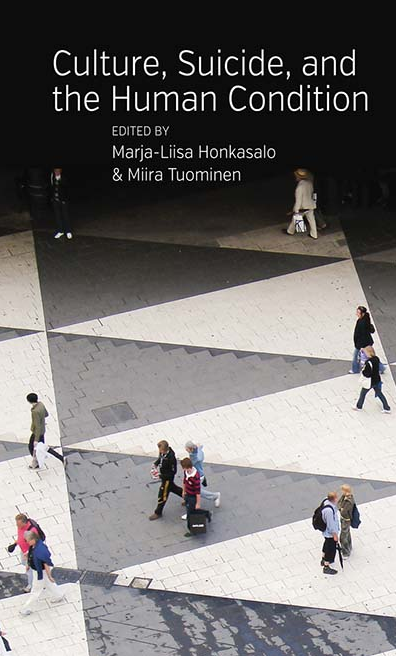
Culture, Suicide, and the Human Condition

Edited by Marja-Liisa Honkasalo and Miira Tuominen / Afterword by Arthur Kleinman

This collection of research on suicide argues that suicide is not “a separate realm of pathological behavior,” but instead a human action contextualized by a suicidal person’s cultural, historical, and ethnic roots. However, “the context never completely determines the decision,” allowing the authors to focus on suicide as both cultural and psychological phenomena. The authors emphasize individual action and choice regarding the decision to commit suicide. Similarly, the collection presents a complicated puzzle: suicidal narratives make sense of self-killing to a community, and depict suicide as a “solution to common human problems.”

Culture, Suicide, and the Human Condition was released in March 2014 by Berghahn Books. More details on the book here: https://www.berghahnbooks.com/extras/docs/flyer/HonkasaloCulture_9781782382348.html

Image via MIT Press

Image via MIT Press

A Metaphysics of Psychopathology

Peter Zachar

Zachar’s book asks what constitutes the “real” in psychopathology. He states that in psychiatry, pathologies are assumed to be “real,” while in psychology, the “realness” of a pathology is debated in terms of its roots in personality, superego, or in “general intelligence.” Neither discipline, however, aims to pin down what “real” entails for mental illness and conditions. Some pathologies move from being cast off as imaginary to being embraced as legitimate, such as PTSD, and others, like multiple personality disorder, are classified as real only to be later considered imaginary. Zachar takes a philosophical approach to considering what “real” means in terms of psychiatric and psychological classification, proposing a new classificatory system that the summary asserts “avoids both relativism and essentialism.” He then uses this model to interpret recent “controversies” in the inclusion of certain mental disorders within existing classificatory systems.

A Metaphysics of Psychopathology was released in March 2014 by MIT Press: http://mitpress.mit.edu/books/metaphysics-psychopathology

Current Issue Highlight: Vol. 38 Issue 4, December 2014

In our “Current Issue Highlight” series, we provide brief synopses of some of the original articles and commentaries published in our latest issue of Culture, Medicine, and Psychiatry. We hope these glimpses into our recent publications serve as a taste of the research we publish, as well as offer fresh insights on the intersections of culture, disease, health, and healing.

“The Ethics of Ambivalence and the Practice of Constraint in US Psychiatry”

Paul Brodwin

“This article,” the abstract begins, “investigates the ambivalence of front-line mental health clinicians toward their power to impose treatment against people’s will.” Ambivalence is itself a psychological construct that describes the tensions between love and hate, or multiple perspectives, within both individual subjects as well as the collective social group: here, psychiatric health workers. Central to this article is the friction generated between the clinicians’ self-concept as caregivers and their professional drive to control patients. Such ambivalence about clinical work in psychiatry is evident in the ethnographic research presented here.

Brodwin’s piece reminds us that anthropology is perfectly situated to draw meaning from these problematic and conflicted perspectives within a social group. Rather than reconciling the participants’ feelings and drawing one universal message from them, Brodwin presents us with an authentic picture of the complicated world of clinical psychiatric practice. He concludes, “To understand the paradox, fieldwork should focus especially on the moments when people’s sense of unease erupts into collective life.”

Link to article: http://link.springer.com/article/10.1007/s11013-014-9401-z

“A Village Possessed by ‘Witches’: A Mixed-Methods Case–Control Study of Possession and Common Mental Disorders in Rural Nepal”

Ram P. Sapkota, et al.

In this article, the authors probe an important question: if we consider spirit possession and psychopathology as separate categories, rather than assume possession as a form of mental illness, how might we describe mental illness within a population who has experienced spirit possession? For societies in which spirit encounters are frequent and socially normative, reading mental illness as distinct from possession is particularly critical when exploring local psychic events.

Nepal provided fertile intellectual grounds for exploring this question because spiritual possession occurs regularly. When the researchers delivered educational sessions on psychosomatic and psychosocial illnesses, suggesting that spirit possession might be a type of mental distress, villagers in the study resisted this notion. They argued that possession was rooted in cosmological and supernatural disturbances, making them altogether different psychological phenomena.

Instead of casting possession as a brand of psychiatric illness, the authors suggest that we might view possession as a coping mechanism against other mental duress. In another way, we could conceive of possession as a cultural idiom of distress: reframing illness in terms of a socially acceptable category of experience that is widely shared.

Link to article: http://link.springer.com/article/10.1007/s11013-014-9393-8

“Confinement and Psychiatric Care: A Comparison Between High-Security Units for Prisoners and for Difficult Patients in France”

Livia Velpry & Benoît Eyraud

Focusing on French mental health care, this article explores the evolving use of confinement as part of the treatment of mentally ill individuals who exhibit violent behavior. The authors parallel the nature of confinement in French psychiatric wards to the security practices of high-security prison units.

In their research, Velpry and Eyraud discovered that the public appeal to heightened security in psychiatric institutions, as well as executive action from the president, led to a “turn” towards new confinement measures. Second, psychiatrists used this new narrative of control to justify control techniques that they argued gave patients “psychic structure.” Rather than standing as its own therapeutic measure, physicians employed confinement as a means of managing “difficult” patients.

As an object of inquiry, this recent trend in French psychiatry recalls the complementary trajectories of care and justice, power and control, as well as reflects on the changing landscape of what we define as therapy.

Link to article: http://link.springer.com/article/10.1007/s11013-014-9400-0

“Psychiatry with Teeth: Notes on Coercion and Control in France and the United States”

Anne M. Lovell & Lorna A. Rhodes

This commentary piece on the articles published in the current issue highlights the “rough edge” of the use of constraint and coercion to subdue “difficult” psychiatric patients. Lovell and Rhodes note that many of the articles demonstrate how these forms of discipline and control are enacted at the local scale, and remind us that the exchange between psychiatric patient and the care institution is the site of the strongest conflict when we look at systems of control. What is the border between “care and custody,” the issue asks? How do we as anthropologists contribute to the knowledge about these complex social interactions?

Furthermore, the authors observe that the geographic emphasis on psychiatric care in France and the United States is hardly accidental. Although care practices for the mentally ill differ widely between the two countries, the focus on constraint and control is similarly present in the scholarly literature produced on psychiatry in each place. Likewise, in French and American research, there is a mutual tendency to study mental health care in terms of autonomy, freedom, humanism, and democracy.

Link to commentary: http://link.springer.com/article/10.1007/s11013-014-9420-9


Want to see a preview and abstracts of all the articles in the current issue? Find details on the full issue here: http://link.springer.com/journal/11013/38/4/page/1

Publication Highlight: “Online First” Articles (Oct 2014), Part Two

Welcome to the second installment of this series. The following collection of articles are from our “Online First” file at our publisher’s website: http://link.springer.com/journal/11013. The full text of these articles will be released in upcoming issues of Culture, Medicine, and Psychiatry, but here we’d like to lend our readers a glimpse into the innovative research in medical anthropology and social medicine that the journal publishes.

Clicking the title of each paper will send you to the “Online First” page for each article, including a full list of authors and abstracts.

cropped-cropped-2009cover-copy1.jpg

Confinement and Psychiatric Care: A Comparison Between High-Security Units for Prisoners and for Difficult Patients in France

Livia Velpry & Benoît Eyraud

Learning Constraint. Exploring Nurses’ Narratives of Psychiatric Work in the Early Years of French Community Psychiatry

Nicolas Henckes

The Ethics of Ambivalence and the Practice of Constraint in US Psychiatry

Paul Brodwin

Between Jewish Settlers and Palestinian Citizens of Israel: Negotiating Ethno-national Power Relations Through the Discourse of PTSD

Keren Friedman-Peleg