Vol. 39 Issue 1 March 2015: Medicalizing Heroin

In addition to our From the Archive series, where we highlight past articles in the journal’s history, the CMP blog features selected previews of our latest issue. This week, we again take a sneak peek into an article from the March issue: the first installment of 2015’s Volume 39 of Culture, Medicine & Psychiatry.


Heroin: From Drug to Ambivalent Medicine

On the Introduction of Medically Prescribed Heroin and the Emergence of a New Space for Treatment

Birgitte Schepelern Johansen • Katrine Schepelern Johansen. Pages 75-91. Link to article: http://link.springer.com/article/10.1007/s11013-014-9406-7

This article examines the reintroduction of heroin as a medicine, as opposed to illicit drug, in the treatment of substance abuse patients. Unlike existing research on this topic, the authors here emphasize the exchanges between the users, the staff, and the material space of the implementation of heroin: the built and organizational environments of the clinic, rather than just the actors in this space alone.

Heroin exists in a complicated place in these clinics: it is (paradoxically) utilized to minimize addiction to it. Rather than marginalizing the drug, this process of managed heroin prescription lends the drug a central place in the lives of users and staff, albeit a place that ambivalently lies between drug use as pleasure and drug injection as a form of medicalized control.

cards3

When considering the rooms in the clinic where the staff injects heroin into clients, the authors note that the space is strictly regulated. Staff observe incoming clients, while those who carry out injections do not permit the patients from selecting where the drug is administered. Likewise, this clinical space is not used for socializing: clients don’t casually talk while waiting, and typically depart this area and linger in the facility’s more casual cafe after receiving their injection. The clinical space removes the use of heroin from the context of pleasure-seeking, and assumes control for the drug’s use. Although the substance is the same, heroin users’ experiences of the drug in recreational settings is deliberately set apart from its use in the clinic.

Yet distinguishing the clinical space where heroin is injected, while no doubt increasing medicalized control over the substance, also complicates the notion of the drug as unquestionably destructive. Clients move into a social, casual environment in the cafe after initial injection. Even the clinical space itself underscores the intimacy of intravenous drug use, as staff and clients engage one-on-one during the injections. The staff similarly struggle with the complex nature of heroin as an illegal drug, made most evident by the strict safeguarding of the location where heroin is stored.

Although the medicalization of heroin abuse may serve to diminish the criminal stigma surrounding use of the drug, medical models of treatment remain entangled in older ideas of substance illegality, criminality, and the stringent enforcement of substance abuse policies. Conversely, the clinical treatment space and its organization is arranged in such a way that muddies the boundary between pleasure and treatment. The authors thereby illustrate the complexity of moving towards a medical model of heroin treatment, and how notions of control evolve with the changing landscape of substance abuse policy.

Guest Blog: Culture, Medicine, and Neuropsychiatry

This week, we are featuring a special guest blog post by M. Ariel Cascio, PhD. Here, she discusses neuropsychiatry in the Italian context and within the United States.

In the 21st century, anthropologists and allied scholars talk frequently of the biologization, cerebralization or neurologization of psychiatry. Many make reference to the 1990s, the “Decade of the Brain” that closed out the last century. They talk about “brain diseases” as a dominant discourse in discussions of mental illness. The 2014 Annual Meeting of the American Anthropological Association hosted a panel on “reflections on mind and body in the era of the ‘cerebral subject.’” In these and other ways, scholars write and talk about increasing dominance of brain discourses in discussion of psychological and psychiatric topics. This dominance has historical roots, for example in German (Kraepelinian) psychiatry, and authors in Culture, Medicine & Psychiatry and elsewhere have written about the historical context and local manifestations of this dominance of the neurological in the psy- sciences.

In this blog post I explore a situation in which neurology and psychiatry have long co-existed: the Italian field of neuropsychiatry. While the field “neuropsychiatry” is not unknown in the United States, and similar terms are used in other countries as well, I offer some comments specifically on the Italian context. The example of Italian neuropsychiatry provides one case of a particular historical relationship between neurology, psychiatry, and psychology that would be of interest to any historical or anthropological scholars of psychiatry.

The Italian medical system distinguishes between neuropsychiatry and psychiatry, neuropsichiatria infantile and psichiatria. Neuropsichiatria infantile (child neuropsychiatry), abbreviated NPI but sometimes referred to simply as neuropsichiatria (neuropsychiatry), addresses neurological, psychiatric, and developmental problems in children under age 18. Psichiatria (psychiatry) treats adults starting at age 18. As such, it is tempting to simply distinguish child and adult psychiatry. However, neuropsychiatry and psychiatry actually have distinct origins and practices. As the names imply, neuropsychiatry links neurology and psychiatry. Adult psychiatry, however, does not.

While Italian psychiatry has its roots in early 19th century organicist and biological approaches, in the 1960s a younger generation of psychiatrists, most prominently Franco Basaglia, aligned themselves with phenomenology and existential psychiatry. These psychiatrists crystallized their ideas into the ideology of Psichiatra Democratica (Democratic Psychiatry) and the initiative of “Basaglia’s Law,” the 1978 Law 180 which began Italy’s process of deinstitutionalization, generally considered to be very successful (Donnelly 1992). While childhood neuropsychiatry is indeed the counterpart to adult psychiatry, more than just the age group served differentiates these fields. If Italian psychiatry has its roots in Basaglia and the ideology of democratic psychiatry, neuropsychiatry has its roots at the turn of the 20th century, in the works of psychiatrist Sante de Sanctis, psychopedagogue Giuseppe F. Montesano, and pedagogue Maria Montessori.

In this way, neuropsychiatry’s origins bridged psychiatry and pedagogy (Bracci 2003; Migone 2014). Giovanni Bollea has been called the father of neuropsychiatry for his role in establishing the professional after World War II (Fiorani 2011; Migone 2014). Fiorani (2011) traces the use of the term neuropsychiatry (as opposed to simply child psychiatry, for example) to Bollea’s desire to honor the distinctly Italian tradition and legacy following Sante de Sanctis.

Several features distinguish psychiatry and neuropsychiatry. Migone (2014) argues that child neuropsychiatry has taken more influence from French psychoanalytic schools, whereas adult psychiatry has taken more influence from first German and then Anglo-Saxon psychiatries. Migone further explains:

Child and adolescent psychiatry in Italy is therefore characterized by a reduced use of medications (if compared to the United States), and by a diffuse use of dynamic psychotherapy, both individual and family therapy (from the mid-1970s systemic therapy spread). The attention to the family and the social environment is extremely important for understand the clinical case during the developmental years. [My translation]

Moreover, neuropsychiatry is known for being multidisciplinary and working in equipe, teams of psychiatrists, psychologists, social workers and so on. It incorporates psychoanalysis, psychotherapy, dynamic psychology, psychological testing, social interventions, and more (Fiorani 2011).

This extremely brief overview outlines key characteristics of Italian neuropsychiatry and the ways it is distinguished from Italian psychiatry, as well as from U.S. psychiatry. Italian neuropsychiatry provides one example of a long-standing relationship between neurology, psychiatry, psychology, philosophy, and pedagogy. By drawing attention to this medical specialty and the complexities of the different fields it addresses, I hope to have piqued the interest of historical and anthropological scholars. I include English and Italian language sources for further reading below.


References and Further Reading – English

Donnelly, Michael. 1992. The Politics of Mental Health in Italy. London ; New York: Routledge.

Feinstein, Adam. 2010. A History of Autism: Conversations with the Pioneers. Malden, MA: Wiley-Blackwell.

Levi, Gabriel, and Paola Bernabei. 1997. Italy. In Handbook of Autism and Pervasive Developmental Disorders. 2nd edition. Donald J. Cohen and Fred R. Volkmar, eds. New York, NY: John Wiley & Sons.

Nardocci, Franco. 2009. The Birth of Child and Adolescent Neuropsychiatry: From Rehabilitation and Social Inclusion of the Mentally Handicapped, to the Care of Mental Health during Development. Ann Ist Super Sanità 45: 33–38.

References and Further Reading – Italian

Bracci, Silvia. 2003. Sviluppo della neuropsichiatria in Italia ed Europa. Storia delle istituzioni psichiatriche per l’infanzia. In L’Ospedale psichiatrico di Roma. Dal Manicomio Provinciale alla Chiusura. Antonio Iaria, Tommaso Losavio, and Pompeo Martelli, eds. Pp. 145–161. Bari: Dedalo.

Fiorani, Matteo. 2011. Giovanni Bollea, 1913-2011: Per Una Storia Della Neuropsichiatria Infantile in Italia. Medicina & Storia 11(21/22): 251–276.

Migone, Paolo. 2014. Storia Della Neuropsichiatria Infantile (prima Parte). Il Ruolo Terapeutico 125: 55–70.

Russo, Concetta, Michele Capararo, and Enrico Valtellina. 2014. A sé e agli altri. Storia della manicomializzazione dell’autismo e delle altre disabilità relazionali nelle cartelle cliniche di S. Servolo. 1. edizione. Milano etc.: Mimesis.


ABOUT THE AUTHOR

M. Ariel Cascio is an anthropologist specializing in the cultural study of science and biomedicine, psychological anthropology, and the anthropology of youth. She recently successfully defended her dissertation on autism in Italy at Case Western Reserve University. She can be reached at ariel.cascio@case.edu. Her blog, written in Italian and English, can be viewed here: https://arielcascio.wordpress.com/.

News: WHO Release on Worldwide Hearing Loss

When medical anthropologists consider the impacts of technology on human health, we envision life-saving drugs, surgeries, or diagnostic tools to detect disease. Technology in these ways can prove instrumental– quite literally — in improving patients’ health outcomes. However, it is equally important to think about the ways in which technology can diminish health, particularly in an age where the global spread of technology deserves the attention of clinicians and anthropologists alike.

This is the nature of the concern posed by the latest World Health Organization (WHO) report, released on February 27th 2015. After studying noise exposure in middle and high income countries and among participants ages 14-35, WHO officials stated that an estimated 1.1 billion people are at risk for hearing loss due to “recreational noise.” This includes music piped through headphones and noise experienced at entertainment venues. Exposure to high decibels of sound is not itself harmful: for instance, hearing a heavy pot fall from the counter and crash onto the floor would not cause hearing damager. Rather, the extended length of exposure to such loud noises is what proves detrimental. The WHO defines dangerous levels of noise exposure as 85 decibels for eight hours or 100 decibels for 15 minutes. The report notes that a rock concert that lasts for two hours may cause temporary hearing loss or lead to other symptoms such as a ringing sensation in the ears, and regular extended exposure may lead to more permanent damage.

The WHO flag, via Wikimedia Commons

The WHO flag, via Wikimedia Commons

What does the WHO recommend to address this global health concern? The report singles out teenagers and implores them to take noise management into their own hands: purchasing noise-canceling headphones, taking “sound breaks” if extended exposure to loud sounds is unavoidable, or wearing ear plugs to loud music venues. This places the responsibility to manage noise exposure on young people rather than on their families and caregivers. Likewise, the report suggests that patrons of entertainment venues like clubs and bars that feature loud music and sounds should limit their time spent in such environments. There are no extensive recommendations listed in the report for those who work in loud venues, other than limiting shifts to eight hours to shorten exposure.

From a medical anthropological standpoint, many of the factors in sound environments are tangled with social life. For instance, in many developed countries, concerts are an important social gathering place for young people. Teens may not avoid these events, but if they follow the WHO recommendations and wear earplugs to the venue, they may be ostracized by their peers for looking out of place. Likewise, neighborhood bars and clubs are important hubs of activity for locals, and avoiding them may come at the cost of social isolation. As technologies spread both to developing and developed countries, the ways that people integrate audio technologies, new entertainment venues, and popular music into their lives is worth considering given the impacts of these tools, sounds, and social spaces on hearing health.


To read the WHO’s news release, click here: http://www.who.int/mediacentre/news/releases/2015/ear-care/en/

From the Archive: AMC’s Breaking Bad, Empowerment, and Terminal Illness

In the “From the Archive” series, we highlight articles published throughout the journal’s history. We look forward to sharing with our readers these samples of the innovative research that CMP has published on the cultural life of medicine across the globe.


In “From the Archive,” we generally highlight older publications from the journal and discuss their importance for medical anthropology and cultural studies of medicine today. This week, we are taking a turn to revisit a newer piece from 2013 that has been one of CMP’s most popular articles: Mark A. Lewis’ “From Victim to Victor: ‘Breaking Bad’ and the Dark Potential of the Terminally Empowered.”

cards

Lewis, an oncologist, opens by describing a recent shift in the treatment of cancer. With new and experimental treatments growing in number, patients are encouraged to feel hopeful about therapy for their cancer, rather than defeated in the face of a potentially terminal condition. These new scientific innovations in treatment, therefore, are altering the rhetorics surrounding cancer diagnoses. Cancer is something to be overcome, or even battled. In the age of the “Live Strong” campaign, and the casting of cancer patients into fighters, new notions of what it means to endure this illness are developing.

The key to AMC’s Breaking Bad, Lewis argues, is that the creators seize upon this new model of the cancer patient and then betray the audience’s expectations that his battle against illness is a “noble” one. Rather than having a diagnosis opening a realm to hope, it lends Walter White the potential to take risks he would not have taken in good health. Imminent death “emboldens” Walter, yet this newfound audacity is channeled towards selfish, perhaps prideful, and certainly criminal ends.

Lewis notes that these behavioral, psychological shifts in cancer patients come under the purview of a new field deemed psycho-oncology. This budding discipline addresses the mental wellness and conditions of cancer patients, whose diagnosis carries somatic as well as psychological effects. As the article suggests, stress for cancer patients extends beyond the worries they have about the severity of their illness: it includes anxiety about the financial and personal costs of the treatment needed to ‘battle off’ the disease. For White, this entails not only having the means to treat his illness and support his family, but also to be self-sustaining, hence why he turns down assistance from wealthy benefactors and instead makes and sells crystal meth.

Walter White therefore follows in the steps of a cancer patient whose diagnosis opens a realm of possibilities and encourages him to take risks in fighting off his condition. However, this transformation alters what victory means for Walter. As he descends deeper into the meth business, the terms of victory are no longer noble. Walter murders his competitors, and after the publication of Lewis’ article, declares at the end of the series that his drug-dealing empire is what gives him life. His pride is in his business, not in overcoming his cancer. Walter’s potential is unlocked by the cancer, yet he subverts the narrative of a “noble” patient who survives his dire diagnosis. His cancer has merely positioned him to accomplish what he would have not otherwise set out to do.

Lewis’ article demonstrates the centrality of illness narratives and new models of illness experience to popular media. His article draws on medical science, popular health campaigns, and on modern-day encounters with terminal illness to inform viewers’ expectations of what path patients might, and should, follow.

To access the article and read an abstract, click here:

http://link.springer.com/article/10.1007/s11013-013-9341-z

Preview of Books Received: Vol. 38 Issue 4, Dec 2014

The following are previews of two books received for review at Culture, Medicine, and Psychiatry. These previews provide a snapshot of recent publications in medical anthropology, cultural studies, and the history of medicine. For a full list of books received in December 2014, click here: http://link.springer.com/article/10.1007/s11013-014-9395-6

Image via Berghahn Books

Image via Berghahn Books

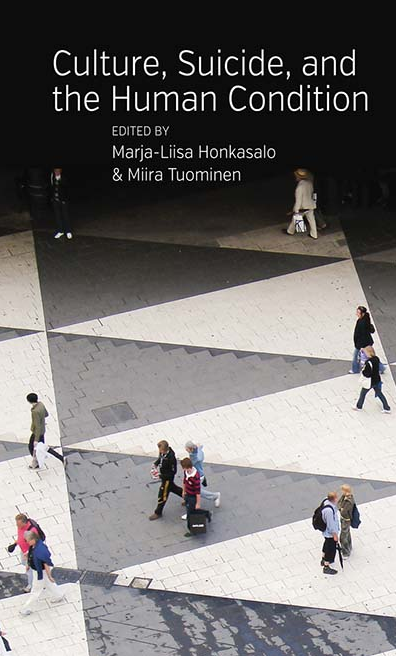
Culture, Suicide, and the Human Condition

Edited by Marja-Liisa Honkasalo and Miira Tuominen / Afterword by Arthur Kleinman

This collection of research on suicide argues that suicide is not “a separate realm of pathological behavior,” but instead a human action contextualized by a suicidal person’s cultural, historical, and ethnic roots. However, “the context never completely determines the decision,” allowing the authors to focus on suicide as both cultural and psychological phenomena. The authors emphasize individual action and choice regarding the decision to commit suicide. Similarly, the collection presents a complicated puzzle: suicidal narratives make sense of self-killing to a community, and depict suicide as a “solution to common human problems.”

Culture, Suicide, and the Human Condition was released in March 2014 by Berghahn Books. More details on the book here: https://www.berghahnbooks.com/extras/docs/flyer/HonkasaloCulture_9781782382348.html

Image via MIT Press

Image via MIT Press

A Metaphysics of Psychopathology

Peter Zachar

Zachar’s book asks what constitutes the “real” in psychopathology. He states that in psychiatry, pathologies are assumed to be “real,” while in psychology, the “realness” of a pathology is debated in terms of its roots in personality, superego, or in “general intelligence.” Neither discipline, however, aims to pin down what “real” entails for mental illness and conditions. Some pathologies move from being cast off as imaginary to being embraced as legitimate, such as PTSD, and others, like multiple personality disorder, are classified as real only to be later considered imaginary. Zachar takes a philosophical approach to considering what “real” means in terms of psychiatric and psychological classification, proposing a new classificatory system that the summary asserts “avoids both relativism and essentialism.” He then uses this model to interpret recent “controversies” in the inclusion of certain mental disorders within existing classificatory systems.

A Metaphysics of Psychopathology was released in March 2014 by MIT Press: http://mitpress.mit.edu/books/metaphysics-psychopathology

Current Issue Highlight: Vol. 38 Issue 4, December 2014

In our “Current Issue Highlight” series, we provide brief synopses of some of the original articles and commentaries published in our latest issue of Culture, Medicine, and Psychiatry. We hope these glimpses into our recent publications serve as a taste of the research we publish, as well as offer fresh insights on the intersections of culture, disease, health, and healing.

“The Ethics of Ambivalence and the Practice of Constraint in US Psychiatry”

Paul Brodwin

“This article,” the abstract begins, “investigates the ambivalence of front-line mental health clinicians toward their power to impose treatment against people’s will.” Ambivalence is itself a psychological construct that describes the tensions between love and hate, or multiple perspectives, within both individual subjects as well as the collective social group: here, psychiatric health workers. Central to this article is the friction generated between the clinicians’ self-concept as caregivers and their professional drive to control patients. Such ambivalence about clinical work in psychiatry is evident in the ethnographic research presented here.

Brodwin’s piece reminds us that anthropology is perfectly situated to draw meaning from these problematic and conflicted perspectives within a social group. Rather than reconciling the participants’ feelings and drawing one universal message from them, Brodwin presents us with an authentic picture of the complicated world of clinical psychiatric practice. He concludes, “To understand the paradox, fieldwork should focus especially on the moments when people’s sense of unease erupts into collective life.”

Link to article: http://link.springer.com/article/10.1007/s11013-014-9401-z

“A Village Possessed by ‘Witches’: A Mixed-Methods Case–Control Study of Possession and Common Mental Disorders in Rural Nepal”

Ram P. Sapkota, et al.

In this article, the authors probe an important question: if we consider spirit possession and psychopathology as separate categories, rather than assume possession as a form of mental illness, how might we describe mental illness within a population who has experienced spirit possession? For societies in which spirit encounters are frequent and socially normative, reading mental illness as distinct from possession is particularly critical when exploring local psychic events.

Nepal provided fertile intellectual grounds for exploring this question because spiritual possession occurs regularly. When the researchers delivered educational sessions on psychosomatic and psychosocial illnesses, suggesting that spirit possession might be a type of mental distress, villagers in the study resisted this notion. They argued that possession was rooted in cosmological and supernatural disturbances, making them altogether different psychological phenomena.

Instead of casting possession as a brand of psychiatric illness, the authors suggest that we might view possession as a coping mechanism against other mental duress. In another way, we could conceive of possession as a cultural idiom of distress: reframing illness in terms of a socially acceptable category of experience that is widely shared.

Link to article: http://link.springer.com/article/10.1007/s11013-014-9393-8

“Confinement and Psychiatric Care: A Comparison Between High-Security Units for Prisoners and for Difficult Patients in France”

Livia Velpry & Benoît Eyraud

Focusing on French mental health care, this article explores the evolving use of confinement as part of the treatment of mentally ill individuals who exhibit violent behavior. The authors parallel the nature of confinement in French psychiatric wards to the security practices of high-security prison units.

In their research, Velpry and Eyraud discovered that the public appeal to heightened security in psychiatric institutions, as well as executive action from the president, led to a “turn” towards new confinement measures. Second, psychiatrists used this new narrative of control to justify control techniques that they argued gave patients “psychic structure.” Rather than standing as its own therapeutic measure, physicians employed confinement as a means of managing “difficult” patients.

As an object of inquiry, this recent trend in French psychiatry recalls the complementary trajectories of care and justice, power and control, as well as reflects on the changing landscape of what we define as therapy.

Link to article: http://link.springer.com/article/10.1007/s11013-014-9400-0

“Psychiatry with Teeth: Notes on Coercion and Control in France and the United States”

Anne M. Lovell & Lorna A. Rhodes

This commentary piece on the articles published in the current issue highlights the “rough edge” of the use of constraint and coercion to subdue “difficult” psychiatric patients. Lovell and Rhodes note that many of the articles demonstrate how these forms of discipline and control are enacted at the local scale, and remind us that the exchange between psychiatric patient and the care institution is the site of the strongest conflict when we look at systems of control. What is the border between “care and custody,” the issue asks? How do we as anthropologists contribute to the knowledge about these complex social interactions?

Furthermore, the authors observe that the geographic emphasis on psychiatric care in France and the United States is hardly accidental. Although care practices for the mentally ill differ widely between the two countries, the focus on constraint and control is similarly present in the scholarly literature produced on psychiatry in each place. Likewise, in French and American research, there is a mutual tendency to study mental health care in terms of autonomy, freedom, humanism, and democracy.

Link to commentary: http://link.springer.com/article/10.1007/s11013-014-9420-9


Want to see a preview and abstracts of all the articles in the current issue? Find details on the full issue here: http://link.springer.com/journal/11013/38/4/page/1

Publication Highlight: “Online First” Articles (Oct 2014), Part Two

Welcome to the second installment of this series. The following collection of articles are from our “Online First” file at our publisher’s website: http://link.springer.com/journal/11013. The full text of these articles will be released in upcoming issues of Culture, Medicine, and Psychiatry, but here we’d like to lend our readers a glimpse into the innovative research in medical anthropology and social medicine that the journal publishes.

Clicking the title of each paper will send you to the “Online First” page for each article, including a full list of authors and abstracts.

cropped-cropped-2009cover-copy1.jpg

Confinement and Psychiatric Care: A Comparison Between High-Security Units for Prisoners and for Difficult Patients in France

Livia Velpry & Benoît Eyraud

Learning Constraint. Exploring Nurses’ Narratives of Psychiatric Work in the Early Years of French Community Psychiatry

Nicolas Henckes

The Ethics of Ambivalence and the Practice of Constraint in US Psychiatry

Paul Brodwin

Between Jewish Settlers and Palestinian Citizens of Israel: Negotiating Ethno-national Power Relations Through the Discourse of PTSD

Keren Friedman-Peleg

Publication Highlight: “Online First” Articles (Oct 2014), Part One

The following collection of articles are from our “Online First” file at our publisher’s website: http://link.springer.com/journal/11013. The full text of these articles will be released in upcoming issues of Culture, Medicine, and Psychiatry, but here we’d like to lend our readers a glimpse into the innovative research in medical anthropology and social medicine that the journal publishes.

Clicking the title of each paper will send you to the “Online First” page for each article, including a full list of authors and abstracts.

cards

A Village Possessed by “Witches”: A Mixed-Methods Case–Control Study of Possession and Common Mental Disorders in Rural Nepal

Ram P. Sapkota, et al

Practicing and Resisting Constraint: Ethnography of “Counter Response” in American Adolescent Psychiatric Custody

Katherine Hejtmanek

The Invisibility of Informal Interpreting in Mental Health Care in South Africa: Notes Towards a Contextual Understanding

Leslie Swartz & Sanja Kilian

Learning Disabilities’ as a ‘Black Box’: On the Different Conceptions and Constructions of a Popular Clinical Entity in Israel

Ofer Katchergin

From the Archive: Biomedicine, Chinese Medicine, and Psychiatry

In the “From the Archive” series, we will highlight articles published throughout the journal’s history. We look forward to sharing with our readers these samples of the innovative research that CMP has published on the cultural life of medicine across the globe.

cards3

At the journal, we often present fascinating work on psychiatric care throughout the world, including Joshua Breslau’s 2001 article “Pathways through the Border of Biomedicine and Traditional Chinese Medicine: A Meeting of Medical Systems in a Japanese Psychiatry Department” (volume 25 issue 3.) 

In this piece, Breslau recounts stories of the two medical systems interacting during a meeting of clinicians employing, to varying degrees, traditional Chinese medicine (TCM) alongside biomedical interventions within a Japanese psychiatric department. The author asserts that Japan is perhaps the most common ground for the two medical systems to meet, and that it represents the “traffic” of medical knowledge between Japan, the Asiatic mainland, and the rest of the world. Indeed, Japan has had a lengthy history of exchange with foreign medical systems,beginning with the 18th-century import of anatomy textbooks from Holland. Combined with expanded trade with “the West” in the 19th century and the later resurgence of local Japanese interest in Chinese herbal remedies during the 1970s, we see that the two medical systems have both held a prominent position in the dynamic medical landscape in Japan.

Breslau observes that the two medical systems complement one another most strikingly in psychiatry, where kanpo (herbal treatments) are used both to diminish the uncomfortable side effects of psychoactive medications and to treat conditions for which there are few biomedical interventions. Exemplifying this blended approach to care, the author notes that Dr. Nakai, professor of psychiatry at Kobe University, examines the tongue to diagnose his patients. This method of diagnosis has its roots in TCM, and was taught to Dr. Nakai from a visiting Chinese student; many such Chinese students, having studied TCM, go to Japan to learn “Western medicine.” Although there is little formal education in TCM available in Japan, these interpersonal (and intercultural) exchanges are important mechanisms for sharing diverse medical techniques.

Another physician, Dr. Song, initially specialized in the use of acupuncture to treat psychiatric patients in China. Breslau theorizes that although it seems anomalous for traditional medicine to find a niche in conditions that generally fall under the scope of biomedicine, Dr. Song’s work is a productive blend of psychiatric treatments from both medical systems. Whereas patients in the Chinese biomedical settings were admitted alone, patients and their families stayed together in the TCM centers for mental health, thereby offering a support network that the biomedical patients lacked. In Japan, Dr. Song combined TCM and biomedical approaches. She established an “open ward” psychiatric unit that welcomed patients and their families, and employed both pharmaceutical and herbal remedies depending on the severity and the stage of psychiatric distress suffered by the patient.

Breslau’s piece reminds us of the complicated ways in which cultures are in contact with one another. Rather than reading medicine in China and Japan as a contest, where biomedicine and traditional Chinese medicine are at odds in the race to be deemed “most effective,” it is more accurate to describe the ways that the systems are in dialogue– often in the same clinical settings.

You can find the contents of the full issue in which Breslau’s article is published here: http://link.springer.com/journal/11013/25/3/page/1

News: AAA Forms Task Force on the Israeli-Palestinian Conflict

The American Anthropological Association (AAA) has recently formed a task force that will examine implications of the conflict between Israel and Palestine for the anthropological community: including forming potential stances that the organization could take on issues that might impede upon scholarly inquiry surrounding the conflict.

Members of the task force, appointed by current AAA president Monica Heller, could profess no public opinion about the political nature of the conflict. They were each required to have a subject matter background pertinent to analyzing the conflict at hand.[i]

Logo of the AAA from Wikimedia Commons

Logo of the AAA from Wikimedia Commons

The AAA website notes that the task force members will investigate “the uses of anthropological research to support or challenge claims of territory and historicity; restrictions placed by government policy or practice on anthropologists’ academic freedom; or commissioning anthropological research whose methods and/or aims may be inconsistent with the AAA statement of professional responsibilities.”[ii] Beyond studying what effects the conflict has on anthropological research and scholarship, the task force will also make recommendations on whether or not the AAA should take a stance on issues unveiled by the report.

In describing the task force goals, the AAA website also notes that it is possible that no stance will be taken on problems raised in the findings—but that any position the organization takes must be substantiated by “neutral overviews” of the argument in favor of a particular stance.

An article about the task force posted earlier this year on the Anthropology News website—operated by the AAA—noted that anthropologists, “have an opportunity here to develop modes of mutually respectful exchange on controversial anthropological topics that will serve us well now and in the future.”[iii]

Although the task force will meet in person during the Annual Meeting in December to discuss these concerns, their findings will not be available in a complete written report until October 2015.


[i] https://www.insidehighered.com/quicktakes/2014/09/09/anthropology-group-creates-task-force-israeli-palestinian-conflict

[ii] http://www.aaanet.org/cmtes/commissions/Task-Force-on-AAA-Engagement-on-Israel-Palestine.cfm

[iii] http://www.anthropology-news.org/index.php/2014/04/30/towards-an-informed-aaa-position-on-israel-palestine/