A Few Words from the AAA 2014 Meeting

This week, many of our readers (and staff members here in the office of Culture, Medicine, and Psychiatry) are attending the American Anthropological Association’s annual meeting in Washington, DC. For those of you presenting, we wish you the best of luck in delivering thoughtful and productive presentations. To all attendees, we hope you have pleasant travels to the nation’s capital, and return from the conference with new knowledge and fresh ideas.
via Wikimedia Commons

via Wikimedia Commons

Much like conferences in our field, CMP social media is a common space for intellectual inquiry about contemporary issues in anthropology. In the spirit of building this communal space electronically, we now invite our followers to submit approximately 500-word blog entries– ranging from brief commentaries on a research project, recent presentation, or reflections on topics in medical anthropology, medical humanities, and social medicine– to be considered for our blog.

We ask that submissions to the blog be widely accessible to readers across anthropology and the humanities: from advanced undergraduate students, graduate students, professors, as well as applied practitioners and interdisciplinary researchers. Accepted pieces will be posted here and shared via our Twitter account. This is an opportunity to showcase your work to new audiences and to gain valuable insight into producing widely accessible, digital scholarship. Please direct your submissions to Julia Balacko at jcb193@case.edu.

Thank you for following CMP social media. We look forward to receiving your guest blog submissions and hearing more from you about exciting new research from the AAA Annual Meeting.

Best Wishes,

The CMP Editorial Staff
AAA 2014: Sessions on Biotechnology and Medical Practice

For our readers attending the American Anthropological Association annual meeting this year, we’ve put together a second selected list of sessions on anthropological approaches to biotechnology and forms of medical practice. The following selection of sessions was drawn from this year’s AAA online presentation schedule for the 2014 annual meeting, to be held this year in Washington, DC from December 3-7th (for more information, click here: http://www.aaanet.org/meetings).

Wednesday, December 3rd

Reproductive Potentialities: Assisted Reproductive Technologies and the Imagination of Possible Futures

8:00pm-9:45pm

https://aaa.confex.com/aaa/2014/webprogram/Session11643.html

Thursday, December 4th

Techniques and Technologies of Global Health

9:00am-10:15am

https://aaa.confex.com/aaa/2014/webprogram/Session11699.html

What Constitutes Medical Knowledge?: Part 2 of a Discussion of Affliction by Veena Das

11:00am-12:45pm

https://aaa.confex.com/aaa/2014/webprogram/Session10870.html

Saturday, December 6th

Producing Intercultural Discourse in the Clinical Encounter, Part 2

2:30pm-4:15pm

https://aaa.confex.com/aaa/2014/webprogram/Session12505.html

Revisiting Midwifery: New Approaches to an Old Profession

6:30pm-8:15pm

https://aaa.confex.com/aaa/2014/webprogram/Session11410.html

Ordering, Morality, and Triage: Producing Medical Anthropology Beyond the Suffering Subject – Part 1: Biomedical Interventions and Failings

6:30pm-8:15pm

https://aaa.confex.com/aaa/2014/webprogram/Session11357.html

Sunday, December 7th

Doctors: Influencing and Being Influenced by Their Work and Subject

10:00am-11:45am

https://aaa.confex.com/aaa/2014/webprogram/Session12929.html

AAA 2014: Sessions on Psychiatry, Mental Illness, and Drugs

For our readers attending the American Anthropological Association annual meeting this year, we’re featuring a list of sessions sure to pique your interest in various aspects of mental illness, health, drugs, and psychiatric care. The following selection of sessions was drawn from this year’s AAA online presentation schedule for the 2014 annual meeting, to be held this year in Washington, DC from December 3-7th (for more information, click here: http://www.aaanet.org/meetings). Sessions in the list are organized by chronological date and time.

If you would like your session to be added to this list, please email a link to the session description on the AAA website to: jcb193@case.edu.

Global Mental Healthcare: Challenges, Controversies and Innovations

Wednesday, December 3rd 2pm-3:45pm

http://aaa.confex.com/aaa/2014/webprogram/Session12926.html

“Global” Knowledge, “Local” Care, and Subjectivity: Producing an Anthropology of Psychosis

Wednesday, December 3rd 2pm-3:45pm

http://aaa.confex.com/aaa/2014/webprogram/Session11392.html

Psyche and the Brain in the 21st Century

Wednesday, December 3rd 4pm-5:45pm

http://aaa.confex.com/aaa/2014/webprogram/Session11636.html

Transcendance and the Everyday in Responses to Trauma

Thursday, December 4th 2:30-4:15pm

http://aaa.confex.com/aaa/2014/webprogram/Session11838.html

What Drugs Produce

Saturday, December 6th 9am-10:45am

http://aaa.confex.com/aaa/2014/webprogram/Session11124.html

Psychological Disorder and Subjectivity in Socio-Political Context

Saturday, December 6th 11am-12:45pm

http://aaa.confex.com/aaa/2014/webprogram/Session12768.html

Ordering, Morality and Triage: Producing Medical Anthropology Beyond the Suffering Subject Part 2: Mental Health and Illness

Saturday, December 6th 2:30pm-4:15pm

http://aaa.confex.com/aaa/2014/webprogram/Session11809.html

Professional Perspectives in the Anthropology of Drugs

Saturday, December 6th 6:30pm-8:15pm

http://aaa.confex.com/aaa/2014/webprogram/Session11263.html

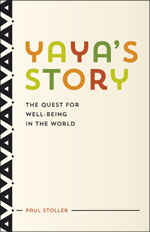
Book Release: Paul Stoller’s “Yaya’s Story: The Quest for Well-Being in the World”

9780226178790

Image from UC Press website

Out this month from the University of Chicago Press is Paul Stoller’s book Yaya’s Story: The Quest for Well-Being in the World. The text traces the author’s friendship with a Songhay trader from Niger named Yaya Harouna: a man who moved to the United States as Stoller, an anthropologist, had likewise made a journey from the USA to Africa as a Peace Corps volunteer. Their story begins whenever Stoller meets Yaya selling artwork in an African market in New York City’s Harlem neighborhood, where Stoller carried out research.

Although the men’s histories are markedly different, they become close after the two are each diagnosed with cancer: this serves as the heart of Yaya’s Story, and the experience upon which the two men’s culturally divergent, yet not entirely dissimilar, narratives cross paths. With extensive publications in the genres of both ethnography and memoir, Stoller is certain to blend keen anthropological insight with deeply personal accounts of human suffering, endurance, and resilience in the face of illness across cultures in his latest book.

Stoller, Professor of Anthropology at West Chester University, is a 1994 winner of a Guggenheim Fellowship and the 2013 recipient of the prestigious Anders Retzius Gold Medal in Anthropology from the King of Sweden.

You can find out more about the book here, at the UC Press website:

http://www.press.uchicago.edu/ucp/books/book/chicago/Y/bo18882897.html

Publication Highlight: “Online First” Articles (Oct 2014), Part One

The following collection of articles are from our “Online First” file at our publisher’s website: http://link.springer.com/journal/11013. The full text of these articles will be released in upcoming issues of Culture, Medicine, and Psychiatry, but here we’d like to lend our readers a glimpse into the innovative research in medical anthropology and social medicine that the journal publishes.

Clicking the title of each paper will send you to the “Online First” page for each article, including a full list of authors and abstracts.

cards

A Village Possessed by “Witches”: A Mixed-Methods Case–Control Study of Possession and Common Mental Disorders in Rural Nepal

Ram P. Sapkota, et al

Practicing and Resisting Constraint: Ethnography of “Counter Response” in American Adolescent Psychiatric Custody

Katherine Hejtmanek

The Invisibility of Informal Interpreting in Mental Health Care in South Africa: Notes Towards a Contextual Understanding

Leslie Swartz & Sanja Kilian

Learning Disabilities’ as a ‘Black Box’: On the Different Conceptions and Constructions of a Popular Clinical Entity in Israel

Ofer Katchergin

Current Issue: Preview of Books Received, Part Two

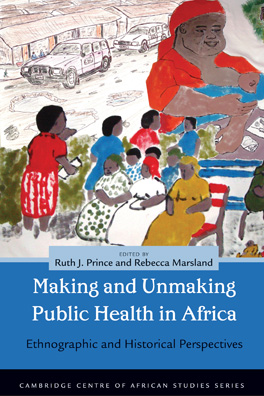
In this special feature on the blog, we’re highlighting recent book publications that have been submitted for review to Culture, Medicine, and Psychiatry. This week, we are pleased to present a short overview of Making and Unmaking Public Health in Africa: Ethnographic and Historical Perspectives, a volume of works edited by Ruth J. Prince and Rebecca Marsland. This book addresses the experience of African public health initiatives from numerous vantage points. Published by the Ohio University Press, a paperback version was released in December 2013. You can learn more about the book here: http://www.ohioswallow.com/book/Making+and+Unmaking+Public+Health+in+Africa.

Book cover image via the Ohio University Press website.

Book cover image via the Ohio University Press website.

Prince and Marsland’s edited collection was the result of a 2008 workshop at the University of Cambridge hosted by the Centre of African Studies and the Department of Social Anthropology. Africa has long served as an “arena” for discussions about global health, human rights, and humanitarian aid, but the notion of health-for-all is complicated against a backdrop of African state formation, international interventions, and transnational policies.

This text explores what public health means for clinical professionals, patients, government officials, and citizens throughout Africa. Instead of generalizing what the meaning of public health to these groups might be, this book aims to establish a rich, complex anthropology of African public health that weighs the importance of politics, culture, and local understanding to the definition and delivery of public health initiatives. The volume covers topics in numerous countries including Uganda, Nigeria, Kenya, and Tanzania, and takes a blended historical-anthropological approach to studying public health.


These brief summaries are intended to give our readers a glimpse into the newest academic publications that we’re excited to discuss in our journal and with our followers on social media. For a full list of books that have been submitted for review at CMP, click this link: http://link.springer.com/article/10.1007/s11013-014-9383-x. This page also has information regarding the submissions process for authors who’d like their academic releases reviewed in the journal, as well as information for those interested in composing a review. For more information on this process, please contact managing editor Brandy Schillace.

Current Issue Highlight: September 2014 (Vol 38 Issue 3) Part Two

Welcome back to our two-week special update featuring glimpses into some of the articles published in the latest release of Culture, Medicine, and Psychiatry. These brief synopses of a few of our newest pieces from the September 2014 issue are only some of the publications that the current issue has to offer. We hope they invite you to explore the many other fascinating articles housed in this issue and in past volumes of CMP.

Swapnaushadhi: The Embedded Logic of Dreams and Medical Innovation in Bengal
Projit Bihari Mukharji

Mukharji’s article discusses the prevalent but little-researched history of indigenous therapeutic practices in Bengal that stem from therapies revealed in healers through dreams. Instead of grouping this practice into the indiscriminate category of “indigenous practice” or “dream culture,” the author asserts that all dream cultures are locally specific. They also do not draw stringent religious boundaries, as healers (and their patients) may receive visions of divine figures like Jesus or Muhammed despite not being of the creed the prophet represents. Because of this cross-cultural and “borderless” dialogue, medical innovation in dream medicine occurs regularly as the product of contact between numerous religious, spiritual, and local traditions. As Mukharji argues, “the logic of dreams opens up a space: the swapna-sthana or the dreamland where such cross-boundary transactions can take place without undermining the sanctity of the boundary itself in everyday social life.”

‘‘Pensando Mucho’’ (‘‘Thinking Too Much’’): Embodied Distress Among Grandmothers in Nicaraguan Transnational Families
Kristin Elizabeth Yarris

Yarris chronicles the difficulties faced by Nicaraguan grandmothers serving as the primary caregivers of grandchildren whose mothers have migrated to another country for employment. The author asks us to reconsider the simplistic mind-body connection in lieu of a more complicated view of the body and mind as experiencing distress: physical, emotional, and cultural all at once. In this paper, we discover that the term “thinking too much” ultimately describes the difficult self-sacrifice faced by grandmothers who tend to their grandchildren to allow their own children to succeed elsewhere. The stress of geographically dispersed and fractured families, the burden of caregiving later in life, and anxieties surrounding the grandmothers’ “hopes for the future” generate a particular form of psychosomatic suffering connected to broader economic, social, and political pressures manifested at the local level among these Nicaraguan families.

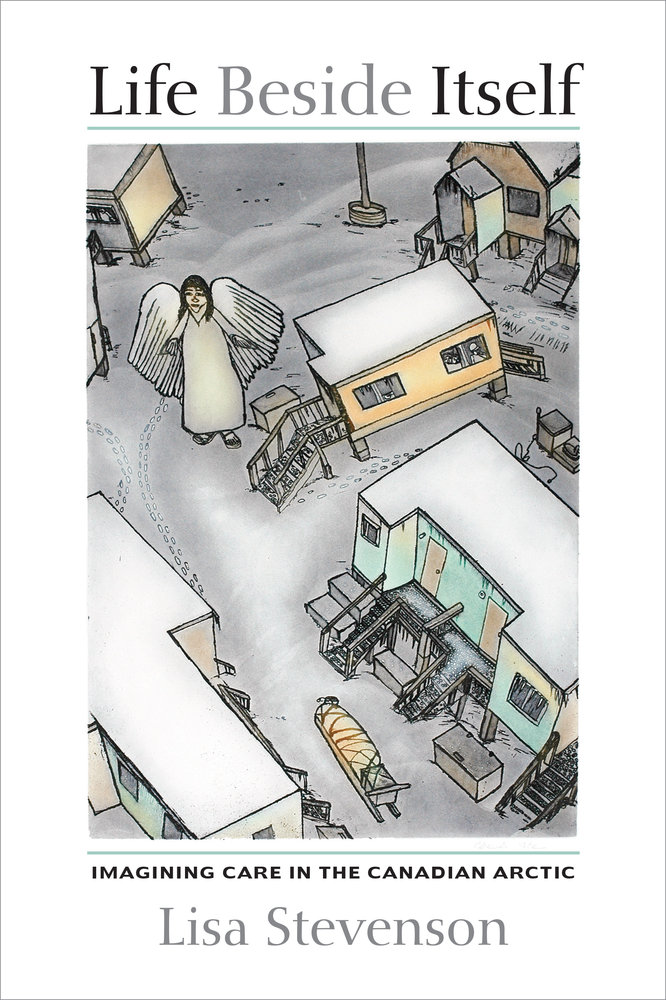
Book Release: Stevenson’s “Life Beside Itself: Imagining Care in the Canadian Arctic”

Cover of Stevenson's book. Rights credited to UC Press.

Cover of Stevenson’s book. Rights credited to UC Press.

This August 2014, Margaret Elizabeth Stevenson’s book on death, illness, and the understanding of life among the Inuit in the Canadian Arctic is set to be released by the University of California Press. The volume will explore two public health crises among the Inuit– a tuberculosis outbreak in the 1950s-60s as well as a suicide epidemic that began in the 1980s and extends into today. In these circumstances, Stevenson reports on how the Inuits cope with the death of their loved ones, realizing that what constitutes “life” is more than just the physical survival of the body.

To read the first chapter of the publication and find further details about Stevenson’s work, check out the page at the university press website here: http://www.ucpress.edu/book.php?isbn=9780520282940

Welcome to the Culture, Medicine, and Psychiatry Website

From all of us on the CMP Journal editorial board, we’d like to extend a few opening words as we launch our new homepage.

This website will feature important information about the article submission process to the journal, as well as detail the newest installments of the journal’s current issue. It will also feature updates on the latest publications in the field of medical anthropology and allied work in the medical humanities, as well as current events that impact our understanding of human health and illness experience throughout the world today. More extensive blog posts exploring the cultural dimensions of medicine and health will be posted to this site as well, composed both by our blog administrator as well as guest writers.

It is our hope that the website will provide an active hub for scholarly work and contemporary trends in medical anthropology and the cultural study of medicine. We thank you for visiting our site and invite you to return for continued updates!

Best wishes,

Atwood Gaines, MA, MPH, PhD

Brandy Schillace, MA, PhD

Catherine Osborn, BA, BS

Stephanie McClure, MA, MPH, PhD

Ariel Casciso, BA, MA

Julia Balacko, MA (blog editor)