Book Releases: New Texts on Sex Tourism, Biotechnology

This week, we are featuring two book releases from the University of Chicago Press. The first book is Gregory Mitchell’s Tourist Attractions: Performing Race and Masculinity in Brazil’s Sexual EconomyThis new book, published in December 2015, presents an ethnographic perspective on gay sex tourism in Rio de Janeiro, Salvador de Bahia, and the Amazon. Mitchell examines issues of race, masculinity, and sexual identity amongst both sex workers and sex tourists. In particular, he asks how men of various racial, cultural, and national backgrounds come to understand their own identities and one another’s within this complex series of commercial, sexual, and cultural exchanges. Details about the book can be found here.

About the author: Gregory Mitchell is assistant professor at Williams College, where he teaches in the Women’s, Gender and Sexuality Studies program and in the Department of Anthropology and Sociology.

9780226309101

Image via UC Press website

The second book, debuting in September 2016, is Hallam Stevens’ Biotechnology and Society: An Introduction (cover image not yet available.) Each chapter of the text will address a different topic in the cultural and historical study of biotechnology, from gene patents, to genetically-modified foods, to genetic testing and disability, assisted reproductive technologies (ARTs), and the intersections of race, diversity, and biotechnologies. The text will be of equal interest to scholars of science and technology studies (STS), posthuman theory, and the history and culture of medical technology. Details about the book can be found here.

About the author: Hallam Stevens is assistant professor at Nanyang Technological University in Singapore. He teaches courses in the history of the life sciences and information technologies. He is the author of Life Out of Sequence: A Data-Driven History of Bioinformatics, also available here via the University of Chicago Press.


Book Release: Kleinman and Wilkinson’s “A Passion for Society”

To herald in the New Year 2016, today we feature a book publication highlight of a new text in medical anthropology co-authored by Culture, Medicine & Psychiatry‘s 2016 Honoree, Arthur Kleinman. Read our editor-in-chief Atwood Gaines’ announcement of the annual honoree here.

9780520287235

Image via UC Press website.

Out this month from the University of California Press is Arthur Kleinman and Iain Wilkinson’s A Passion for Society: How We Think About Human Sufferin(paperback edition details here.) The book examines the concept of suffering as a broader social “problem,” both in the contemporary age and through history. The authors explore how notions of suffering and care are reflective of present social and moral conditions, and how social science as a profession responds to “social suffering.” They argue that enlivened discussions about care have invigorated a new approach to the study of suffering by social scientists, who no longer engage with human suffering dispassionately. This shift has widespread implications for an “engaged social science” that takes a humanitarian approach to analyzing, understanding, and ameliorating human suffering. The text will interest applied social scientists as well as medical anthropologists and scholars of social medicine, who study illness and social inequities both across time and in cross-cultural contexts. The book can be purchased in hardcover here.

About the Authors: Arthur Kleinman is a medical anthropologist and psychiatrist who serves as professor in the departments of Anthropology, Social Medicine, and Psychiatry, and Director of the Asia Center, at Harvard University. Iain Wilkinson is a sociologist and Reader in Sociology in the School of Social Policy, Sociology and Social Research at the University of Kent.

AAA 2015 & New Initiatives at the CMP Blog

To our readers:

This week, many of you are attending the American Anthropological Association (AAA) Meeting in Denver, Colorado. From all of us at Culture, Medicine & Psychiatry, we wish you safe travels to the conference and new knowledge and fresh insights upon your return.

Last year on the blog, the editorial staff took this week to thank our readers and to share with you the future directions of our social media in the coming year. We are grateful to all of our readers and followers for helping us foster an online community for medical anthropologists and our peers in allied disciplines, whether on our Facebook page, on our Twitter feed, or here at the blog. Thank you to all of our colleagues for sharing our posts, retweeting our links, and reading our features: from news updates, to conference postings, to book releases, and journal issue highlights.

In addition to these features, we are embarking upon two new initiatives on social media into 2016. The first is a new submission mechanism for book release updates on the blog. If you are an author of a new academic text in medical anthropology, social medicine, or medical humanities, let us know about your publication, and we will share it on the blog. We hope this new initiative allows us to showcase new and trending topics in the field, while it spreads the word about the research our readers and colleagues are carrying out across the globe.

cropped-cards.jpg

The second new initiative will include interviews with anthropologists, historians, and other scholars (including graduate students) about ongoing projects or newly published research. If you want to share your findings, introduce new theories or issues, or present new topics in the field, contact us to be interviewed. For both initiatives, please send requests and queries to our social media editor (Julia Knopes) at jcb193@case.edu. As always, books for review and academic articles can also be submitted to the journal proper. Please direct questions about journal submissions to managing editor Brandy Schillace at bls10@case.edu.

Lastly, we continue to accept guest blog submissions between 500-700 words in length on topics in medical anthropology, medical humanities, bioethics, and social medicine. Guest blog submissions may be submitted for review to our social media editor at the above listed address.

We look forward to sharing with you all of the changes and additions at CMP social media in the coming year.

Our best,

The Editorial Staff of Culture, Medicine & Psychiatry

Issue Highlight: Vol 39 Issue 3, Depression & Psychiatry in Iran

With each new issue of Culture, Medicine & Psychiatry, we feature a series of blog posts that highlight the latest publications in our journal. This September’s issue features articles that address psychiatric conditions and the experiences of people with mental illness across cultures. The articles span studies in India, the United States, East Africa, Iran, and Belize. Readers may access the full issue at Springer here: http://link.springer.com/journal/11013/39/3/page/1. In this issue highlight, we will explore the emergence of public discourse about mental illness, suffering, and political struggle in Iran.


cropped-cards.jpg

Writing Prozak Diaries in Tehran: Generational Anomie and Psychiatric Subjectivities

Orkideh Behrouzan – Pages 399-426

http://link.springer.com/article/10.1007/s11013-014-9425-4

Behrouzan’s study began upon noticing young Iranians discussing mental illness in blogs and in public forums in the early 2000s. At the same time, the author examined unpublished public health records maintained by the state, and noticed that there was a sharp rise in the prescription rate of antidepressants in the mid to late 1990s. This pattern correlated with a shift in the understanding of suffering: during the Iran-Iraq war of the 1980s, PTSD and anxiety disorders were considered the most pressing mental health concerns, but these illnesses became supplanted by a shared culture of loss and hopelessness amongst young Iranians in the period following the war.

Unlike the narrative of depression in other places, however, Behrouzan found that the Iranian category of depreshen held deep political meanings. The illness category reflected the condition of those unable to publicly mourn for friends and family who may have been executed as political prisoners, or to process grief about continued political unrest that seemed to have no resolution, or to understand the loss of a parent during wartime as a young child. As one Iranian blogger described, “our delights were small: cheap plastic footballs, cartoons and game cards… But our fears were big: what if a bomb targets our house?” Thus depreshen becomes an experience of suffering that reverberates throughout a generation.

However, Iranian psychiatry responds to this condition outside of its cultural context, and continues to treat depreshen as an individual patient pathology that can be understood in biological terms. By biomedicalizing depreshen in this way without understanding its connection to political struggle, Iranian psychiatry minimizes suffering and “takes away subjects’ abilities to interpret and/or draw on their pain as a political resource.” When we interpret depreshen from the perspective of patients, therefore, we gain a nuanced view of suffering that is at once culturally specific and politically powerful.

Special Issue Highlight: The Anthropology of Autism, Part 2

In this week’s entry, we continue our issue highlight on the current special issue of Culture, Medicine & Psychiatry. Released in June 2015, the latest issue explores anthropological research on autism, both across the world and between communities of people with autism and their families. Like the first part of this feature, we will explore two articles in the current special issue.


 “But-He’ll Fall!”: Children with Autism, Interspecies Intersubjectivity, and the Problem of ‘Being Social’

Olga Solomon

Autism-spectrum disorders (ASD) are described in diagnostic manuals as an impairment of one’s ability to successfully relate to and understand other people. Yet this definition of autism relies on a specific notion of sociality that, Solomon argues, becomes much more complicated when considering autistic individuals’ interaction with therapy animals.

Solomon compares two cases that highlight autistic children’s understandings of what it means to be social: one without animals, and another with animals featured prominently in the therapeutic intervention. In the first instance, a child she calls Rosalyn is being tested in a psychological facility. The child attempts to engage in conversation with the psychologist and her parent, but is dismissed. She also shows a picture she has drawn to the psychologist, yet is again dismissed and offered a standardized picture book to complete another diagnostic task. Rosalyn’s own experiences and perspectives are cut from the diagnosis, while artificial tasks and measures that are foreign to her—such as the picture book—are substituted for “real” social materials worth engaging with.

Unlike Rosalyn, whose encounter with the psychologist in the office offers her little opportunity to demonstrate her connections to other people on her own terms, a girl named Kid has a much different experience in animal-based therapy. While Kid has no friends in school and struggles to engage socially, she demonstrates concern for her therapy dog. She worries in one interaction that she might drop him from her lap, and in another vignette, notes to her family that she fears the family dog might be jealous of her interactions with the therapy dog.

In Kid’s case, the presence of animals provided an opportunity for her to demonstrate her understandings of their emotional state and to express her feelings towards them. Rosalyn likewise attempted to engage with her psychologist and mother while in the office, but her attempts to interact were brushed aside and supplanted with artificial testing activities that did not elicit an empathetic response.

Solomon posits that these findings align with theory after the post-human turn, whenever the human actor became destabilized as the center of all social interaction and new notions of sociality began to consider interspecies engagements, particularly in the works of Donna Haraway. When animals enter the picture, these non-human actors prove central to understandings of social relationships that might not otherwise be seen in strictly human-to-human interaction, as in the case of Rosalyn.

Click here for the full article: http://link.springer.com/article/10.1007/s11013-015-9446-7
cards3

Making Meaningful Worlds: Role-Playing Subcultures and the Autism Spectrum

Elizabeth Fein

Like Solomon, Fein explores another case where individuals on the autism spectrum learn to interact and engage with others on their own, productive terms. Fein draws on ethnographic research of a summer camp for teens with autism, where they role-play as magicians, scientists, and other fantastical characters.

At the camp, the teens posit themselves in new social roles, explore new identities, and forge relationships with others in novel ways. They largely practiced live-action role playing (LARP), stylized as LARPing, an activity where participants dress and act as mythical characters in a live-action fantasy game. The founders of the camp, called the Journeyfolk, realized that ASD youth were drawn to these fantasy role-playing communities, where a shared mythology and a story arc that pitted villains against heroes created a common social space for participants.

Although participants of the games had unique behavioral qualities—in one team, for instance, there was someone who jumped on other players and another with intense hyperactivity—they accepted that they had to overcome these individual differences in order to work together. Likewise, older players who gravitated to the roles of heroes in the LARP events were often instructed to act as villains: challenging them to take on new roles beyond their own desire to act as a specific character.

The game and the camp provided a strong external structure that guided participants through tasks and activities: structure that individuals on the autism spectrum often need to navigate social situations effectively. Conversely, it also promoted a storytelling environment where characters that teens acted struggled with deep, internal, psychological quandaries, such as battling off evil spirits that possessed team mates, and struggling with being a mythological human/inhuman hybrid being. They could draw upon their real-life struggles, such as anger issues, in order to create characters that—like them—were challenged to solve problems in light of these personal difficulties.

Fein concludes, in part, that these camps both provide the structure and the social patterning that autism-spectrum individuals need to engage with others positively, while also encouraging neurodiversity by valorizing fringe nerd culture and allowing individuals to create characters that are informed by the behavioral patterns and psychological struggles of those who play them in the games.

To access this article, click here: http://link.springer.com/article/10.1007/s11013-015-9443-x


To access all of the articles in this issue, click here: http://link.springer.com/journal/11013/39/2/page/1


Special Issue Highlight: The Anthropology of Autism, Part 1

The newly released June 2015 special issue of Culture, Medicine & Psychiatry addresses anthropological studies of autism from around the world, including the United States, India, and Italy. In this installment and the next entry on the blog, we will explore four articles published in the latest issue. This research spans the fields of disability studies, psychological anthropology, and medical anthropology, and touch on themes of identity, subjectivity, family caregiving, and community. Here, we will focus on two articles in this publication.


Parenting a Child with Autism in India: Narratives Before and After a Parent–Child Intervention Program

Rachel S. Brezis, et al.

Throughout India, there are limited social services and support networks for individuals with autism and their families. Furthermore, neurodiverse (and mentally ill) individuals have historically been cared for in private by family members in India, where they are hidden from the community and may be treated as a mark of shame on the household. However, despite these challenges, Indian parents of children with autism are increasingly seeking out professional programs that educate them about autism and appropriate caregiving strategies.

One such program in New Delhi, the Parent-Child Training Program (PCTP), evidences the changing view towards autism in India. The program aims to educate parents about autism and, in so doing, encourage them to educate others about the experience of raising a child with the condition. Parents bring their child to PCTP and learn alongside them. As the first program in India to provide such training, its examination proves essential in understanding the way that various populations (here in India) are now approaching the shifting landscape of autism.

Brezis and colleagues studied the PCTP to discover how the training was altering parents’ perceptions of autism and relationships with their children. They interviewed 40 pairs of parents at the beginning and end of the 3-month program, encouraging the parents to speak for five minutes without prompts regarding their child and their relationship to the child.

The authors found that parents who participated in the three-month program were less likely to describe their children in relation to an assumed “normality,” although mothers proved to be more likely than fathers to self-reflect on their relationship with their child. Similarly, while parents described their child’s behaviors no less frequently in the second and final interview, they did not note behavior in relation to other individuals’ behavior perceived as “normal.”

To learn more about this research, click here for a link to the article: http://link.springer.com/article/10.1007/s11013-015-9434-y

cards3

Custodial Homes, Therapeutic Homes, and Parental Acceptance: Parental Experiences of Autism in Kerala, India and Atlanta, GA USA

Jennifer C. Sarrett

Like Brezis et al, Sarrett also investigates Indian caregiving and parental experiences of autism, while comparing this context to autism and the family in the United States. In both cases, Sarrett asks how the home as space and place impacts the meaning of disability for people with autism. She interviewed seventeen caregivers in Atlanta and thirty-one in Kerala, and observed seventeen families in Kerala and five families in Atlanta who had also participated in interviews. Sarrett concludes that though there are some similarities in the constellation of autism-specific and biomedical services that may be available to Keralite and American families, the arrangement of households themselves drastically changes the way autistic children are cared for in each location.

In Kerala, for example, mothers serve as both full-time child caregivers as well as domestic laborers, often spending long hours washing clothes by hand and cooking from scratch. Keralite children with autism have few interactive toys that are specifically geared to engaging them, few devices that may control their movements and behaviors (such as baby gates) or assist them in communication (such as an electronic device that voices requests for food or other needs.) Such tools are common in Atlanta households. However, they have consistent household care from mothers who manage all domestic labor with no outside employment.

Households with autistic children in Atlanta, meanwhile, are specifically retrofitted for the needs of the child. There are picture cards that children may use to show caregivers and parents an item of food that they wish to eat, as well as a calendar in the kitchen or office that marks doctors’ appointments and family events geared for socialization with the autistic child. Baby gates, cabinet locks, and other safety devices ensure the child does not come into contact with household dangers (such as kitchen knives and cleaning solutions.)

In sum, these tools are designed to change and improve the behavior of the child. The home itself is structured to be a therapeutic space: requiring material and financial resources that Keralite families do not have to physically adjust their households. Instead, Keralite families focus not on improving or altering an autistic child’s behavior, but rather emphasize consistent caregiving for the child. In both cases, however, parents are committed to creating an environment (be it material or social) in which a child with autism can be integrated into the activities of the household, and thus into the family’s social world. Despite cultural, and certainly resource, differences between Indian and American families, they share a common commitment to building home support systems for their developmentally disabled children.

Click here to access the full text of this article: http://link.springer.com/article/10.1007/s11013-015-9441-z


To access all of the articles in this issue, click here: http://link.springer.com/journal/11013/39/2/page/1

“Making” Anatomical Bodies: T. Kenny Fountain’s Rhetoric in the Flesh

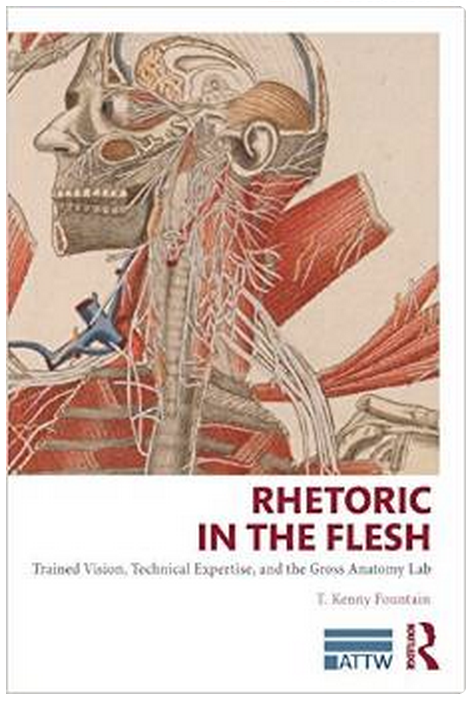
Recently, I had the pleasure of attending the book launch for T. Kenny Fountain’s Rhetoric in the Flesh: Trained Vision, Technical Expertise, and the Gross Anatomy Lab. At the event, Fountain discussed some of the key arguments from the book, and shared anecdotes from his participant observation in the human gross anatomy lab.

Book cover via ATTW

Book cover via ATTW

Fountain’s text is an ethnographic account penned from the perspective of a rhetorician of science communication. His focus on language offers a lens into anatomical learning and clinical training that is at once pointed and engrossing. Through his account, Fountain reveals the underlying relationships and tensions between students of anatomy and the bodies they dissect.

As I learned from the book launch talk and from an initial reading of the text, one term that Fountain’s participants in the laboratory frequently returned to was “making.” This word appears counterintuitive, given that dissection entails acts that are more closely associated with destruction than creation: scraping fat from tissues, disarticulating bones, removing organs to see structures beneath of them. However, “making” meant something quite particular to those who carried out dissections.

Students, instructors, and teaching assistants in the cadaver laboratories employed “making” to describe cutting and preparing the corpse in ways that would mimic the beautifully colored, flawlessly sketched anatomical drawings in their medical atlases. To dissect a body in a careful fashion that would reveal biological structures as cleanly and as clearly as the textbooks was to “make” the body, both into a mimicry of the visuals in the textbooks, and into a body that was representative of what the books deemed anatomical truth. Some students alternatively deemed this process “Netterizing,” or rendering their cadaver’s anatomy to appear as manifestly as the eminent anatomical artist and physician Frank Netter did in his illustrations.

Yet bodies can be “made” by more than the students and faculty alone. Fountain’s text also argues that bodies can make themselves. In one case, a woman who donated her body to science accompanied her anatomical gift with a letter. The letter contained details of the domestic abuse she suffered, as she explained the scars medical students would discover on her skin when they began to dissect her. The woman cast her body in a context that the students who received her body, and read her correspondence, could not ignore when considering the conditions under which that body lived and died. This woman “made” her body a representation of its life, its embodied struggles, and its significance as a precious gift to the students who received it.

Cadavers can also “make” themselves in death. One cadaver in the laboratory Fountain observed at had late-stage cancer that had not been reported on her medical records before she was embalmed for dissection. The cancerous tissue was stiff and impossible to cut through. It obscured structures, encased organs, and halted the dissection. In this instance, the cadaver makes itself both anomalous– by not representing “true” anatomical structures like the textbooks– and simultaneously representative of the reality of disease, which medical students will confront as future physicians.

For linguistic and medical anthropologists alike, as well as all humanistic scholars of medicine, Fountain’s book presents fresh analysis on an age-old tradition of medical learning: anatomical dissection. By attending closely to the language used to describe bodies, the language used by donors to describe their own bodies, and to the visual displays that mediate experience in anatomical learning, Fountain provides an innovative account that blends science and technology studies, visual studies, and rhetorical research.


You can learn more about and purchase Rhetoric in the Flesh here:

http://www.attw.org/publications/book-series/rhetoric-in-the-flesh

A similar version of this post appears at the Dittrick Museum blog, which you may find here:

http://dittrickmuseumblog.com/

Book Release: Haeckel’s Embryos by Nick Hopwood

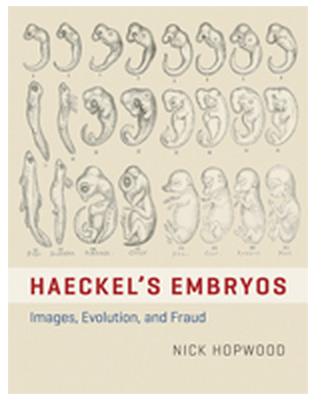
Debuting May 2015 from the University of Chicago Press is Nick Hopwood’s Haeckel’s Embryos: Images, Evolution, and Fraud. The book describes the lasting cultural impact of 19th-century illustrations that demonstrate the identical appearance of human and other vertebrate embryos in the earliest stages of gestation, only later morphing into their adult-like forms. These drawings, produced by Darwinist Ernst Haeckel in 1868, caused an uproar in the scientific community at the time as well as in the 1990s, when biologists and creationists alike argued against their accuracy and inclusion into scientific textbooks.

Image courtesy University of Chicago Press

Image courtesy University of Chicago Press

Hopwood traces the heated history of Haeckel’s drawings from their initial publication in the 19th century through their controversial presence in the current age. In addition to considering the impact of these images on developing understandings of biology, Haeckel simultaneously draws attention to the continued power of these images in contemporary discourse. The book will prove of interest to scholars of medicine who are curious about how popular as well as scientific knowledge of the human body is shaped by visual media, as well as how scientific information is culturally and historically situated.

Nick Hopwood is Reader in History of Science and Medicine and the Director of Graduate Studies at the University of Cambridge’s Department of History and Philosophy of Science.


To learn more about the book, check out its feature page at UCP here: http://www.press.uchicago.edu/ucp/books/book/chicago/H/bo18785800.html

Preview of Books Received: Vol. 38 Issue 4, Dec 2014

The following are previews of two books received for review at Culture, Medicine, and Psychiatry. These previews provide a snapshot of recent publications in medical anthropology, cultural studies, and the history of medicine. For a full list of books received in December 2014, click here: http://link.springer.com/article/10.1007/s11013-014-9395-6

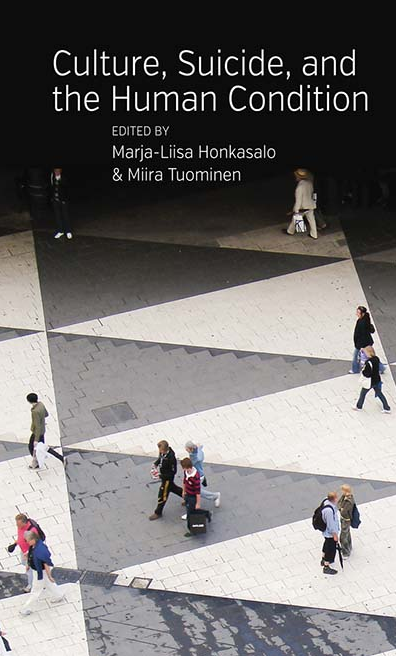
Image via Berghahn Books

Image via Berghahn Books

Culture, Suicide, and the Human Condition

Edited by Marja-Liisa Honkasalo and Miira Tuominen / Afterword by Arthur Kleinman

This collection of research on suicide argues that suicide is not “a separate realm of pathological behavior,” but instead a human action contextualized by a suicidal person’s cultural, historical, and ethnic roots. However, “the context never completely determines the decision,” allowing the authors to focus on suicide as both cultural and psychological phenomena. The authors emphasize individual action and choice regarding the decision to commit suicide. Similarly, the collection presents a complicated puzzle: suicidal narratives make sense of self-killing to a community, and depict suicide as a “solution to common human problems.”

Culture, Suicide, and the Human Condition was released in March 2014 by Berghahn Books. More details on the book here: https://www.berghahnbooks.com/extras/docs/flyer/HonkasaloCulture_9781782382348.html

Image via MIT Press

Image via MIT Press

A Metaphysics of Psychopathology

Peter Zachar

Zachar’s book asks what constitutes the “real” in psychopathology. He states that in psychiatry, pathologies are assumed to be “real,” while in psychology, the “realness” of a pathology is debated in terms of its roots in personality, superego, or in “general intelligence.” Neither discipline, however, aims to pin down what “real” entails for mental illness and conditions. Some pathologies move from being cast off as imaginary to being embraced as legitimate, such as PTSD, and others, like multiple personality disorder, are classified as real only to be later considered imaginary. Zachar takes a philosophical approach to considering what “real” means in terms of psychiatric and psychological classification, proposing a new classificatory system that the summary asserts “avoids both relativism and essentialism.” He then uses this model to interpret recent “controversies” in the inclusion of certain mental disorders within existing classificatory systems.

A Metaphysics of Psychopathology was released in March 2014 by MIT Press: http://mitpress.mit.edu/books/metaphysics-psychopathology

Welcome to the Culture, Medicine, and Psychiatry Website

From all of us on the CMP Journal editorial board, we’d like to extend a few opening words as we launch our new homepage.

This website will feature important information about the article submission process to the journal, as well as detail the newest installments of the journal’s current issue. It will also feature updates on the latest publications in the field of medical anthropology and allied work in the medical humanities, as well as current events that impact our understanding of human health and illness experience throughout the world today. More extensive blog posts exploring the cultural dimensions of medicine and health will be posted to this site as well, composed both by our blog administrator as well as guest writers.

It is our hope that the website will provide an active hub for scholarly work and contemporary trends in medical anthropology and the cultural study of medicine. We thank you for visiting our site and invite you to return for continued updates!

Best wishes,

Atwood Gaines, MA, MPH, PhD

Brandy Schillace, MA, PhD

Catherine Osborn, BA, BS

Stephanie McClure, MA, MPH, PhD

Ariel Casciso, BA, MA

Julia Balacko, MA (blog editor)