Guest Blog: Reflections on Antibiotic Use in American Hospitals

This week, we are featuring a special guest blog written by Katharina Rynkiewich from Washington University in St. Louis. Today, she tells us about her experiences researching antibiotic use among infectious disease practitioners in Chicago, Illinois. If you would like to submit a guest blog entry on your research, please send a 500-700 word piece to social media editor Julia Balacko at jcb193@case.edu.


In the spring of 2013, I conducted research on hospital-based infectious disease specialists in Chicago. Although my participants had a lot to say about antibiotic resistance, I was most surprised at how they characterized and criticized fellow clinicians’ use of antibiotics in relation to resistant disease strains. In hospitals, they suggested, the regulation of antibiotics has changed drastically in the past half century. Some of the older infectious disease specialists I interviewed remembered a time when antibiotic overuse was rampant within the hospital setting. “Anyone could prescribe antibiotics,” my participants complained when describing that era. Clinicians and hospital officials at that time had little reason to expect that antibiotic resistance would become the expensive, lethal, and complicated problem that it is today.

In health care settings now, there is more regulation concerning the use of antibiotics. Clinicians are experiencing a lull in the production of antibiotics for infectious diseases, and practitioners must make do with the limited antibiotic supplies they have. Today, there are systematic hospital reviews of antibiotic use to monitor how often the drugs are used. However, most practitioners can still prescribe antibiotics with little oversight. Procedurally, the review of antibiotics in the hospital setting is an enormous task, and an adjustment of patient treatment plans may not occur until after the first few doses of an antibiotic have been given. There is room, therefore, for antibiotic-resistant diseases to generate as misuse and overuse of antibiotics still occurs.

One way to mitigate overuse employed was the notion of antibiotic stewardship: an idea that the infectious disease specialists I interviewed frequently emphasized. “Stewardship” here refers to the responsibility of certain clinicians to manage antibiotic prescription and usage. The infectious disease specialists expressed a desire to have more control over the distribution of antibiotics in hospital settings, leaving surgery to the surgeon and cancer to the oncologist. The infectious disease staff wished for this level of control over antibiotic use despite the fact that both surgeons and oncologists can prescribe antibiotics independently, meaning antibiotics are not managed by one clinical care specialty. When asked whether, in general, practitioners today realize the importance of antibiotic stewardship in light of the dangers of antibiotic resistant infections, one infectious disease practitioner joked, “Which doctors?” My data show that  many infectious disease specialists note that their management of antibiotic resistance is quite a challenge because most other physicians within and outside of hospitals may readily prescribe them.

This issue is especially pressing because illnesses themselves are rarely treated with one biomedical intervention, or by one clinician. Few patients can be treated for one disease with one corresponding treatment, meaning that patients’ cases are managed with a variety of therapies and by a number of doctors. Patients can also have multiple conditions, again meaning that multiple types of practitioners can prescribe antibiotics for these patients at different points in their hospital stay. In these complex networks of caregiving, who gets the power to give antibiotics might not always be clear, or there might be tension when deciding who gets to limit the drug’s use. Indeed, when an infectious disease specialist is added to a patient’s chart, they are often added as a consult, meaning their advice may not be adhered to by the primary physician.

Certainly, we can expect that infectious disease specialists want professional autonomy over the management of antibiotic drugs, which means limiting and surveying the drug’s accessibility to other clinicians. But to do so, this would mean that other practitioners would have to agree to the control of part of their treatment plans by an outside party. This relationship of competing interests and access to antibiotics leads to disagreements and struggles of bureaucratic power in the hospital. As it stands, the future of antibiotic resistance rests in the hands of all practitioners who must negotiate who gets to prescribe, and who gets to control, the use of antibiotics.


About the Author: Katharina Rynkiewich

I am a PhD student in Anthropology at Washington University in St. Louis. My current research involves studies of infectious disease practitioners and treatment of infectious disease in hospital settings, and will focus on hospital policy regarding infection and epistemic differences among specialty groups of physicians. In 2013, I completed a masters program (MAPSS) at the University of Chicago, and research for this post was done in partial fulfillment of this masters.
Current Issue Highlight: Vol. 38 Issue 4, December 2014

In our “Current Issue Highlight” series, we provide brief synopses of some of the original articles and commentaries published in our latest issue of Culture, Medicine, and Psychiatry. We hope these glimpses into our recent publications serve as a taste of the research we publish, as well as offer fresh insights on the intersections of culture, disease, health, and healing.

“The Ethics of Ambivalence and the Practice of Constraint in US Psychiatry”

Paul Brodwin

“This article,” the abstract begins, “investigates the ambivalence of front-line mental health clinicians toward their power to impose treatment against people’s will.” Ambivalence is itself a psychological construct that describes the tensions between love and hate, or multiple perspectives, within both individual subjects as well as the collective social group: here, psychiatric health workers. Central to this article is the friction generated between the clinicians’ self-concept as caregivers and their professional drive to control patients. Such ambivalence about clinical work in psychiatry is evident in the ethnographic research presented here.

Brodwin’s piece reminds us that anthropology is perfectly situated to draw meaning from these problematic and conflicted perspectives within a social group. Rather than reconciling the participants’ feelings and drawing one universal message from them, Brodwin presents us with an authentic picture of the complicated world of clinical psychiatric practice. He concludes, “To understand the paradox, fieldwork should focus especially on the moments when people’s sense of unease erupts into collective life.”

Link to article: http://link.springer.com/article/10.1007/s11013-014-9401-z

“A Village Possessed by ‘Witches’: A Mixed-Methods Case–Control Study of Possession and Common Mental Disorders in Rural Nepal”

Ram P. Sapkota, et al.

In this article, the authors probe an important question: if we consider spirit possession and psychopathology as separate categories, rather than assume possession as a form of mental illness, how might we describe mental illness within a population who has experienced spirit possession? For societies in which spirit encounters are frequent and socially normative, reading mental illness as distinct from possession is particularly critical when exploring local psychic events.

Nepal provided fertile intellectual grounds for exploring this question because spiritual possession occurs regularly. When the researchers delivered educational sessions on psychosomatic and psychosocial illnesses, suggesting that spirit possession might be a type of mental distress, villagers in the study resisted this notion. They argued that possession was rooted in cosmological and supernatural disturbances, making them altogether different psychological phenomena.

Instead of casting possession as a brand of psychiatric illness, the authors suggest that we might view possession as a coping mechanism against other mental duress. In another way, we could conceive of possession as a cultural idiom of distress: reframing illness in terms of a socially acceptable category of experience that is widely shared.

Link to article: http://link.springer.com/article/10.1007/s11013-014-9393-8

“Confinement and Psychiatric Care: A Comparison Between High-Security Units for Prisoners and for Difficult Patients in France”

Livia Velpry & Benoît Eyraud

Focusing on French mental health care, this article explores the evolving use of confinement as part of the treatment of mentally ill individuals who exhibit violent behavior. The authors parallel the nature of confinement in French psychiatric wards to the security practices of high-security prison units.

In their research, Velpry and Eyraud discovered that the public appeal to heightened security in psychiatric institutions, as well as executive action from the president, led to a “turn” towards new confinement measures. Second, psychiatrists used this new narrative of control to justify control techniques that they argued gave patients “psychic structure.” Rather than standing as its own therapeutic measure, physicians employed confinement as a means of managing “difficult” patients.

As an object of inquiry, this recent trend in French psychiatry recalls the complementary trajectories of care and justice, power and control, as well as reflects on the changing landscape of what we define as therapy.

Link to article: http://link.springer.com/article/10.1007/s11013-014-9400-0

“Psychiatry with Teeth: Notes on Coercion and Control in France and the United States”

Anne M. Lovell & Lorna A. Rhodes

This commentary piece on the articles published in the current issue highlights the “rough edge” of the use of constraint and coercion to subdue “difficult” psychiatric patients. Lovell and Rhodes note that many of the articles demonstrate how these forms of discipline and control are enacted at the local scale, and remind us that the exchange between psychiatric patient and the care institution is the site of the strongest conflict when we look at systems of control. What is the border between “care and custody,” the issue asks? How do we as anthropologists contribute to the knowledge about these complex social interactions?

Furthermore, the authors observe that the geographic emphasis on psychiatric care in France and the United States is hardly accidental. Although care practices for the mentally ill differ widely between the two countries, the focus on constraint and control is similarly present in the scholarly literature produced on psychiatry in each place. Likewise, in French and American research, there is a mutual tendency to study mental health care in terms of autonomy, freedom, humanism, and democracy.

Link to commentary: http://link.springer.com/article/10.1007/s11013-014-9420-9


Want to see a preview and abstracts of all the articles in the current issue? Find details on the full issue here: http://link.springer.com/journal/11013/38/4/page/1

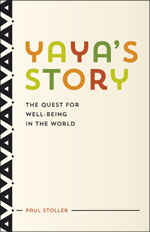
Book Release: Paul Stoller’s “Yaya’s Story: The Quest for Well-Being in the World”

9780226178790

Image from UC Press website

Out this month from the University of Chicago Press is Paul Stoller’s book Yaya’s Story: The Quest for Well-Being in the World. The text traces the author’s friendship with a Songhay trader from Niger named Yaya Harouna: a man who moved to the United States as Stoller, an anthropologist, had likewise made a journey from the USA to Africa as a Peace Corps volunteer. Their story begins whenever Stoller meets Yaya selling artwork in an African market in New York City’s Harlem neighborhood, where Stoller carried out research.

Although the men’s histories are markedly different, they become close after the two are each diagnosed with cancer: this serves as the heart of Yaya’s Story, and the experience upon which the two men’s culturally divergent, yet not entirely dissimilar, narratives cross paths. With extensive publications in the genres of both ethnography and memoir, Stoller is certain to blend keen anthropological insight with deeply personal accounts of human suffering, endurance, and resilience in the face of illness across cultures in his latest book.

Stoller, Professor of Anthropology at West Chester University, is a 1994 winner of a Guggenheim Fellowship and the 2013 recipient of the prestigious Anders Retzius Gold Medal in Anthropology from the King of Sweden.

You can find out more about the book here, at the UC Press website:

http://www.press.uchicago.edu/ucp/books/book/chicago/Y/bo18882897.html

Publication Highlight: “Online First” Articles (Oct 2014), Part One

The following collection of articles are from our “Online First” file at our publisher’s website: http://link.springer.com/journal/11013. The full text of these articles will be released in upcoming issues of Culture, Medicine, and Psychiatry, but here we’d like to lend our readers a glimpse into the innovative research in medical anthropology and social medicine that the journal publishes.

Clicking the title of each paper will send you to the “Online First” page for each article, including a full list of authors and abstracts.

cards

A Village Possessed by “Witches”: A Mixed-Methods Case–Control Study of Possession and Common Mental Disorders in Rural Nepal

Ram P. Sapkota, et al

Practicing and Resisting Constraint: Ethnography of “Counter Response” in American Adolescent Psychiatric Custody

Katherine Hejtmanek

The Invisibility of Informal Interpreting in Mental Health Care in South Africa: Notes Towards a Contextual Understanding

Leslie Swartz & Sanja Kilian

Learning Disabilities’ as a ‘Black Box’: On the Different Conceptions and Constructions of a Popular Clinical Entity in Israel

Ofer Katchergin

From the Archive: Biomedicine, Chinese Medicine, and Psychiatry

In the “From the Archive” series, we will highlight articles published throughout the journal’s history. We look forward to sharing with our readers these samples of the innovative research that CMP has published on the cultural life of medicine across the globe.

cards3

At the journal, we often present fascinating work on psychiatric care throughout the world, including Joshua Breslau’s 2001 article “Pathways through the Border of Biomedicine and Traditional Chinese Medicine: A Meeting of Medical Systems in a Japanese Psychiatry Department” (volume 25 issue 3.) 

In this piece, Breslau recounts stories of the two medical systems interacting during a meeting of clinicians employing, to varying degrees, traditional Chinese medicine (TCM) alongside biomedical interventions within a Japanese psychiatric department. The author asserts that Japan is perhaps the most common ground for the two medical systems to meet, and that it represents the “traffic” of medical knowledge between Japan, the Asiatic mainland, and the rest of the world. Indeed, Japan has had a lengthy history of exchange with foreign medical systems,beginning with the 18th-century import of anatomy textbooks from Holland. Combined with expanded trade with “the West” in the 19th century and the later resurgence of local Japanese interest in Chinese herbal remedies during the 1970s, we see that the two medical systems have both held a prominent position in the dynamic medical landscape in Japan.

Breslau observes that the two medical systems complement one another most strikingly in psychiatry, where kanpo (herbal treatments) are used both to diminish the uncomfortable side effects of psychoactive medications and to treat conditions for which there are few biomedical interventions. Exemplifying this blended approach to care, the author notes that Dr. Nakai, professor of psychiatry at Kobe University, examines the tongue to diagnose his patients. This method of diagnosis has its roots in TCM, and was taught to Dr. Nakai from a visiting Chinese student; many such Chinese students, having studied TCM, go to Japan to learn “Western medicine.” Although there is little formal education in TCM available in Japan, these interpersonal (and intercultural) exchanges are important mechanisms for sharing diverse medical techniques.

Another physician, Dr. Song, initially specialized in the use of acupuncture to treat psychiatric patients in China. Breslau theorizes that although it seems anomalous for traditional medicine to find a niche in conditions that generally fall under the scope of biomedicine, Dr. Song’s work is a productive blend of psychiatric treatments from both medical systems. Whereas patients in the Chinese biomedical settings were admitted alone, patients and their families stayed together in the TCM centers for mental health, thereby offering a support network that the biomedical patients lacked. In Japan, Dr. Song combined TCM and biomedical approaches. She established an “open ward” psychiatric unit that welcomed patients and their families, and employed both pharmaceutical and herbal remedies depending on the severity and the stage of psychiatric distress suffered by the patient.

Breslau’s piece reminds us of the complicated ways in which cultures are in contact with one another. Rather than reading medicine in China and Japan as a contest, where biomedicine and traditional Chinese medicine are at odds in the race to be deemed “most effective,” it is more accurate to describe the ways that the systems are in dialogue– often in the same clinical settings.

You can find the contents of the full issue in which Breslau’s article is published here: http://link.springer.com/journal/11013/25/3/page/1

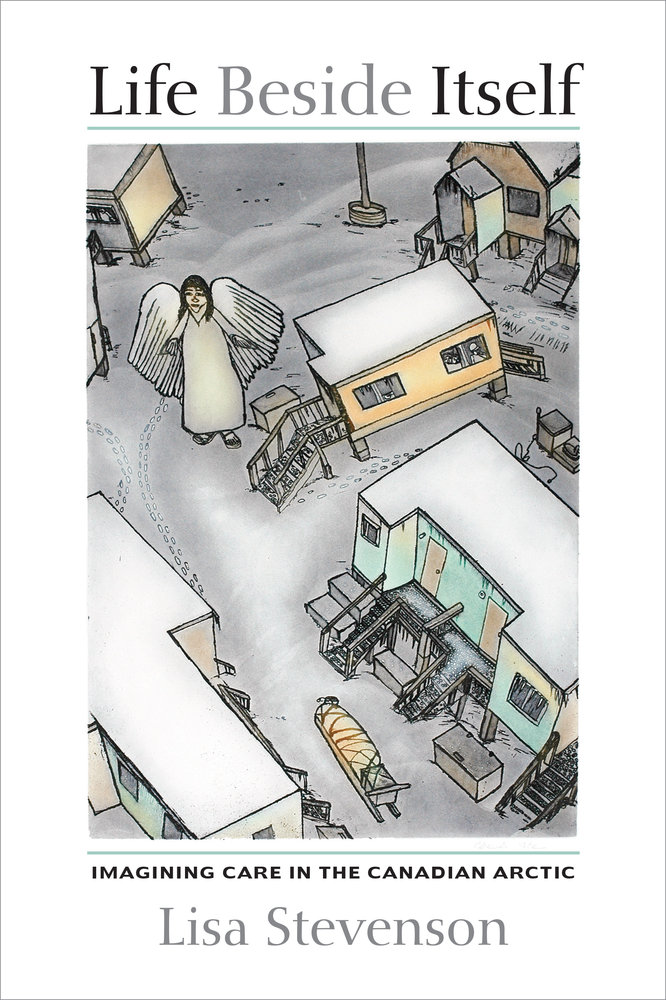
Book Release: Stevenson’s “Life Beside Itself: Imagining Care in the Canadian Arctic”

Cover of Stevenson's book. Rights credited to UC Press.

Cover of Stevenson’s book. Rights credited to UC Press.

This August 2014, Margaret Elizabeth Stevenson’s book on death, illness, and the understanding of life among the Inuit in the Canadian Arctic is set to be released by the University of California Press. The volume will explore two public health crises among the Inuit– a tuberculosis outbreak in the 1950s-60s as well as a suicide epidemic that began in the 1980s and extends into today. In these circumstances, Stevenson reports on how the Inuits cope with the death of their loved ones, realizing that what constitutes “life” is more than just the physical survival of the body.

To read the first chapter of the publication and find further details about Stevenson’s work, check out the page at the university press website here: http://www.ucpress.edu/book.php?isbn=9780520282940