Book Release: Crowley-Matoka’s “Domesticating Organ Transplant”

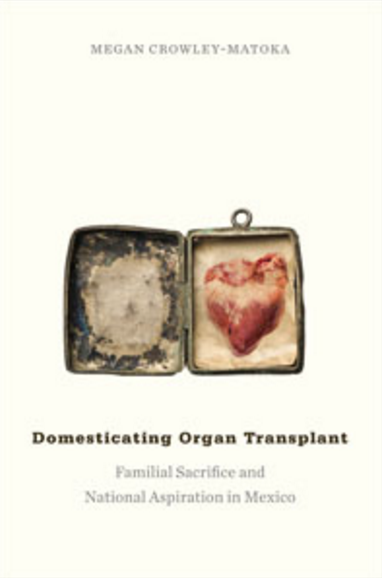
Image via Duke UP

Image via Duke UP

Due for release in March 2016 from Duke University Press is Megan Crowley-Matoka’s Domesticating Organ Transplant: Familial Sacrifice and National Aspiration in Mexico. The text explores the familial nature of kidney transplantation in Mexico, where the organs are donated between relatives rather than received by strangers. Crowley-Matoka also examines kidney transplant in Mexico beyond the family unit, assessing national pride in transplantation procedures performed at hospitals operated by the state. Through family and government, organ transplantation thus becomes an iconic procedure in Mexican society– both within the home and across the nation– that represents the curative promise of contemporary medicine. Crowley-Matoka’s ethnography highlights the relationships between embodied experience, domestic life, national identity, and clinical practice. This text will appeal widely to scholars who study biomedicine in the Americas, the connections between medicine and the state, and familial networks of caregiving.

About the author: Megan Crowley-Matoka is Assistant Professor of Medical Humanities and Bioethics at Northwestern University. You can access more details about her upcoming book here.

AAA 2015 & New Initiatives at the CMP Blog

To our readers:

This week, many of you are attending the American Anthropological Association (AAA) Meeting in Denver, Colorado. From all of us at Culture, Medicine & Psychiatry, we wish you safe travels to the conference and new knowledge and fresh insights upon your return.

Last year on the blog, the editorial staff took this week to thank our readers and to share with you the future directions of our social media in the coming year. We are grateful to all of our readers and followers for helping us foster an online community for medical anthropologists and our peers in allied disciplines, whether on our Facebook page, on our Twitter feed, or here at the blog. Thank you to all of our colleagues for sharing our posts, retweeting our links, and reading our features: from news updates, to conference postings, to book releases, and journal issue highlights.

In addition to these features, we are embarking upon two new initiatives on social media into 2016. The first is a new submission mechanism for book release updates on the blog. If you are an author of a new academic text in medical anthropology, social medicine, or medical humanities, let us know about your publication, and we will share it on the blog. We hope this new initiative allows us to showcase new and trending topics in the field, while it spreads the word about the research our readers and colleagues are carrying out across the globe.

cropped-cards.jpg

The second new initiative will include interviews with anthropologists, historians, and other scholars (including graduate students) about ongoing projects or newly published research. If you want to share your findings, introduce new theories or issues, or present new topics in the field, contact us to be interviewed. For both initiatives, please send requests and queries to our social media editor (Julia Knopes) at jcb193@case.edu. As always, books for review and academic articles can also be submitted to the journal proper. Please direct questions about journal submissions to managing editor Brandy Schillace at bls10@case.edu.

Lastly, we continue to accept guest blog submissions between 500-700 words in length on topics in medical anthropology, medical humanities, bioethics, and social medicine. Guest blog submissions may be submitted for review to our social media editor at the above listed address.

We look forward to sharing with you all of the changes and additions at CMP social media in the coming year.

Our best,

The Editorial Staff of Culture, Medicine & Psychiatry

AAA 2015 Sessions: Medical and Patient Bodies

This entry is our last in a three-part blog series on the upcoming American Anthropological Association (2015) meeting, to be held in Denver, CO from November 18th-22nd. Here we feature paper sessions on contemporary themes in medical anthropology and social medicine. This year, we showcased sessions on the anthropology of mental health care (read here) and on cultural approaches to food sovereignty and economies, featured last week. In this installment, we highlight three sessions on the theme of the medical and patient body. All sessions are listed chronologically by date and time.

Image via AAA Website

Image via AAA Website

The Politics of Health and Ritual Practices: Ethnographic Perspectives

Wednesday, November 18th from 2:00pm-3:45pm (details here.)

In this session, topics will include: health and religion in Putin’s Russia; rhetoric and biopolitics in local medicines of North India; hypochondria, somatic experience, and psychiatry in Soviet-era Bulgaria; and the implications of mortuary rituals in neoliberal Romania. These papers will particularly interest scholars who study the relationship between body and state, as well as those who examine the intersection of religion, health, and healing practice.

The Biosociocultural Trajectory of Stigma

Sunday, November 22nd from 10:15am-12:00pm (details here.)

Papers in the session will address stigma in the following contexts: methadone treatment in a Moldovan prison; HIV+ identities in intergenerational perspective; changes in HIV/AIDS stigma in Western Kenya; stigma and HIV/AIDS as chronic versus curable; obesity and depression in Puerto Rico; and de-stigmatization in massive weight loss. Through these presentations, the session will posit the medical body at the center of social discourses on stigma, illness, and treatment across cultures.

Micropolitics of Medical Life

Sunday, November 22nd from 10:15am-12:00pm (details here.)

This session spans topics such as: organ donation and the family in Japan; patient-centered approaches to biomedical readmission; infant health in El Salvador; translation and language in medical encounters; ethnographic research on contaminated water exposure and local treatments for infant diarrhea; dialysis and the family unit; and the connections between cells, culture, and knowledge-making. These papers will underscore the cross-cultural ties between body, biology, illness, culture, and daily life.

AAA 2015 Sessions: Food Sovereignty and Food Economies

Last Fall 2014, we featured a series of blog entries highlighting sessions at the AAA 2014 Annual Meeting on topics of interest to our readers. This year, we feature sessions from this year’s AAA 2015 Annual Meeting, to be held November 18-22 in Denver, Colorado (more information here.) You can also browse another past installment of the blog, where we highlighted sessions on biomedicine and the body at the upcoming Society for Social Studies of Science (4S) meeting, also in Denver, to be held November 11-14 (details here.)

This week, we present three paper sessions on anthropological approaches to food sovereignty and food economies: topics that have been increasingly of interest to medical anthropologists who study related issues such as body image, preventative care, nutrition, and well-being. The sessions are organized chronologically by date.

Image via AAA Website

Image via AAA Website

Food Values in Europe: Sustainable Economies, Power, and Activism

Thursday, November 19th 8:00am-9:45am (details here.)

Topics in this session will include the decommodification of food and organic food supplies; organic food provisioning in Catalonia; food values amongst British-born African Caribbean peoples in the United Kingdom; food waste and recycling in southern Spain; food politics, communities, and the garden in the Czech Republic; sustainability in a Galician dairy farm; and food ideologies in an urban Portuguese garden. The session crosses numerous topics of study including European cultures, sustainability and the environment, cross-cultural food practices, green space and the role of the garden, and global nutrition.

Critical Perspectives on Food Sovereignty, Food Justice, and Food Citizenship

Friday, November 20th 1:45pm-3:30pm (details here.)

This session will include presentations on the following topics: agricultural activism in Cuba; food access amongst migrant farm laborers; food justice at the border of the United States and Mexico; food sovereignty in Mexico in popular narratives; food literacy amongst women in a food-insecure neighborhood; and an analysis of divergent perspectives on food justice. These papers will offer valuable perspectives on the role of food in disparities across economic classes and across national borders.

New Directions in Agriculture and Culture: The Convergences of Food, Labor, and Neoliberalism

Saturday, November 21st 8:00am-9:45am (details here.)

Presenters in this session will address: a case study in sustainable entrepreneurship; food sovereignty and food landscapes in Detroit, Michigan; labor and food in a Wisconsin farm-to-table network; Haitian farmers and socioeconomic change; technoscience, translation, and olive oil; seeds and labor on the shorelines of Turkey; and an ecological study of resistance and labor on a South African plantation. These sessions will appeal to scholars who work on economic anthropology, nutrition, or political ecology.

AAA 2015 Sessions: The Anthropology of Mental Health Care

Beginning last Fall 2014, we began compiling lists of sessions at the Annual Meeting of the American Anthropological Association that we thought would be of interest to our readers attending the conference. These sessions included topics such as drug use and abuse, reproductive medicine, and global health. This year, we again feature our series on the upcoming conference, to be held November 18-22 in Denver, Colorado (more information here.) You can also browse last week’s installment of the blog, where we highlighted sessions on biomedicine and the body at the upcoming Society for Social Studies of Science (4S) meeting, also in Denver, to be held November 11-14 (details here.) This week, we present three paper sessions on the anthropology of mental health care. The sessions are organized chronologically by time and date.

Image via AAA Website

Image via AAA Website

Re-Institutionalizing Care: Anthropological Engagements with Mental Health Courts and Alternative Forensic Psychiatry Interventions in North America

Saturday, November 21st 10:15am-12:00pm (details about this session.)

Topics in this session will include racial disparities in a mental health court in Canada; the relationship between criminal justice officials, psychiatric crisis, and mental health; dogma and psychiatry; and mental health care reform. The session lists itself as particularly of note to applied and practicing anthropologists, especially those with an interest in mental health care, policy, and reform.

From the Streets to the Asylum: Medicalizing Vulnerable Children

Saturday, November 21st 10:15am-12:00pm (details about this session.)

This session includes work on the following topics: humanitarian care and child homelessness in Cairo, Egypt; drug use and treatment amongst juvenile prisoners in Brazil; immigrant youth and mental health in France; and notions of American childhood in the context of mental health. Though the session is sponsored by the Anthropology of Children and Youth Interest Group, its topics overlap with many contemporary issues in medical anthropology and the social study of mental health care.

Making Sense of Mental Health Amidst Rising Rural Social Inequality in North America: Class, Race, and Identity in Treatment-Seeking

Saturday, November 21st, 1:45pm-3:30pm (details about this session.)

Presenters in this session will speak on these issues: mental health and poverty in rural New England; mental health and prescription drug abuse in Appalachia; citizenship and mental health in Oklahoma; care access in remote Alaskan communities; community mental health activism; and inequity and depression in rural Kentucky. These sessions will be of interest to scholars of social justice and medicine, as well as those studying mental health care access and the culture of psychiatry in the United States.

4S 2015: Sessions on Biomedicine, the Body, and Knowledge

Last year, we featured blog posts that highlighted paper sessions on various topics in medical anthropology and social medicine presented at the annual AAA (American Anthropological Association) meeting in Washington, DC. This year, we are heralding in conference season by featuring details on two upcoming events: the AAA meeting and the annual meeting of the Society for Social Studies of Science (4S). Both conferences will be held in November 2015 in Denver, CO. You can find out more about the AAA Meeting here (http://www.aaanet.org/meetings/) and the 4S Meeting here (http://www.4sonline.org/meeting.)

Logo of 4S via the organization's website

Logo of 4S via the organization’s website

The 4S organization brings together researchers whose works span all aspects of scientific research, production, and the impact of science on society. Despite the organization’s breadth of represented interests, many scholars of social medicine take a science and technology studies (STS) approach and are active in 4S. This week, we highlight sessions at the 4S Meeting that emphasize their research and paper sessions on biomedicine. Sessions are organized chronologically by date and time.


Sex and Gender in Biomedicine

Thursday, November 12th 8:30-10:00am

Click here for details on this session.

This session will feature three presentations on sex and gender in biomedicine focused on the following topics: cosmetic surgery in South Korea and the United States, the history of biological sex as defined by the sciences, and the role of a parasite transmitted through sex on the reproductive lives of humans. The papers propose new understandings of sex and gender as constructed through scientific knowledge and practice.

Examining the Exceptional: Case Studies of Knowledge Production in Biomedicine and Science

Thursday, November 12th 10:30am-12:00pm

Click here for details on this session.

Topics in this session will address: microevolution and genetic science on indigenous men in Brazil; the definition of crisis in emergency medicine in the United States; sickle cell patient advocacy in Brazil; a comparative case of pregnancy monitoring in the USA and the United Kingdom; and immigrant physicians and medical professionals arriving in the United States as an “exceptional” population. These papers will offer various examples of the way that science constructs meaning for patients and practitioners of biomedicine alike.

Biomedicine and Difference

Thursday, November 12th 2:00-3:30pm

Click here for details on this session.

In this session, presenters will explore: human microbiome research; astronauts, race, and physical preparation for conditions in outer space; representations of race in a stroke awareness campaign; past technologies for measuring skin color; and the breakdown of ethnic origin by genetic percentages. These papers will scrutinize the complex and often problematic relationships between race, science, medicine, and the body.

The Body in Biomedical Knowledge

Friday, November 13th 4:00-5:30pm

Click here for details on this session.

This session will address the following topics: food insecurity, the use of inmates as test subjects, obesity, and anatomical and physiological representations in 20th century Chinese medicine. The session will also feature the work of our blog editor, Julia Knopes, on the ontological status of cadavers as objects in Western medical traditions.

Replaceable Parts: Prosthetic Technologies in Biomedicine 

Saturday, November 14th 10:30am-12:00pm

Click here for details on this session.

Presenters in this session will speak about new surgical robots, the role of prosthetic limbs amongst wounded military veterans, cross-cultural readings of prosthetic making in Canada and Uganda, 3D organ printing and facial transplants, and the experiences of amputees in an ever-changing landscape of prosthetic and bionic technologies. The sessions in this paper panel will offer fresh perspectives on the meaning of the cyborg, a continued area of interest for many medical anthropologists and researchers in social medicine.

News: UN Releases New Sustainable Development Goals (SDGs)

On Friday, September 25th, the UN released its new plan for global development through 2030: the sustainable development goals (SDGs).[i] This plan replaces the millennium development goal (MDG) plan that expires at the end of 2015, and offers a new 17-point agenda focused on social equality, infrastructure, technology, and environmental conservation.[ii] Of note to medical anthropologists, global health workers, and other scholars in social medicine is the continued focus on health and well being as the third item amidst the seventeen goals. The SDG plan champions health “for all at all ages,” although it proposes no specific goals for improving elder care despite the language stressing health across ages. Maternal and reproductive health, substance abuse, traffic deaths, and universal health care coverage are key issues addressed in the SDGs.

Emblem of the UN via Wikimedia Commons

Emblem of the UN via Wikimedia Commons

Proponents of the new SDGs, like the World Bank, argue that the plan’s emphasis on both developed and developing countries creates a shared impetus for bolstering food security, education, and access to quality health care; likewise, it suggests that these issues are global ones that cross national borders, and do not exist at the state level alone.[iii] Others criticize the SDGs as too ambitious, arguing that global authorities already struggle to aid migrants and peoples in crisis[iv], stating that the goals are too broad and thus not focused enough to produce observable change[v], and highlighting the irony of combating climate change while promising electricity for all by 2030.[vi]

Anthropologists have long held an interest in international development as a site of cross-cultural exchange, a relic of colonialism, and as a paternalistic model of societal shepherding of developing nations by the wealthy West and Global North.[vii] Amongst development anthropologists, the sustainable development goals will certainly generate new questions about the connectedness of social inequities with health, autonomy, and human rights in the contemporary age. The goals will similarly continue to attract the interest of scholars studying biomedicine and global health in diverse cultural settings.

In addition, the SDGs will no doubt capture the attention of anthropologists in science and technology studies (STS) with the plan’s robust emphasis on technologies, energy, infrastructure, and the environment. This sharpened focus on the connection between social order, science, and technology attests to the applicability of STS approaches to the study of development.

The SDGs arrive at a time of increased concern over social justice and equity on the transnational scale, particularly in the face of the Syrian refugee crisis[viii] and given wide income gaps that impact people in the United States, Chile, Greece, Mexico, and Turkey alike.[ix] Anthropologists are ideally situated to explore the impact of development goals across cultures, and to question how and why these goals may face considerable challenges as they are translated into action, law, and practice at the local level.


[i] http://www.theguardian.com/global-development/2015/sep/25/global-goals-summit-2015-new-york-un-pope-shakira-malala-yousafzai

[ii] https://sustainabledevelopment.un.org/topics

[iii] https://blogs.worldbank.org/voices/global-goals-economic-transformation-in-an-interconnected-world

[iv] http://www.npr.org/sections/goatsandsoda/2015/09/28/444188463/are-the-new-u-n-global-goals-too-ambitious

[v] http://www.scientificamerican.com/article/sustainable-development-goals-offer-something-for-everyone-and-will-not-work/

[vi] http://www.theatlantic.com/international/archive/2015/09/energy-access-sdgs-un-climate-change/407734/

[vii] http://www.wiley.com/WileyCDA/WileyTitle/productCd-0631228802.html

[viii] http://www.cnn.com/2015/09/28/world/united-nations-main/

[ix] http://www.reuters.com/article/2015/09/27/us-development-goals-challenges-analysis-idUSKCN0RR0TV20150927

Book Release: “The Law of Possession: Ritual, Healing, and the Secular State”

Screen Shot 2015-09-13 at 7.10.00 PM

Image via Oxford UP website

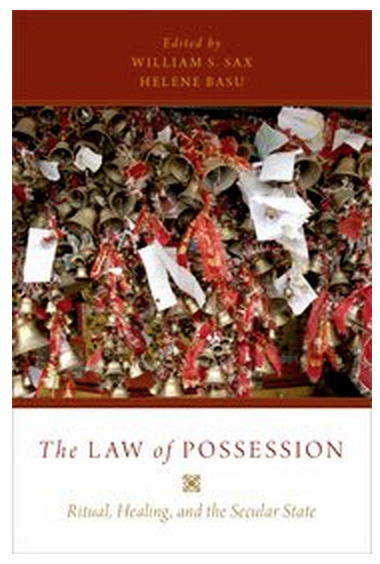
Out this November 2015 from Oxford University Press is an edited collection by William S. Sax and Helene Basu entitled The Law of Possession: Ritual, Healing, and the Secular State. The text presents both contemporary and historical case studies of the relationship between spiritual conflict and judicial exchanges across cultures. While rituals to exorcise spirits from the afflicted are typically characterized solely as acts of healing, they are also scenarios in which spirit healers do justice by the possessed by driving out a spirit who has committed an act of evil against the person they inhabit. Spirit possession may similarly provide valuable opportunities for members of a community to contact restless spirits through a human oracle. These otherworldly entities may then offer evidence to the living as to how to avenge or appease them, thereby restoring social harmony. Healing, justice, cosmic order, and religion are thus closely integrated within these culturally meaningful negotiations.

The authors of the text challenge the assumption that these spiritual encounters– which have consequences for both medicine and the law in many societies– are antiquated and do not belong in modern societies or in secular governments. By drawing on examples from East Asia, South Asia, and Africa, the authors assert that spiritual healing and law nevertheless persist in the contemporary age as a way to meet social and religious needs in many cultures.

Learn more about the book (in paperback) by clicking here.

Link to the hardcover copy: https://global.oup.com/academic/product/the-law-of-possession-9780190275747?cc=us&lang=en

About the editors: William Sax teaches at the University of Heidelberg, where he serves as the Chair of Cultural Anthropology at the South Asia Institute. Helene Basu is the director of the Institute of Social Anthropology at Münster University.

Issue Highlight: Vol 39 Issue 3, Suicide in Rural Kenya

When a new issue of Culture, Medicine & Psychiatry is released, we feature a series of blog posts that highlight these latest publications in our journal. The current September issue includes articles that address psychiatric conditions and the experiences of people with mental illness across cultures. Readers may access the full issue at Springer here: http://link.springer.com/journal/11013/39/3/page/1. In this issue highlight, we will discuss an article on ethnographic analyses of suicide and distress amongst three communities in northern Kenya.


cards3

Suicide in Three East African Pastoralist Communities and the Role of Researcher Outsiders for Positive Transformation: A Case Study

Bilinda Straight, Ivy Pike, Charles Hilton, and Matthias Oesterle – Pages 557-578

http://link.springer.com/article/10.1007/s11013-014-9417-4

The authors of this article strive to establish a nuanced and ethnographically rich understanding of suicide and mental distress in an under-studied population of three distinct, yet interacting, pastoral communities in northern central Kenya. These three groups– the Pokot, Samburu, and Turkana– are engaged in intercommunity conflicts over territory and land use agreements, despite the communities’ shared and entangled oral histories. Such tensions are only exacerbated by mutual fear of raids by other groups, dearths in food available for forage, and the theft of livestock from individuals who sell the animals to finance political campaigns. Poverty is likewise aggravated by these patterns of loss and violence.

This turbulent social environment creates widespread mental distress amongst the three communities, yet individuals from each group stressed to the research team that they felt obligated to persevere despite these pressures, making admitting psychological suffering (and especially confessing thoughts about suicide) deeply taboo. Therefore, any mental health intervention would have to be responsive to the extent to which Pokot, Samburu, and Turkana culture disallow individuals from discussing or even thinking about suicide: an act which could create even more social strain on the family of the person who committed it. The researchers confirmed this inability to discuss suicide by the high rates of non-response on a survey question which asked participants whether or not they had experienced suicidal thoughts.

Suicide thus proves to be a unique case for anthropological analysis because it is both driven by the social conditions of those who take their own lives, as well as disruptive to the communities in which these people lived. Its treatment by global health workers must in turn be sensitive to cultural beliefs that forbid conversation about suicide, especially in communities where the death of an individual may contribute to already extraordinary social distress.

Issue Highlight: Vol 39 Issue 3, Maya Mental Disorders in Belize

With each new issue of Culture, Medicine & Psychiatry, we feature a series of blog posts that highlight the latest publications in our journal. This September’s issue includes articles that address psychiatric conditions and the experiences of people with mental illness across numerous cultures. Readers may access the full issue at Springer here: http://link.springer.com/journal/11013/39/3/page/1. In today’s issue highlight, we will examine a study on indigenous nosologies of mental illness amongst the Maya of Belize.


cropped-cards.jpg

Narrative Structures of Maya Mental Disorders

Andrew R. Hatala, James B. Waldram, and Tomas Caal – Pages 449-486

http://link.springer.com/article/10.1007/s11013-015-9436-9

To understand the compatibility of divergent medical traditions, it is first essential to describe how medical systems classify and interpret disorders in particular ways. With this aim in mind, the authors of this ethnographic study sought to develop an picture of indigenous mental illness nosology amongst the Q’eqchi’ Maya of southern Belize. They also asked how this knowledge may alternatively coexist, or compete, with biomedical concepts of suffering.

In order to learn about this indigenous medical epistemology, the authors worked with the Maya Healers’ Association, a professional, self-regulated group of twelve healers who maintain a garden of medicinal plants for research and who strive to reinvigorate traditional medical practice in Belize. Across ninety-four interviews with healers, the authors uncovered four illness categories that the participants used to describe the roots of mental illnesses: “thinking too much,” fright, the day of birth, and spirit “attacks.”

These descriptions are sometimes cross-compatible with DSM-V nosologies, as the researchers discovered that “thinking too much” was also listed as a symptom in biomedical models of mental illness. However, unlike the DSM-V, Maya healers tended to characterize overthinking as a “genre” of illness experience rather than as a discrete symptom. Maya healers also characterize mental illnesses as existing within the heart, the mind, and the spirit: thereby expanding the implications of mental illness beyond brain physiology, the proximate explanation employed by biomedical psychiatry.

The authors conclude that it is essential to understand the similarities in the two nosologies to facilitate collaboration between indigenous and biomedical healers, but add that both groups must also be aware of the differences in classificatory schemes that they use to interpret mental illness. In this way, people with mental disorders in Belize may best receive care that accounts for all of the ways they might seek care and understand their illness across the boundaries of medical systems.